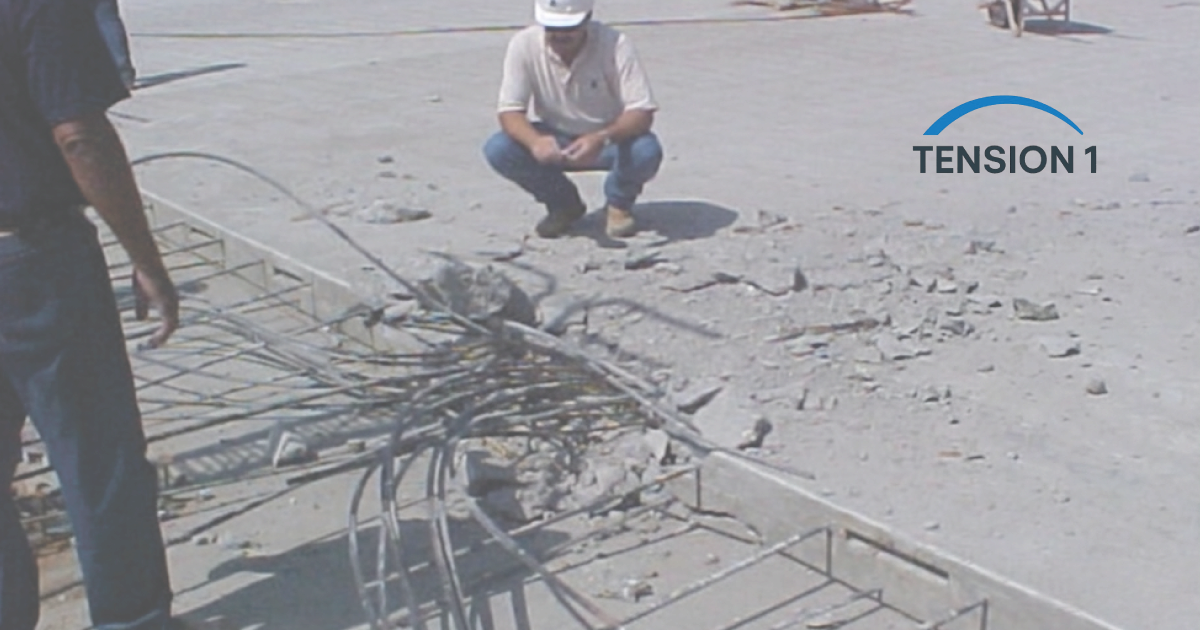
A post tension slab is often treated as a set-it-and-forget-it system once the tendons are stressed and the anchor pockets are patched. That assumption is expensive. We have reviewed foundation reports on Dallas residential and light commercial projects where early-stage tendon corrosion was completely missed because no periodic inspection protocol was in place.
By the time visible symptoms appeared, the damage was already past a simple fix. Those symptoms were floor cracking, slab deflection and popped anchor covers. PT slabs can deteriorate quietly. The real question is how often, and how rigorously, they are inspected to catch it early.
Why a Post Tension Slab Is Not Maintenance-Free
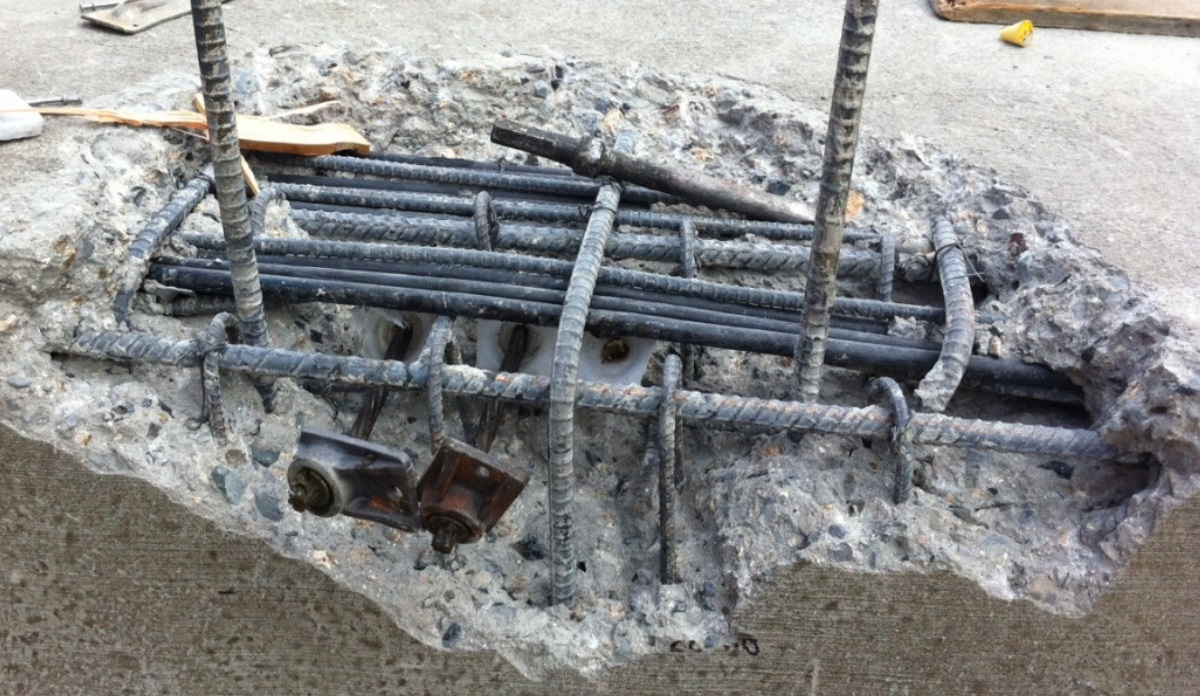
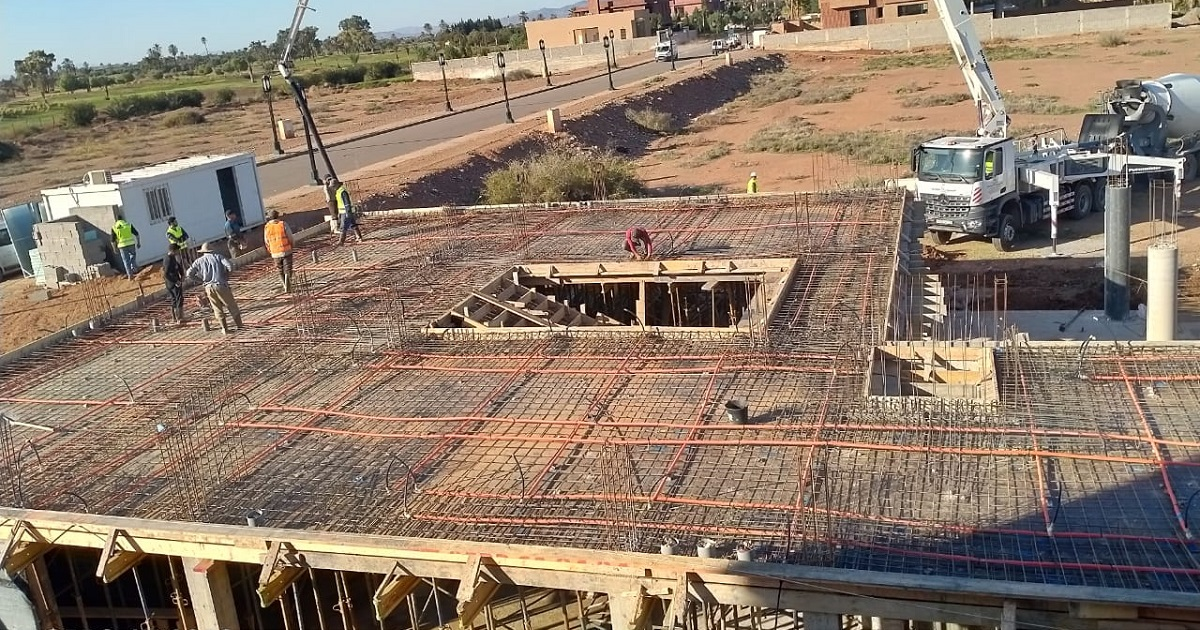
A post tension slab is held together by tendons: steel cables in a greased plastic sheath, pulled tight and locked off at the slab edges in recesses called anchor pockets. The system is robust. Its components are not immune to time, though. Sheathing tears, grease is lost, and anchors corrode if water reaches them.
ACI 318-19 requires installation and stressing to be documented during construction. It does not set any inspection interval once the building is in service. That gap leaves the responsibility with the owner, and in practice nobody looks until something cracks.
In field experience reviewing existing PT foundations in the Dallas-Fort Worth area, the following degradation mechanisms appear most frequently:
- Anchor pocket exposure due to failed patching mortar, which allows moisture to reach the anchor head and wedge assembly
- HDPE sheathing punctures caused by construction traffic or improperly placed penetrations
- Grease loss at cut ends, which accelerates strand corrosion in unbonded monostrand systems (ASTM A416, Grade 270)
- Slab edge cracking that progressively exposes tendon paths to sulfate-bearing soils, a particularly relevant concern in expansive clay geology across North Texas
None of these failure modes gives an obvious symptom in its early stages. Passive observation is not a substitute for a structured inspection.
Where Inspection Is Already Mandatory
Some jurisdictions have stopped leaving this to chance. After the 2021 Champlain Towers South collapse, Florida introduced milestone inspections for condominium and cooperative buildings of three stories or more. According to the Florida Senate summary of SB 154 (2023), the inspection is due when a building reaches 30 years and every 10 years after that. Local agencies keep the option of a 25-year trigger.
Texas has no equivalent statewide requirement for private buildings, and no code requires a single-family PT foundation to be inspected at all. For most Texas owners, the schedule is a decision they make themselves.
What a Professional PT Slab Inspection Covers
A real inspection is more than a walkthrough. It covers the surface, the accessible tendon hardware and the soil conditions that load the slab.
Surface and Accessible Components
- Crack mapping: orientation, width and position relative to the tendon layout.
- Anchor pockets: grout condition at every exposed edge, rust staining, grease bleed-out.
- Slab edge and floor levels: signs of edge lift, center lift or settlement.
- Re-entrant corners and joints: where restraint cracking concentrates.
Crack widths are compared with ACI 224R-01, Control of Cracking in Concrete Structures. Its guidance values are 0.016 in. for dry air, 0.012 in. for humid air or contact with soil, and 0.007 in. where deicing chemicals are present. A wider crack near an anchorage zone warrants a closer look.
Tendon Condition
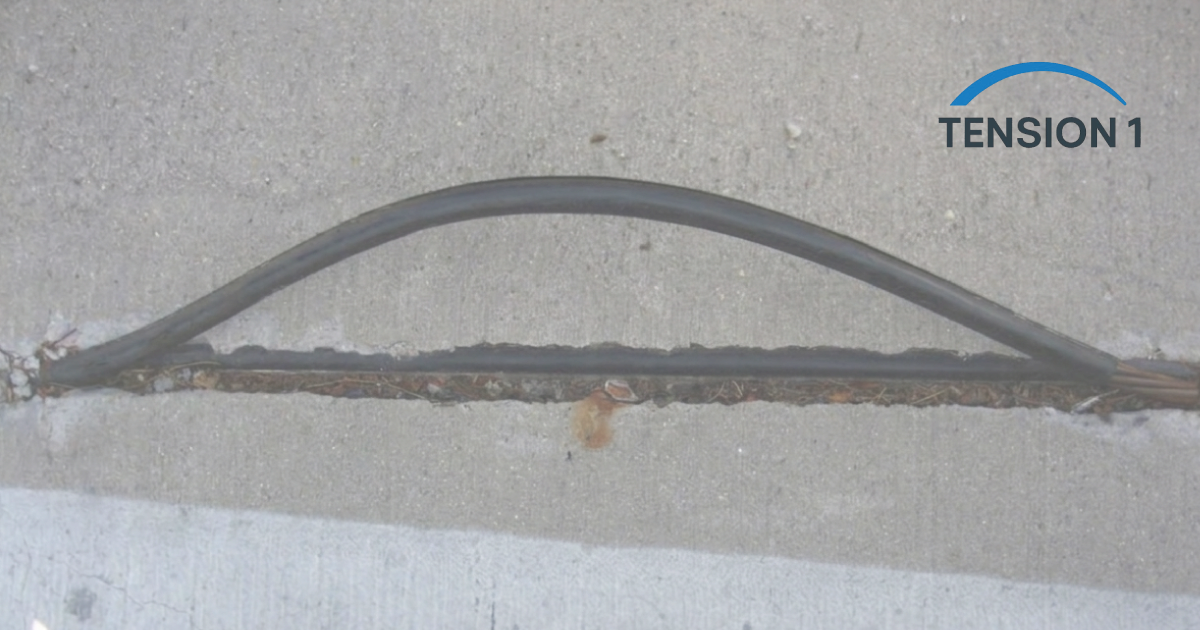
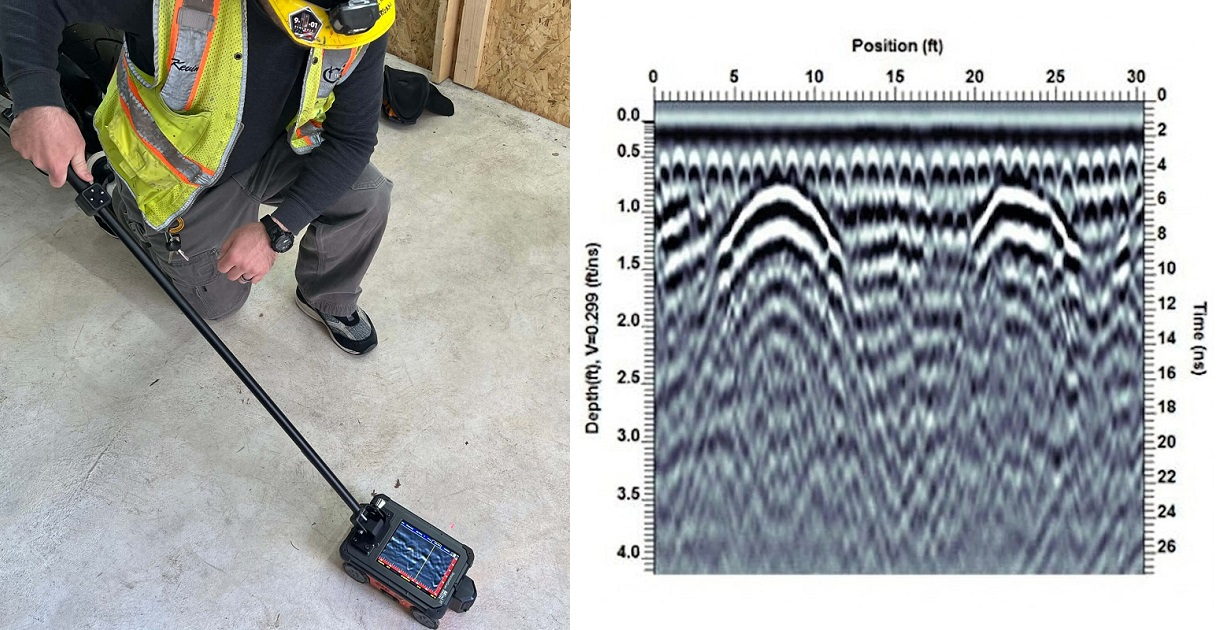
Where pockets are opened, the inspector checks wedge seating, corrosion of the bearing plate, grease coverage on the strand tail, and broken wires at the wedges. The wedges are the most common starting point for a post tension cable snap. Remeasuring tendon elongation is not possible on an occupied building. A lift-off test with a stressing jack can measure the force remaining at an accessible anchor. PTI DC80.3/ICRI 320.6 (2024) describes these evaluation methods.
Soil and Drainage
On Texas foundations, soil moisture often matters more than the tendon hardware. Expansive clay swells when wet and shrinks when dry. The Virginia Department of Energy cites an ASCE estimate that one quarter of all U.S. homes have suffered damage from these soils. The inspection checks perimeter drainage, grading, trees close to the foundation and signs of plumbing leaks under the slab. PTI DC10.2-17, Construction and Maintenance Manual for Post-Tensioned Slab-on-Ground Foundations, covers what owners should maintain. PTI DC10.8-18 covers how foundation performance is evaluated.
How Often Should a Post Tension Slab Be Inspected?
No U.S. model code sets an interval. The baseline below is our engineering judgment. It is driven by two factors: exposure to water and salts, and the activity of the soil underneath.
| Building Type | Recommended Interval | Triggers for Immediate Review |
|---|---|---|
| Residential slab-on-grade, stable soil | Every 5 years | Visible cracking, door or window binding, drainage changes |
| Slab-on-grade over expansive clay (DFW) | Every 3 years | Seasonal heave, foundation repair history |
| Light commercial (retail, office) | Every 3 years | Anchor pocket damage, leaks, significant loading changes |
| Post-tensioned elevated deck or parking structure | Annually | Impact event, exposed tendons, water infiltration |
Elevated decks get the shortest interval because water and deicing salts reach the tendons directly. Slabs on active clay come next, because the soil keeps changing the load the slab was designed for. The inspection itself should be led by a licensed professional engineer with PT experience. PTI also certifies field inspectors through its Level 2 Unbonded PT Inspector program. Between inspections, watch for the symptoms in our guide to the 5 warning signs your post-tension slab needs immediate expert repair. Long-term corrosion protection is covered in our guide to tendon corrosion inspection and preservation.
The Real Cost of Skipping a Post Tension Slab Inspection
Skipping inspections does not remove the risk. It defers it, and the bill grows. Based on cost data reported by Texas-based post-tension repair contractors, an anchor pocket repair at $300 to $700. A full unbonded tendon replacement runs $1,500 to $4,000 per tendon, before shoring, engineering or access costs. The difference between those two lines is what an inspection buys.
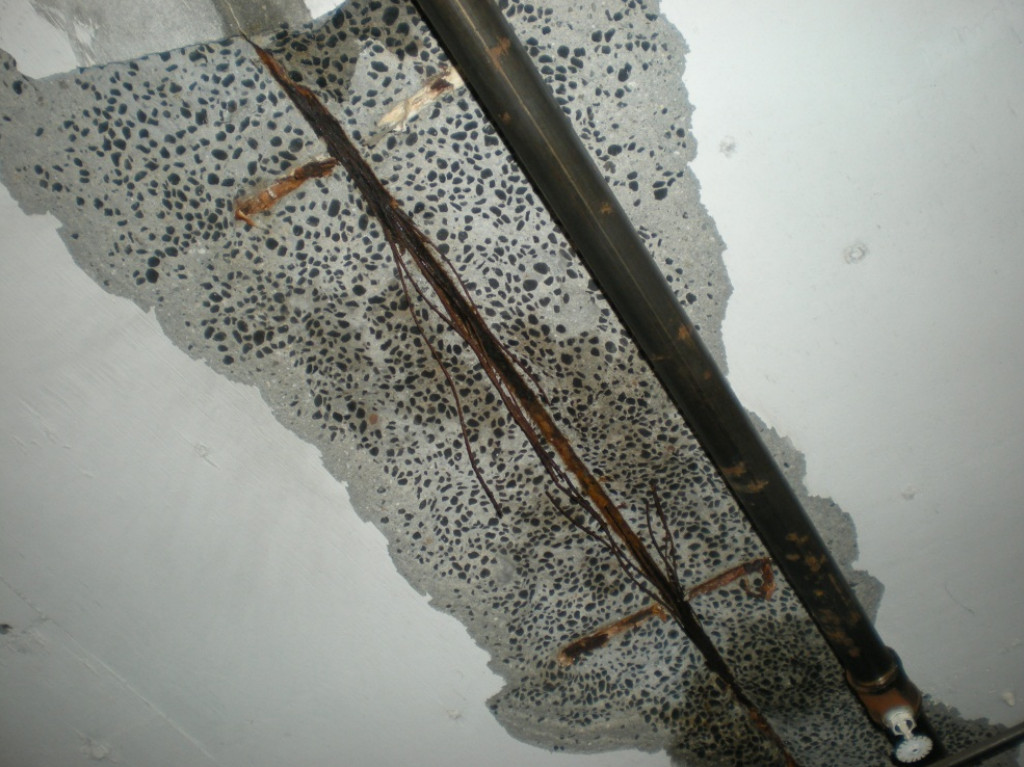
We evaluated this risk dynamic on a light commercial project where two anchor zones showed rust bleed through patching mortar. Rather than dismissing them as cosmetic, we opened the pockets and found wedge corrosion at Stage 2 out of 4 on the PTI corrosion classification scale. Early intervention cost the owner approximately $1,200. The structural engineer's assessment confirmed that left unaddressed, both tendons were likely to lose serviceability within 18 to 24 months under typical Texas thermal cycling conditions.
When a corroded strand does break, the work becomes a tendon repair: locate, detension, splice or replace, and restress. The sequence is described in our step-by-step guide to fixing a severed post-tension tendon. If a tendon was cut during work on the slab, start with the emergency protocol for a cut tendon. To put a repair quote in context, see the average cost per square foot for post-tension slab repair or run the post-tension slab repair cost calculator.
Get a Second Opinion on Your Inspection Report
An inspection report full of terms like "lift-off" and "edge lift" is hard to act on. Through our expert technical consulting, we walk through your report, photos and repair quotes with you in a virtual meeting. We explain what the findings mean and what to ask the contractor before you commit. This is independent technical support, not a sealed assessment. On-site evaluation and approval of any repair remain with a licensed engineer.
This article is educational. It is not a PE-stamped structural opinion, a design guarantee or a diagnosis of any specific slab. All project-specific structural decisions must be reviewed and sealed by a licensed professional engineer.
References: ACI 318-19, Building Code Requirements for Structural Concrete (current edition ACI CODE-318-25). ACI 224R-01, Control of Cracking in Concrete Structures. PTI DC80.3/ICRI 320.6 (2024), Guide for Evaluation and Repair of Unbonded Post-Tensioned Concrete Structures. PTI DC10.2-17, Construction and Maintenance Manual for Post-Tensioned Slab-on-Ground Foundations. PTI DC10.8-18, Guide for Performance Evaluation of Slab-on-Ground Foundations. ASTM A416, Standard Specification for Low-Relaxation, Seven-Wire Steel Strand for Prestressed Concrete. Florida Senate, CS/CS/SB 154 (2023) bill summary.