The short answer: on Texas projects we have reviewed, surface work on a post tension slab runs about $3 to $8 per sq ft. Patching around exposed tendon pockets runs $15 to $35 per sq ft, and full-depth section replacement $45 to $90 per sq ft. The tendon work itself is not priced by area at all. It is priced per anchor or per tendon, and that is where most budgets go wrong.
We have reviewed repair scopes across multiple Texas projects, from isolated tendon pocket corrosion to full stressing-end replacements and mid-span tendon fractures. In experience, most repair estimates presented to property owners either underestimate the concrete work involved or ignore the cost of engineering documentation entirely. That gap leads to change orders, project delays, and sometimes improper repairs that compromise the long-term performance of the slab.
This article breaks down the most common PT slab repair scenarios by cost, with a focus on conditions in the Dallas-Fort Worth market.
Why Post Tension Slab Repair Costs Do Not Follow a Single Rate
A square-foot rate works for surface work: concrete removal, patching and finishing. PT-specific work is priced differently. It is priced by the number of tendons affected, the length of the repair zone, or the complexity of the anchorage.
The spread is wide. Using the ranges in the table below, sealing cracks over 100 sq ft costs $300 to $800. Replacing a full-depth section of the same area costs $4,500 to $9,000. Identical square footage can differ by more than ten times depending on what lies below the surface.
The Three Cost Drivers We Evaluate on Every Scope
These factors consistently separate low-cost repairs from high-cost ones on the projects we have reviewed:
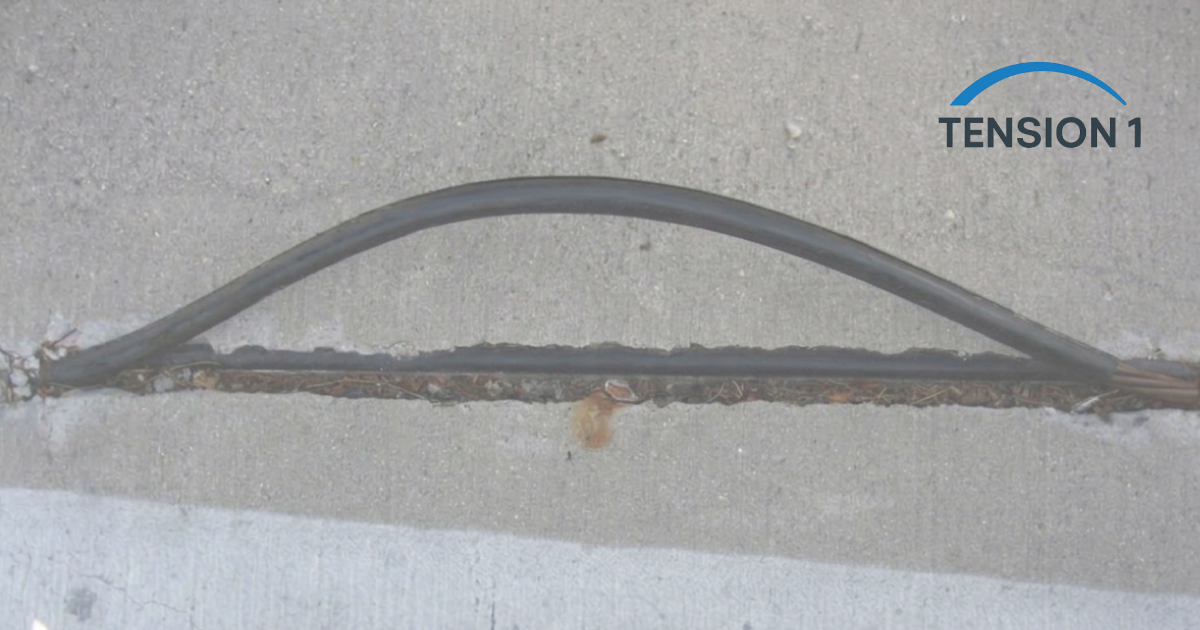
- Tendon condition: a corroded but intact anchor costs far less to treat than a fractured strand. A fracture usually means partial demolition, a splice or replacement, and restressing.
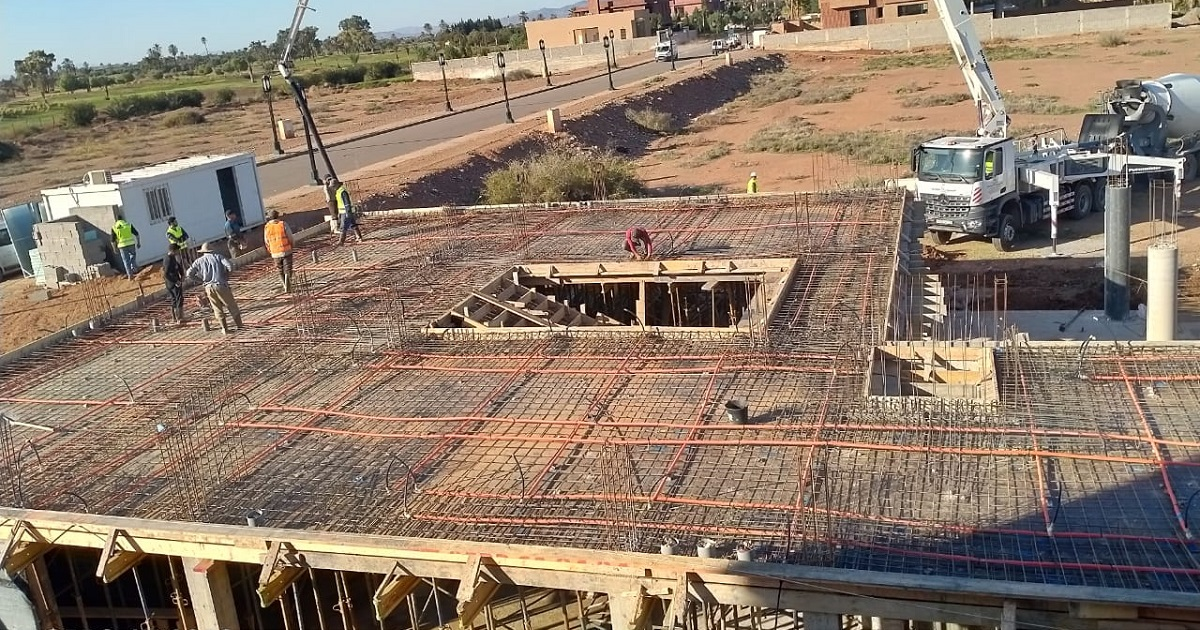
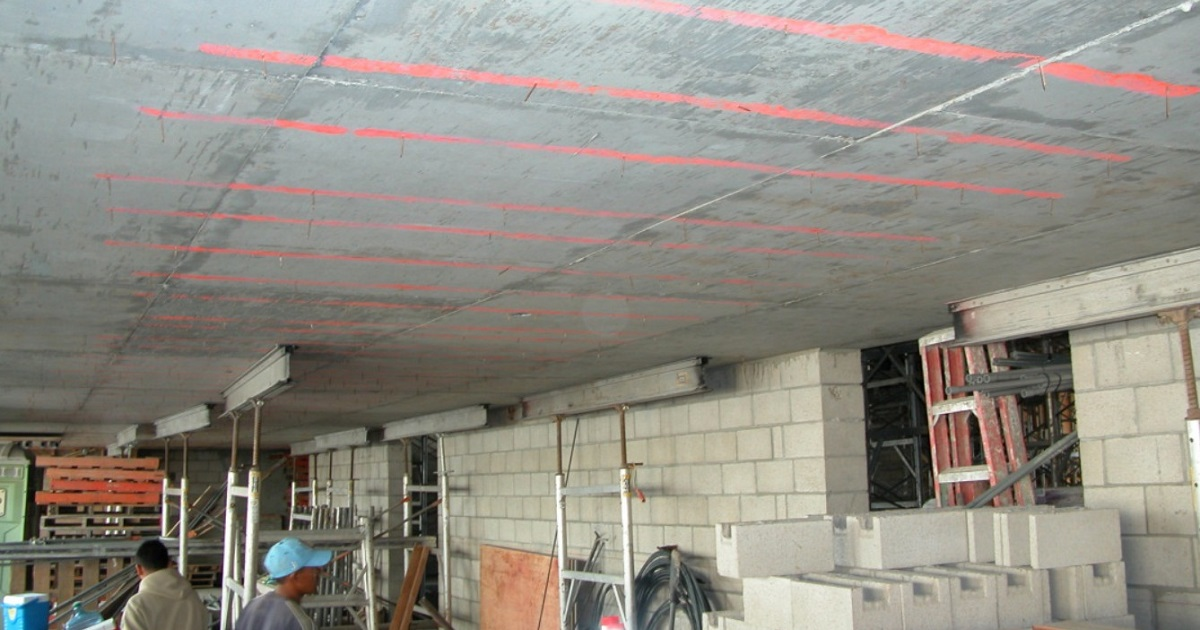
- Slab access: a slab-on-grade with open perimeter access costs less than an elevated PT slab over occupied space. There, shoring, protection of occupants below and restricted work hours drive labor up.
- Documentation: engineering review, repair drawings and permit submittals are real costs that many preliminary quotes leave out.
Labor is the line that moves most. According to the U.S. Bureau of Labor Statistics (May 2023), cement masons and concrete finishers in the Dallas-Fort Worth area earned a mean of $22.86 per hour. Specialty PT crews, equipment, insurance and overhead sit on top of that wage. A bid rate several times higher is normal, not a red flag.
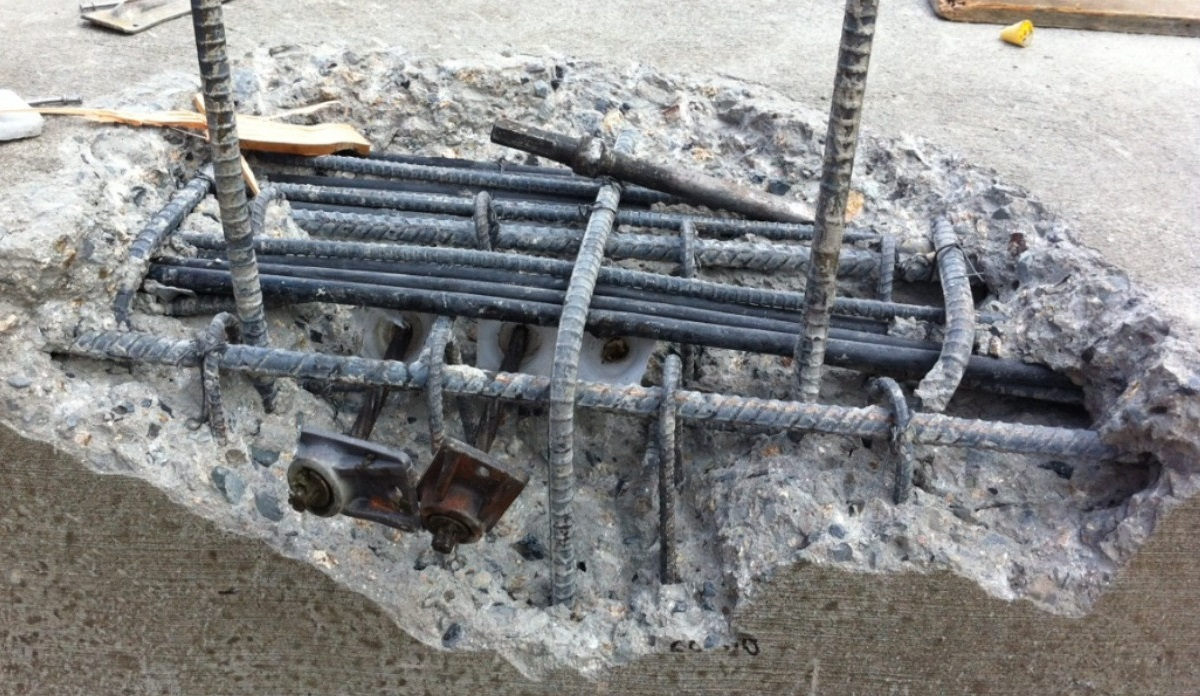
Average Post Tension Slab Repair Cost Per Square Foot in Texas
We built the following breakdown by reviewing repair scopes on residential and light commercial post-tension slab projects in Texas. We cross-referenced labor and material costs against regional subcontractor pricing in the Dallas-Fort Worth and Houston markets. The ranges represent observed project costs, not fixed pricing.
| Repair Type | Typical Scope | Est. Cost Range (Texas) |
|---|---|---|
| Surface crack routing & sealing | Hairline to 1/8 in. cracks, no tendon involvement | $3 to $8 per sq ft |
| Concrete patching (PT pocket area) | Tendon pocket exposure and patching only | $15 to $35 per sq ft |
| Stressing-end anchor replacement | Corroded or damaged single anchor, end cap repair | $400 to $900 per anchor |
| Fractured tendon mid-span repair | Demolition, tendon splice or bypass, re-patch | $1,200 to $3,500 per tendon |
| Full-depth section replacement | Section removal and replacement with PT continuity | $45 to $90 per sq ft |
Source: TensionOne review of Texas repair scopes, Dallas-Fort Worth and Houston markets. These figures exclude engineering fees, permit fees and mobilization, and they are not quotes. Always obtain project-specific quotes from specialty PT contractors.
Ranges vary between our articles because the scopes differ. A base pocket repair, a corroded pocket with surface preparation and inhibitor, and a full anchor replacement are three different line items. For a budget by damage type and region, use the post-tension slab repair cost calculator.
What Pushes the Final Repair Bill Higher
In experience, projects that exceed their initial repair budgets consistently share a few common traits. Identifying them before the scope is issued protects both the contractor and the owner from change orders.
Conditions Discovered During Demolition
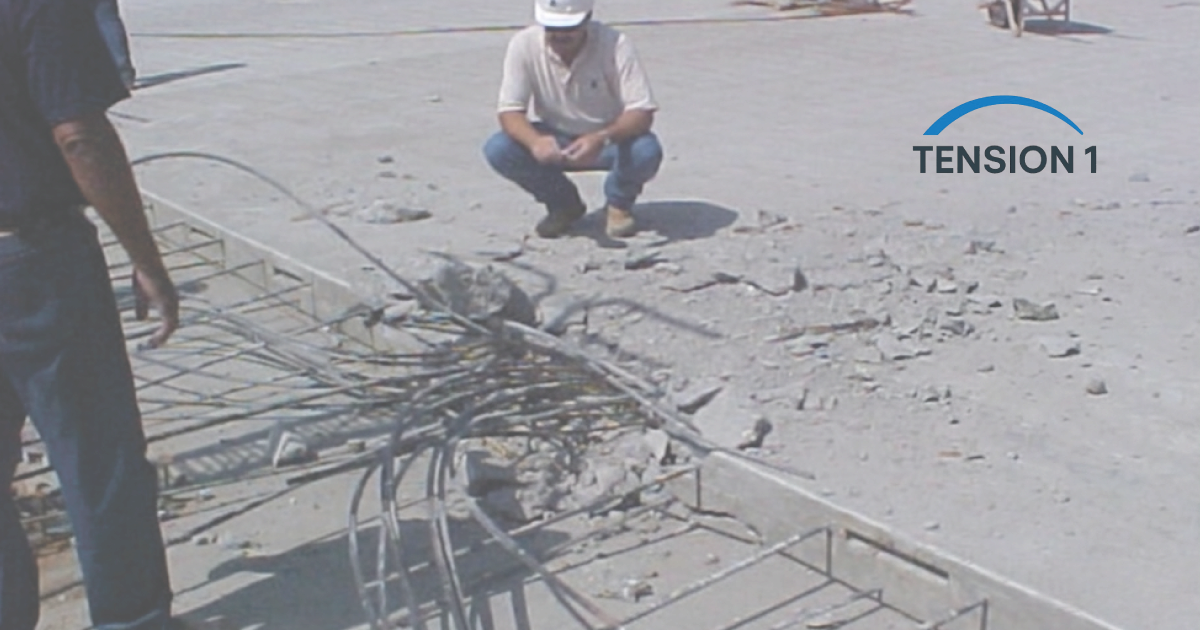
Once concrete comes off around a damaged tendon, adjacent deterioration is often exposed. Corrosion rarely affects a single anchor in isolation. On a residential slab in the DFW area, the initial scope called for two stressing-end replacements. Once the concrete was cut back, four additional anchors showed active corrosion. The scope expanded by roughly 60% before the first repair was complete.
Building a contingency allowance of 20 to 30% into the initial budget for PT repairs is a practice we strongly recommend, specifically because of this pattern.
No As-Built Tendon Layout
Sawing near a repair zone without as-built drawings or a ground-penetrating radar survey is a high-risk operation. One unplanned tendon cut turns a planned repair into an emergency, with added scope, material and engineering cost. If that happens, follow our emergency protocol for a cut post-tension tendon. This is one of the most preventable cost drivers we see. It is a core reason to schedule a professional PT slab inspection before any cutting.
Permits and Engineering in Texas
Many Texas cities treat foundation work as permitted work. In Denton, for example, the city building department requires a permit for all foundation repairs. That permit needs a repair letter and plan signed and sealed by a Texas registered engineer, and the city lists a $100 fee. Dallas requires a permit to repair or alter a structure, and its general repair exemption excludes strengthening of load-bearing elements. Check with your own building department before work starts.
Engineering fees for a typical PT repair submittal range from $800 to $2,500 depending on scope complexity. That is not a line to cut. It is the protection for both the contractor and the owner. The repair design itself falls under ACI CODE-562-21 where adopted, and under PTI DC80.3/ICRI 320.6 (2024) for unbonded PT.
Repair Scope vs. Section Replacement: When the Cost Math Shifts
At some point, repair cost has to be compared with replacement cost. We apply a working threshold. When the localized repair scope approaches 35 to 45% of the section's full replacement cost, complete section replacement often gives better structural performance and better long-term value. That is our engineering judgment, and the final call belongs to the engineer of record.
Before reaching that point, confirm what the slab is telling you with the 5 warning signs your post-tension slab needs immediate expert repair. For a severed tendon, the decision timeline is shorter and the sequence of work matters. Our step-by-step guide to fixing a severed post-tension tendon covers that repair from assessment to restressing.
Get a Second Opinion on Your Repair Quote
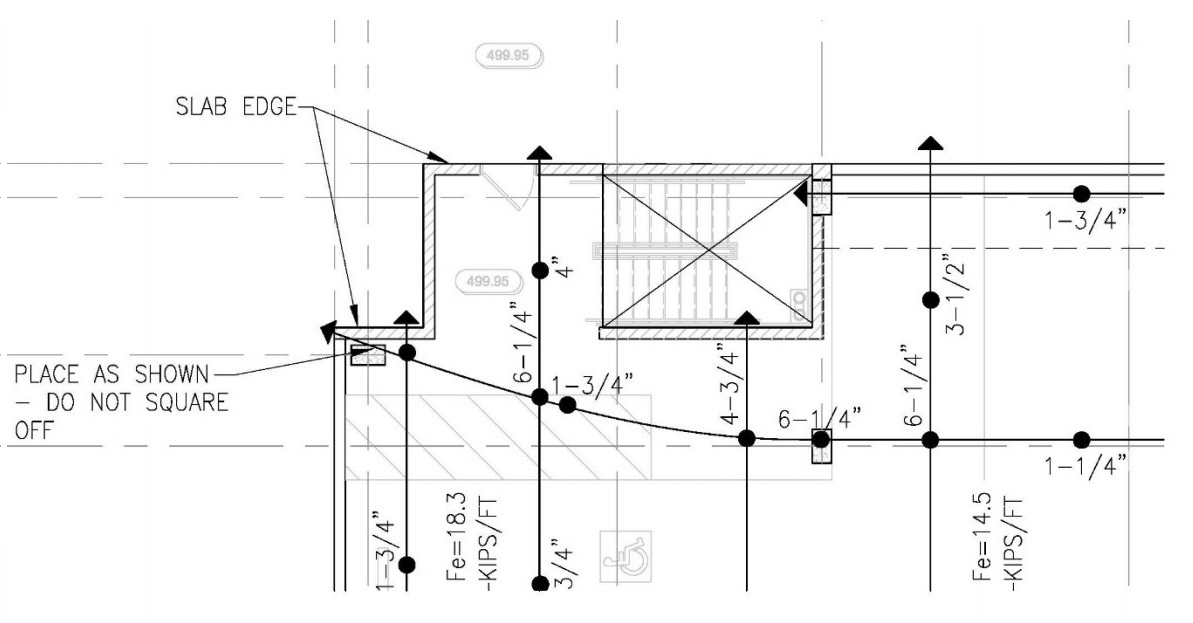
If you already have a repair proposal and the number does not make sense, our expert technical consulting reviews it with you in a virtual meeting. We go through the scope, the photos and the drawings. We point out what is missing, such as engineering, permits or contingency, and which questions to ask before you sign. This is independent technical support, not a sealed assessment or a quote.
This article is a technical reference. It does not constitute a PE-stamped engineering opinion or a project-specific structural recommendation. All design and repair decisions should be reviewed and approved by the licensed engineer of record for your project.
References: ACI CODE-562-21, Assessment, Repair, and Rehabilitation of Existing Concrete Structures, American Concrete Institute. PTI DC80.3/ICRI 320.6 (2024), Guide for Evaluation and Repair of Unbonded Post-Tensioned Concrete Structures. U.S. Bureau of Labor Statistics, Occupational Employment and Wages, May 2023, SOC 47-2051. City of Denton, Foundation Repair permit requirements.