Every post tension slab we design carries a hidden variable: we calculate the initial prestress force, verify it against ACI 318-19 and PTI DC80.3, and rely on stressing records to confirm it was applied correctly. But once the concrete is poured and the forms are stripped, the actual long-term behavior of the tendon system becomes largely invisible. That gap between design intent and in-service reality is where failures incubate.
The consequences of missing early warning signs in a PT slab are not minor. A tendon experiencing accelerated corrosion in an unbonded monostrand system loses cross-sectional area quietly. Creep and shrinkage redistribute prestress forces over months. An anchor pocket exposed to moisture in an aggressive environment does not announce its degradation. By the time cracking or deflection becomes visually apparent, the serviceability damage is often significant and the repair cost is substantial.
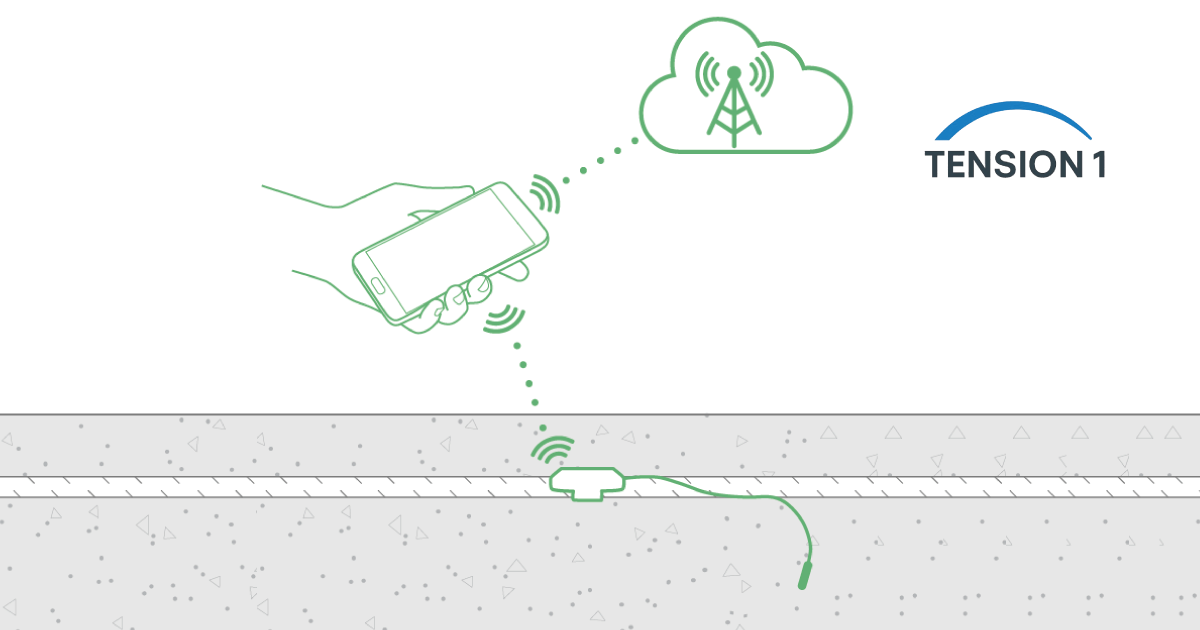
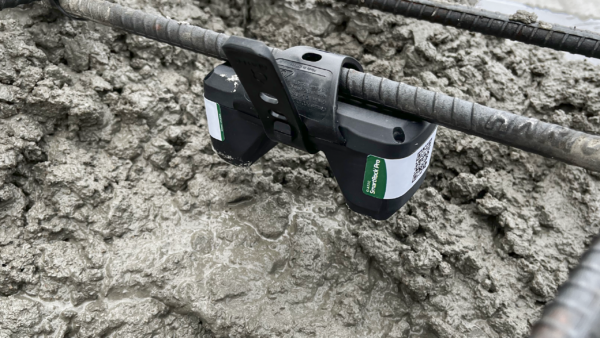
IoT-based embedded sensor technology is changing that equation. We are now able to instrument a post-tension slab with strain gauges, corrosion sensors, and wireless data nodes that transmit continuous structural health data from inside the concrete to a cloud dashboard. In this article, we break down how this technology works in the field, what it reliably detects, where its limitations lie, and how we integrate it into our PT slab monitoring workflow.
What Embedded Sensors Actually Measure in a Post-Tension Slab
The phrase 'smart concrete' gets used loosely. In the context of PT slab monitoring, what we are actually deploying is a network of purpose-built transducers that measure discrete physical parameters at the sensor location. Understanding exactly what each sensor type captures is essential before evaluating any monitoring scheme.
Strain and Stress Monitoring
Vibrating wire strain gauges (VWSGs) remain the workhorse of embedded structural monitoring. Installed in the concrete matrix adjacent to tendon anchorage zones or midspan sections, they measure micro-strain in the concrete, which we then convert to stress using the elastic modulus of the cured mix. A 28-day compressive strength of 4,000 psi produces a modulus of approximately 3,600 ksi per ACI 318-19 Table 19.2.2, giving us a reliable conversion baseline.
What VWSGs do not measure directly is tendon force. We infer changes in effective prestress from changes in the concrete strain field. This is a critical distinction: sensor data confirms relative behavior, not absolute tendon load without calibration against initial jack readings.
Corrosion Detection
Chloride ingress and carbonation-driven corrosion are the primary durability threats to PT systems in coastal environments and in slabs exposed to deicing chemicals. Embedded half-cell corrosion sensors (based on a silver/silver-chloride or manganese dioxide reference electrode) measure the electrochemical potential of the rebar or PT duct environment. A reading more negative than -350 mV (versus CSE reference) indicates a greater than 90% probability of active corrosion per ASTM C876, which remains the governing standard for this test method.
Temperature and Humidity
Thermocouples and relative humidity sensors track the moisture and thermal environment inside the slab. In Dallas, TX, where ambient temperatures routinely swing 40 to 50 degrees Fahrenheit between summer and winter, thermal gradients across a PT slab produce prestress variation that compounds long-term deflection. Monitoring this data allows us to separate thermally induced strain from load-induced strain in our analysis.
How We Deploy IoT Sensors in a PT Slab: Our Field Methodology
We evaluated this approach on a ground-level PT slab-on-grade project in the Dallas-Fort Worth area, where expansive clay subgrade conditions made long-term tendon performance monitoring particularly valuable. The deployment followed a systematic process we have since refined across multiple projects. For more on how PT slabs perform in expansive clay environments specifically, see our detailed field guide: Post-Tension Foundations 101: Preventing Slab Movement and Cracking in Expansive Clay Soils.
Stage 1: Pre-Pour Sensor Placement
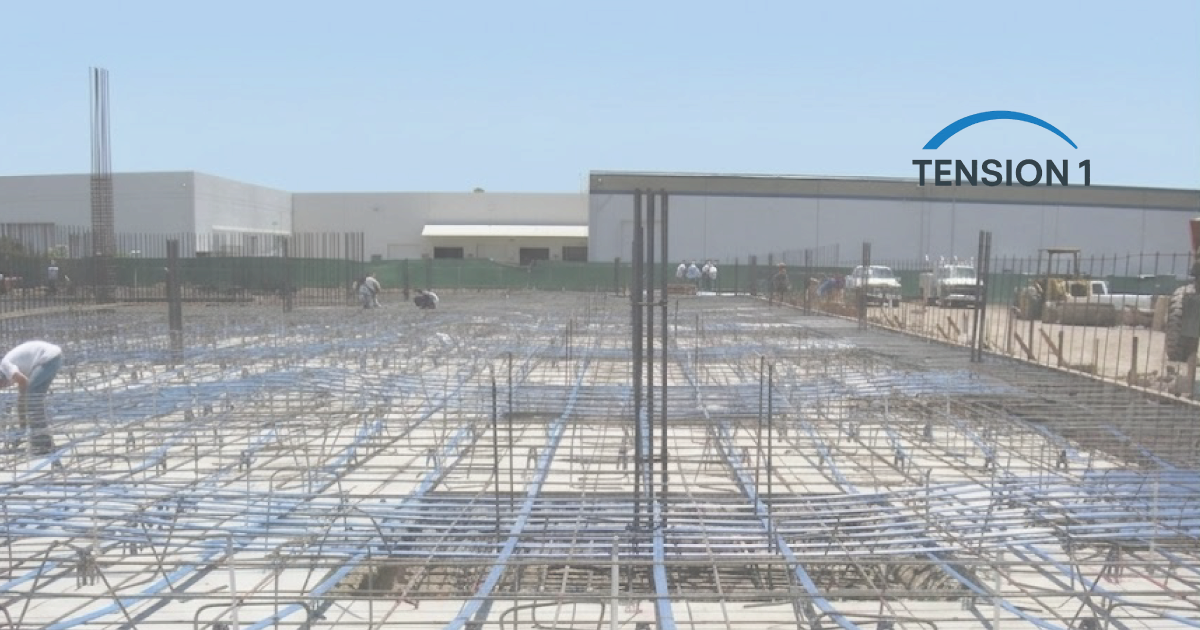
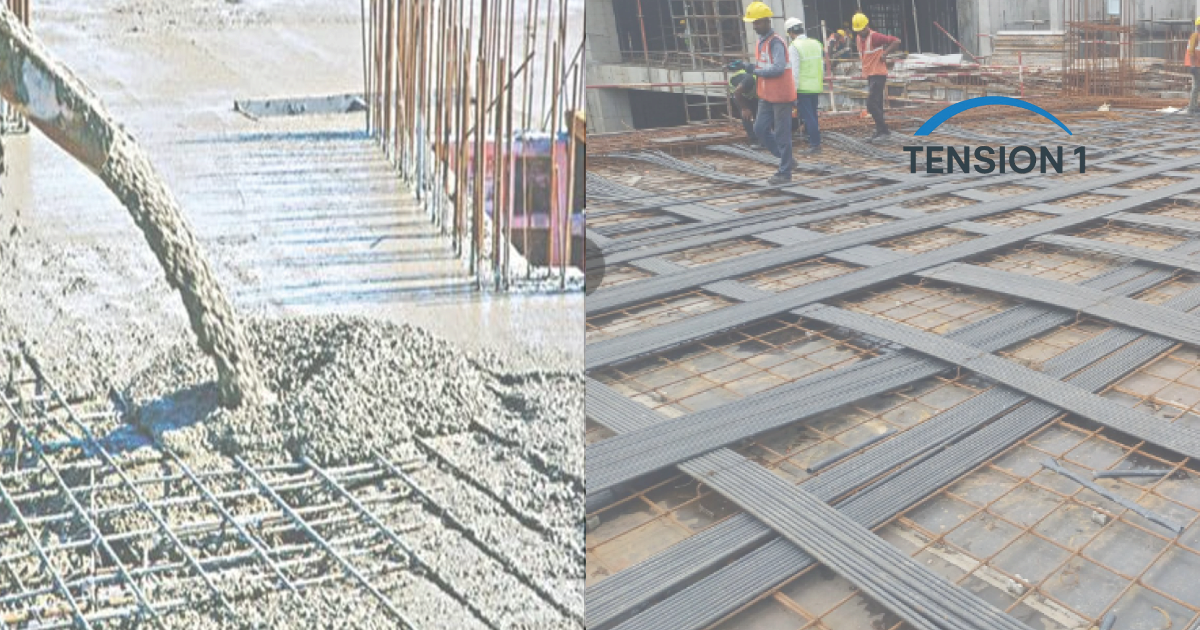
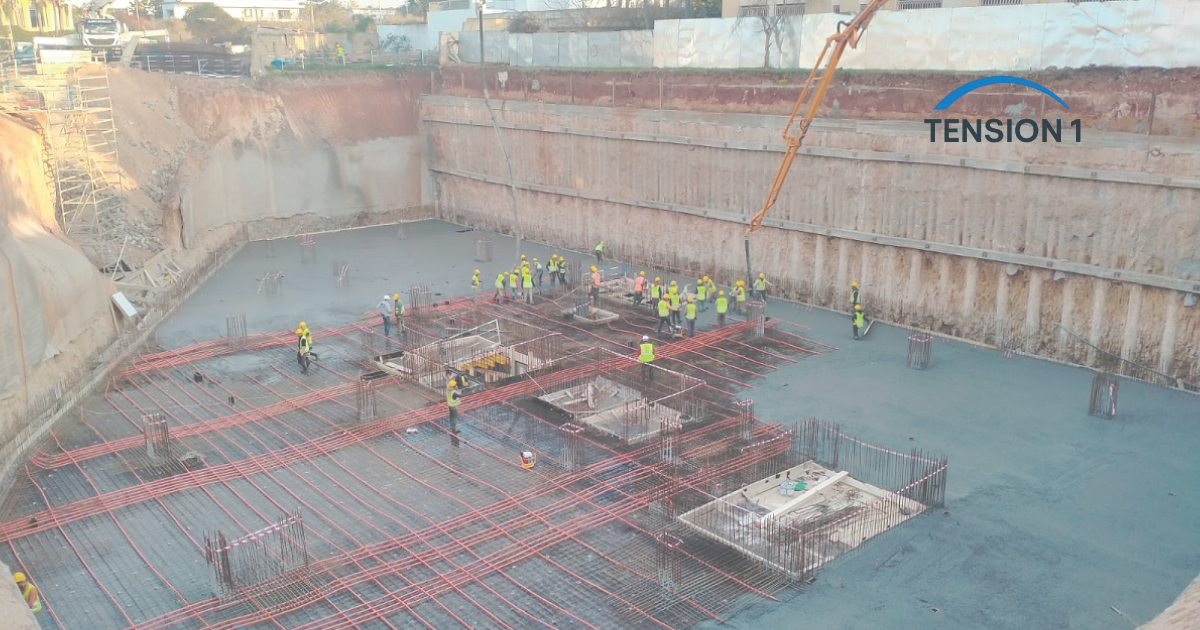
Sensors are tied to the PT tendon layout or fixed to rebar supports at design-specified depths before the pour. We coordinate sensor placement with the tendon profile drawing to avoid interfering with tendon draping points. Cables are routed to junction boxes cast into the slab edge or to wireless node housings set at the top of the slab. This stage requires close coordination with the PT contractor and the concrete placing crew.
Field Note
Sensor leads must be secured with sufficient slack to tolerate tendon movement during stressing. We lost two VWSG leads on an early project because the cable was routed too tightly across a tendon that displaced laterally during the pour. The fix is straightforward, but it requires pre-planning during the pre-pour walkthrough.
Stage 2: Baseline Establishment During Stressing
The stressing operation is the most informative event in the life of an instrumented PT slab. We record sensor readings immediately before and after each tendon is stressed, correlating the measured elongation from the jack with the VWSG response in the adjacent concrete. This gives us a calibrated baseline for every subsequent data point.
This is also where we cross-check our tendon elongation verification process calculations against real behavior. A 5% deviation between calculated and measured elongation triggers a detailed review per PTI DC80.3 tolerances.
Stage 3: Long-Term Data Acquisition
After project completion, wireless nodes transmit data via a cellular or Wi-Fi gateway to a cloud-based structural health monitoring (SHM) platform. Depending on the project, we configure sampling intervals between 15 minutes and 24 hours. Higher-frequency sampling is reserved for the first 90 days post-stressing, when creep and shrinkage effects are most active.
What Worked On-Site and What Did Not: An Engineering Assessment
For example, we present in this section an evaluation of a monitoring system by tracking strain evolution over an 18-month period on a 5,000 sq ft PT slab, correlating sensor data with periodic visual inspections and one round of flatness measurement at the 12-month mark.
What Worked On-Site
- Early detection of anomalous strain redistribution at one corner panel, which we traced to inadequate compaction during the pour. The VWSG readings diverged from the baseline within 30 days and prompted a targeted GPR scan that confirmed a localized low-density zone.
- Thermal cycle tracking confirmed that seasonal prestress variation in Dallas project reached approximately 4% of the initial effective prestress, which is consistent with published values for unbonded monostrand in hot climates.
- Corrosion sensor data provided documentation supporting a warranty claim on the PT material supplier after chloride readings exceeded threshold levels at 14 months, traceable to inadequate protection of the anchor pocket during curing.
- The wireless transmission worked without interruption for the full monitoring period. The cellular gateway required one firmware update at month 6, performed remotely.
What Did Not Work
- Three of 12 VWSGs failed within the first 90 days due to moisture ingress at the cable connector during the pour. We now use fully potted, sealed connectors rated for direct concrete embedment rather than general-purpose waterproof connectors.
- The corrosion sensors required manual calibration verification at 6-month intervals. The drift in reference electrode potential, while within the expected range for the sensor type, required an engineer familiar with electrochemistry to interpret correctly. Automated threshold alerts were not reliable without this calibration step.
- Cloud dashboard data volume was difficult to manage for non-specialist clients. Raw strain time-series data without pre-processed trend summaries created confusion. We now deliver a monthly one-page summary report rather than raw dashboard access for most clients.
PT Slab Monitoring Method Comparison
| Method | Detects | Limitation | Best Application |
|---|---|---|---|
| Embedded IoT Sensors | Real-time stress, corrosion, thermal data | Pre-pour placement required; sensor failure risk | New construction, long-term health monitoring |
| Visual Inspection | Surface cracking, spalling, anchor damage | Subsurface damage invisible | Periodic maintenance, post-storm checks |
| Ground Penetrating Radar (GPR) | Tendon location, voids, delamination | Snapshot only, no continuous monitoring | Condition assessment, repair planning |
| Acoustic Emission (AE) | Active crack propagation, tendon wire breaks | Noise-sensitive, requires signal interpretation specialist | Critical structures, suspected progressive failure |
Integrating Sensor Data with Your PT Slab Design: The Engineering Value
Raw sensor data only generates value when it is tied to the structural model. In practice, we maintain the original PT slab calculation notes alongside the monitoring dataset, which allows us to compare measured behavior against the serviceability predictions we made at design stage.
For a full walkthrough of how PT slab design controls cracking and deflection in long-span conditions, see: How Post-Tensioning Prevents Cracking and Deflection in Long-Span Concrete Structures. The principles discussed there (balanced load ratio, effective prestress, and camber control) are exactly the parameters that sensor data allows us to verify in service.
When sensor readings indicate that the effective prestress has dropped below 80% of the design value, we initiate a structural review. Depending on the slab geometry and loading history, this may involve deflection verification per ACI 318-19 Section 24.2, a punching shear recheck at column heads, or a recommendation for supplemental non-destructive testing.
The broader context of PT slab design, including the core advantages and long-term performance principles underlying this monitoring approach, is covered in depth in our pillar resource: The Ultimate Guide to Post-Tension Slabs: Advantages, Design, and Longevity.
TensionOne provides structural engineering support services. All deliverables are prepared for review and use by a licensed Professional Engineer. TensionOne does not provide PE-stamped documents directly.
References: ACI 318-19: Building Code Requirements for Structural Concrete, American Concrete Institute. PTI DC80.3: Specification for Unbonded Single Strand Tendons, Post-Tensioning Institute. ASTM C876: Standard Test Method for Corrosion Potentials of Uncoated Reinforcing Steel in Concrete, ASTM International.