One of the most consistent questions we receive from general contractors and drafters in the Dallas area sounds simple: how far can a residential post tension slab span? It is not a lookup. The answer sits between code limits, tendon geometry and the deflection the finishes can tolerate, and getting it wrong costs money.
An undersized post tension slab does not fail loudly. It deflects under sustained load, partitions crack, tile separates, and the owner calls the contractor, who calls the engineer. That chain is avoidable if the span and the thickness are checked together before formwork is ordered.
This article gives the preliminary span-to-depth ratios, the practical span ranges we apply on residential projects, and the variables that let you push a span or force you to pull back.
First, Which Residential Post Tension Slab?
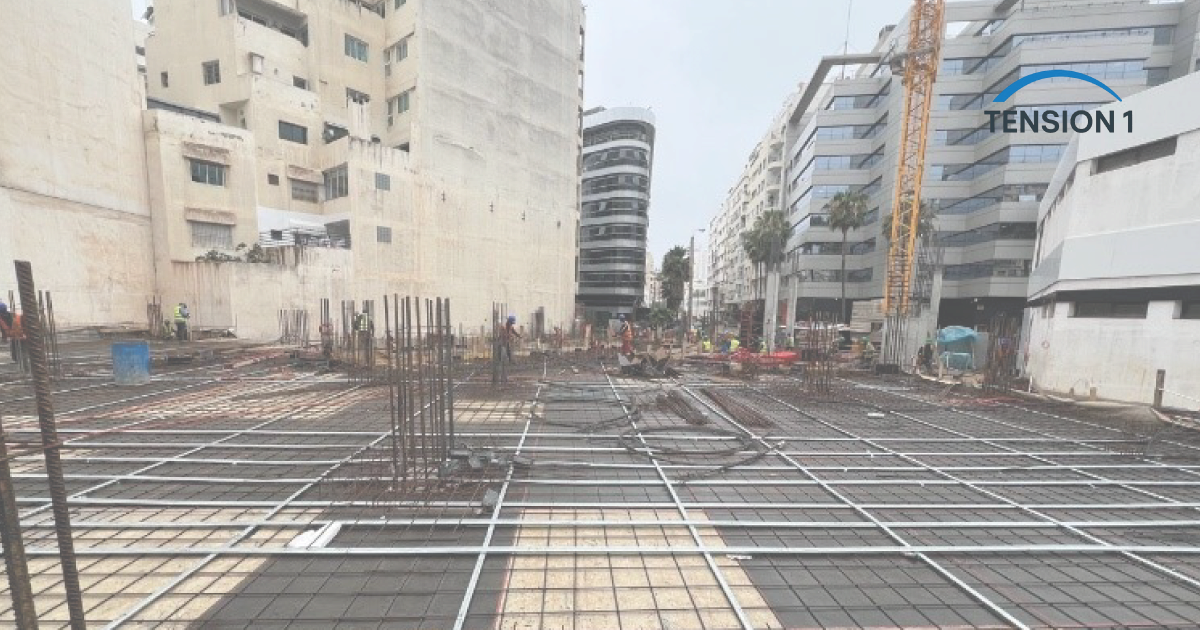
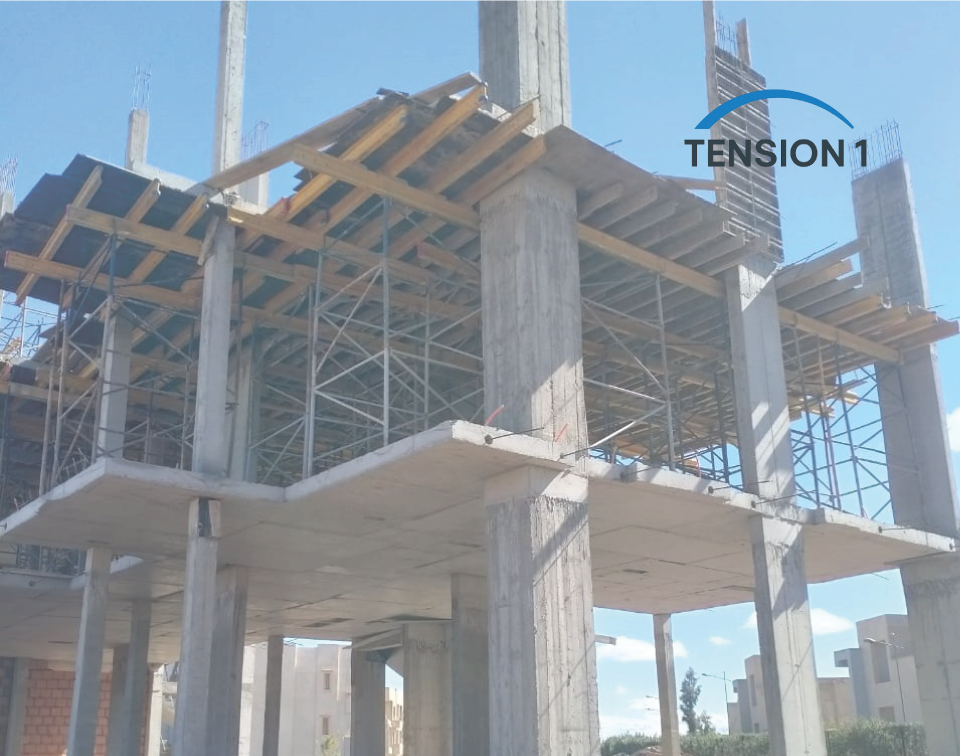
Most Texas houses sit on a post tension slab on ground. That slab does not span between columns; it rides on soil, and its design follows PTI DC10.5 rather than span-to-depth rules. This article covers the other residential case: elevated PT flat plates in condominiums, apartments and multi-family podiums, where the span between columns is the design question.
Post Tension Slab Span-to-Depth Ratios: The First-Pass Answer
For nonprestressed two-way slabs, ACI 318-19 Table 8.3.1.1 prescribes a minimum thickness. Post-tensioned slabs are treated differently: the designer shows compliance by calculating deflections against the limits of ACI 318-19 Table 24.2.2. That freedom is useful, but someone has to run the numbers.
For a first-pass post tension slab thickness, a Portland Cement Association design article (2005) gives a span-to-thickness ratio of 45 for floors and 48 for roofs, for typical occupancies where live load is less than dead load. At 45, a 25 ft bay gives about 6.7 in, which we round to 7 in. On residential projects we start from a slightly more conservative ratio of 42.
| Configuration | Typical span | First-pass thickness | Notes |
|---|---|---|---|
| Interior flat plate bay | 20 to 28 ft | 5.7 to 8.0 in (l/h = 42) | Most common in DFW residential |
| Edge bay, one free edge | 18 to 25 ft | 5.1 to 7.1 in (l/h = 42) | Check punching shear with unbalanced moment |
| One-way PT slab | 18 to 30 ft | 4.3 to 7.2 in (l/h = 50) | Spans between beams or walls |
| Long-span open plan | 28 to 35 ft | 8.0 to 10.0 in (l/h = 42) | Full deflection analysis required |
These ranges reflect where a residential post tension slab lands on Dallas-Fort Worth projects. They are starting points, not code limits. Beyond about 35 ft, a flat post tension slab usually gives way to drop panels or beams.
[tool:pt-slab-thickness-calculator]
What ACI 318-19 Actually Limits
ACI 318-19 sets no maximum span for a post tension slab. It limits stresses and deflections instead:
- Precompression: Section 8.6.2.1 requires an average effective precompression of at least 125 psi in two-way PT slabs.
- Service stresses: two-way prestressed slabs are designed as uncracked, Class U, under Table 24.5.2.1.
- Deflection: Table 24.2.2 limits deflection after attachment of nonstructural elements to L/480 where they are likely to be damaged, such as tile and masonry partitions, and L/240 where they are not.
Which deflection limit applies depends on the finishes, so ask the architect before you size the slab. Long-term deflection includes creep, calculated with the multipliers in Section 24.2.4.
Four Variables That Move the Maximum Post Tension Slab Span
1. Drape and load balancing
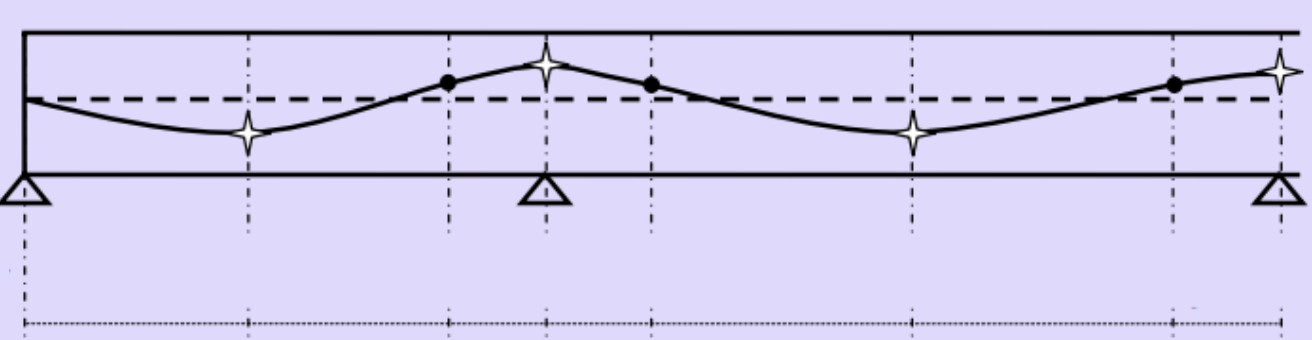
The drape, from the high point over the supports to the low point at midspan, creates the uplift that offsets self-weight. On residential flat plates we typically target 60 to 80 percent of the sustained load, consistent with the 65 to 80 percent of self-weight the PCA article reports as common. More depth means more drape, which is why thickness and span cannot be set separately.
2. Effective force per tendon
Residential work uses 0.5 in, 270 ksi monostrand, stressed to about 33 kip at the jack. After losses, the PCA article uses 26.6 kip as a common effective force. Count tendons from the effective force, not the jacking force, or the post tension slab will be short of precompression on paper and in service.
3. Concrete strength
Most residential post tension slab work in Texas uses 4,000 psi concrete. Moving to 5,000 psi on longer spans raises the allowable tension under Table 24.5.2.1, which lets the designer keep the section thinner while staying uncracked. It does little for stiffness, so deflection still has to be checked.
4. Loads and use
ASCE/SEI 7-22 sets 40 psf for residential floors, but a home gym, a library or a wine room changes the picture. We document the intended use early because it drives the unbalanced load, the midspan deflection and whether tendons should be banded or distributed.
What Worked on Site and What to Watch
We compared the preliminary l/h thickness with the thickness that came out of a full ACI 318-19 deflection analysis on four Dallas-area residential projects.
What worked
- Starting from l/h = 42 for interior bays of 22 to 26 ft produced a final thickness that matched the estimate in 3 of 4 cases. The sizing held because load balancing was calibrated to 70 percent of the sustained load, keeping long-term creep deflection within the limit.
- Banded tendons in one direction and distributed tendons in the other gave us room to optimize each direction independently, which mattered on irregular plans with bays from 20 to 28 ft. ACI 318 permits this banded arrangement, and the PCA article describes it as the industry's common practice.
What to watch
- On the project with the 26 ft bay, applying l/h = 45 without a deflection check gave an initial thickness of 6.5 in. Creep multipliers under ACI 318-19 Section 24.2.4 pushed the long-term deflection to 1.18 in against a limit of 1.08 in. We added 0.5 in to reach 7 in. Running the numbers first would have been faster.
- On one project, the contractor had already ordered forming hardware for a 6 in slab, and the revised 7 in thickness required a change order. The lesson was about process: issue a verified thickness before formwork procurement, not a preliminary one.
From Span to Site
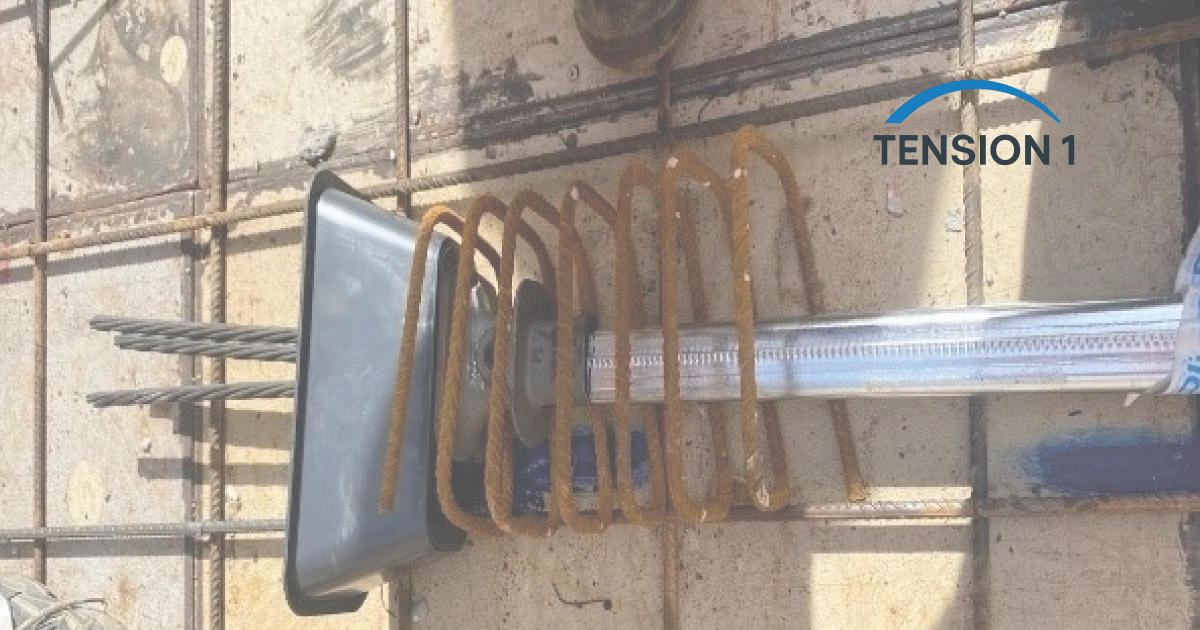
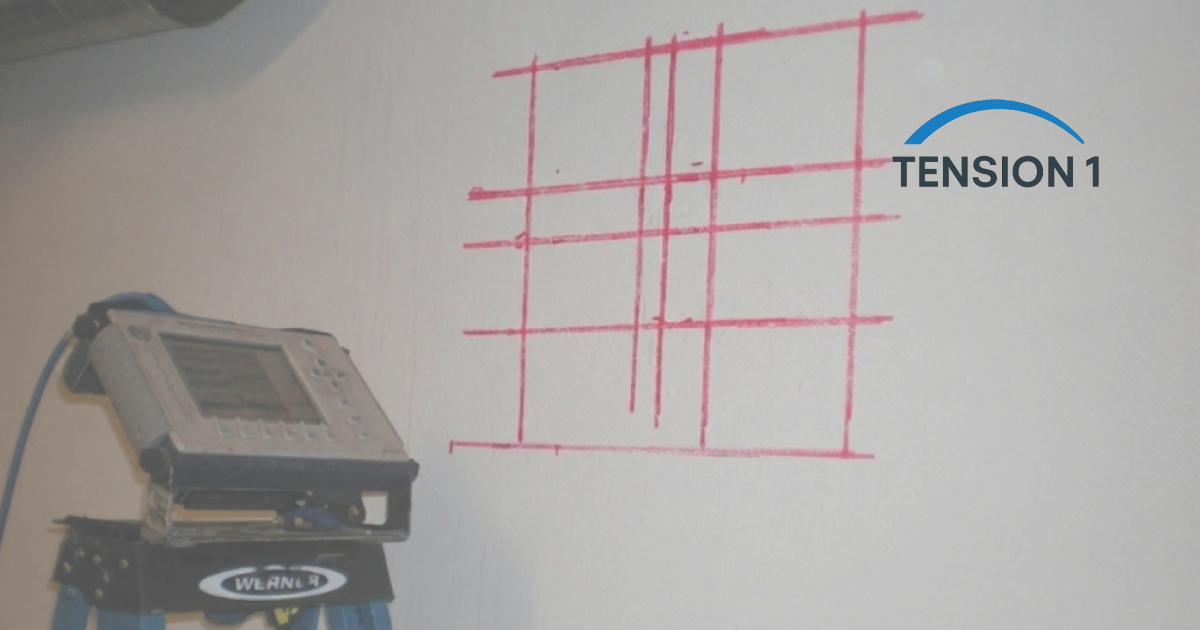
Once the post tension slab thickness and layout are fixed, execution decides whether the design performs. Our contractor's checklist for stressing and grouting procedures covers elongations, sequence and documentation, and crew safety is in post-tension slab stressing safety protocols. Where the anchors go matters as much as the span, see how anchorage placement affects load distribution. After construction, residents need to know the slab cannot be cut blind: our checklist to locate post-tension cables before drilling and 5 mistakes when cutting into a post-tension slab cover that.
The governing code edition and project documents take precedence over this article, and sealing and approval belong to the licensed engineer of record. Our sourcing rules are in our editorial policy. If you need a post tension slab span checked before formwork is ordered, we prepare preliminary sizing, tendon layouts and deflection calculations as independent technical support for your engineer of record. See our post-tension slab design, optimization and diagnostics services.