Estimated reading time: 8 minutes  |  Article type: Cluster Page  |  Author: Joseph, Civil Engineer & Founder, TensionOne LLC

Introduction

Every structural engineer on a Texas project eventually faces the same uncomfortable moment: the site conditions, the budget, or the project scope make a post tension slab the logical first choice, and then something rules it out. Maybe the slab depth is too shallow for proper tendon clearance. Maybe the owner's aggressive schedule leaves no room for a 28-day stressing cycle. Maybe a subgrade investigation flags expansive soils that need a different foundation strategy entirely.

The problem is not that post-tensioned concrete has limits. Every structural system does. The real problem is that the team on-site often defaults to conventional reinforced concrete without running the numbers on what that substitution actually costs, in slab thickness, in material tonnage, in long-term deflection performance, and in lifecycle maintenance.

We wrote this guide to give builders, contractors, and drafters a clear-eyed framework for evaluating PT alternatives when the system genuinely cannot be used. We cover conventional reinforced concrete, structural steel framing, and precast concrete systems, along with hybrid approaches used in the Dallas-Fort Worth area. For a direct head-to-head comparison of PT against rebar on commercial builds, see Post-Tension vs. Reinforced Concrete: When Does PT Win the Structural Battle?

Why Post-Tensioning Is Sometimes Off the Table

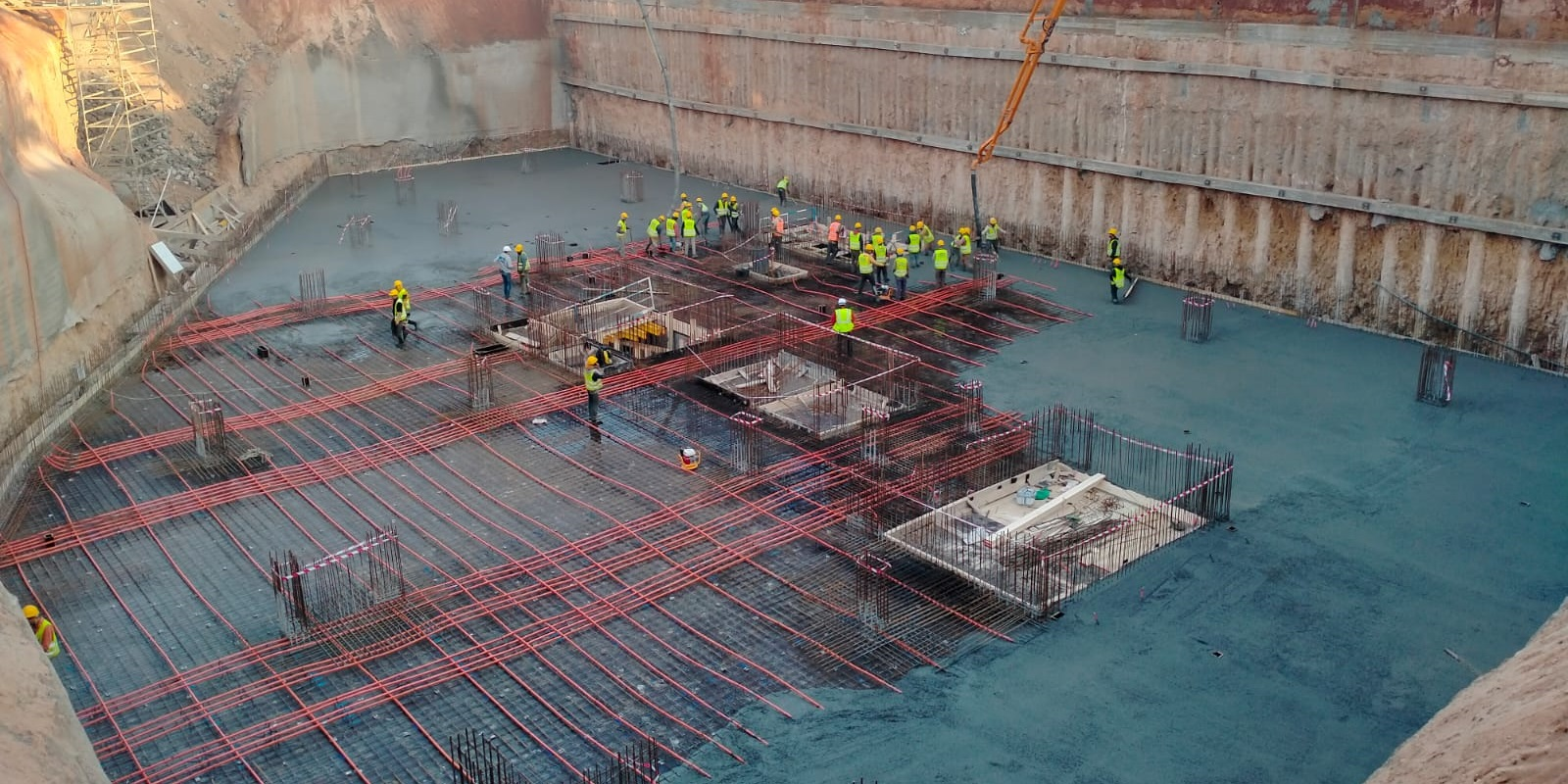
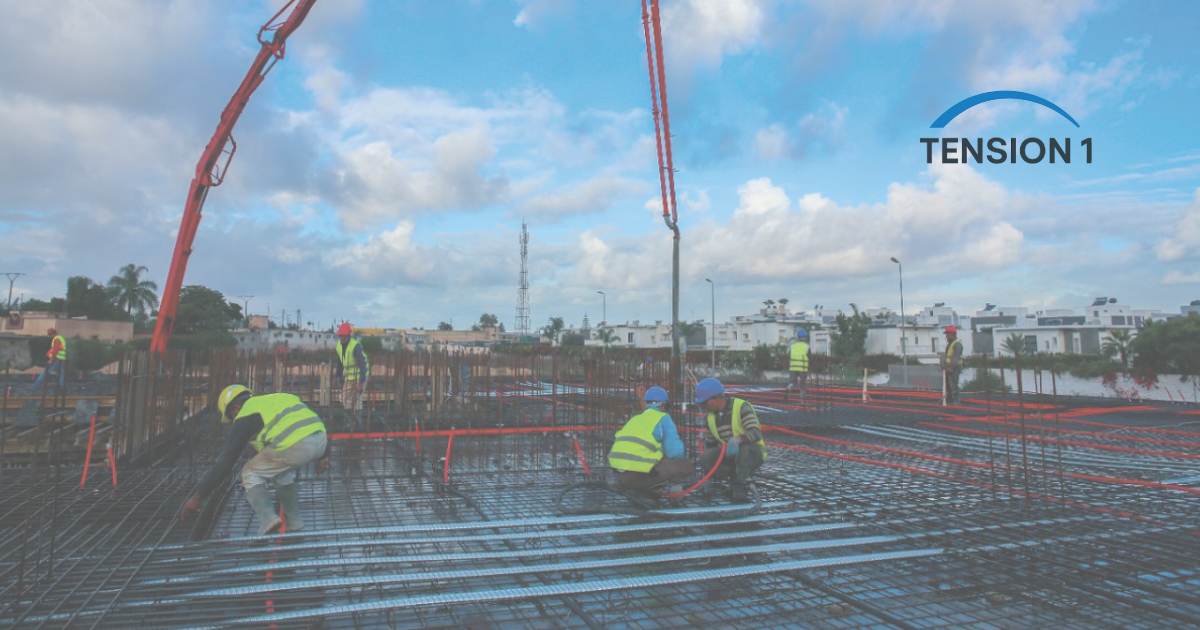
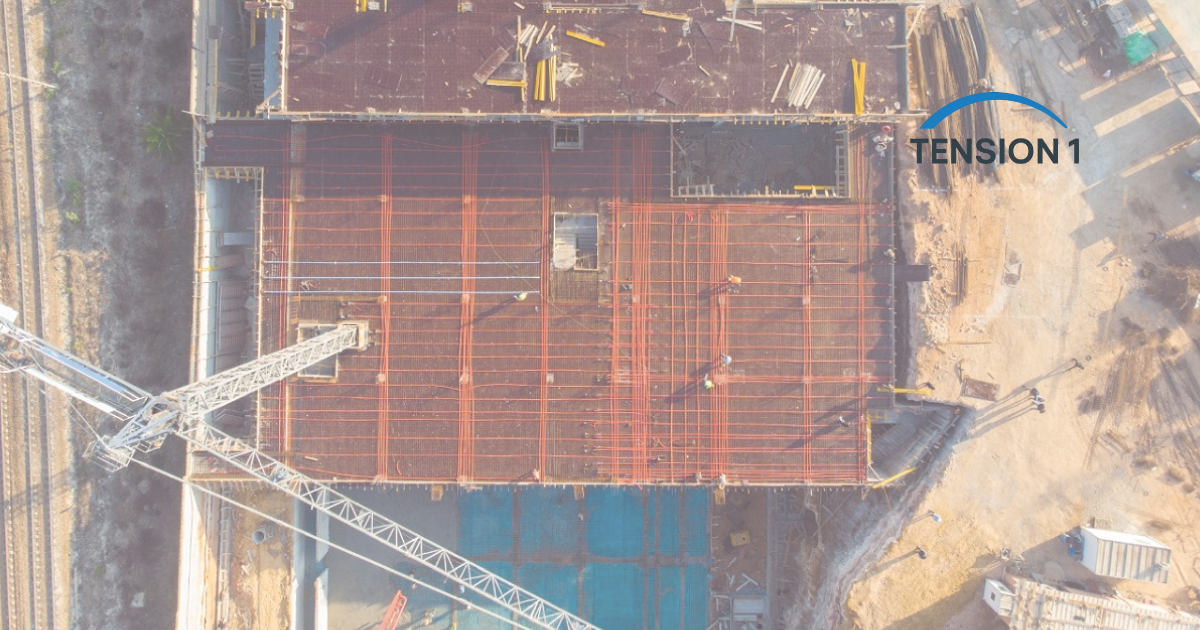
Large scale construction site showing workers pouring concrete over a post tension slab foundation grid with visible unbonded tendons.
Execution of a post tension slab foundation, utilizing a concrete pump to cover the tendon network and reinforcement steel.

Before evaluating alternatives, we need to be precise about why PT is being excluded. In experience, vague objections such as "too expensive" or "too complicated" rarely hold up under scrutiny. The constraints that legitimately remove PT from consideration fall into four categories.

Structural Geometry Constraints

Unbonded PT tendons require a minimum cover of 1 in. to a slab's top and bottom faces per ACI 318-19 Section 26.6.2. In very thin slabs (under 4.5 in. for residential, or shallow beams with tight stirrup configurations), there is simply no room to route tendons at the required drape without violating clearance requirements.

Corrosive or Aggressive Environments

In environments with sustained chloride exposure, such as coastal structures, parking garages with deicing salts, or industrial slabs with chemical spills, unbonded PT monostrand requires careful detailing and corrosion protection per PTI DC80.3. Where those detailing requirements cannot be met (limited access for inspection, inability to maintain sheathing integrity), a bonded PT system or a non-PT alternative may be more defensible.

Schedule and Stressing Window

Stressing PT tendons before the concrete achieves 75% of its specified compressive strength (f'c) is not permitted under ACI 318-19. On projects where the construction schedule demands a slab stripped and loaded in under 14 days, a high-early-strength conventional concrete mix may outperform PT in pure program terms, even if the slab uses more material.

Owner or Jurisdictional Restrictions

Some owners have institutional restrictions on PT systems in their facilities. This is more common in industrial owner-operators who have had prior maintenance challenges with anchor pockets or who lack in-house expertise to manage a PT inspection program. In those cases, the structural engineer must design with the constraint, not against it.

Conventional Reinforced Concrete (RC): The Default Fallback

When PT is ruled out, the first system most teams reach for is conventional RC, and with good reason. The contractor base is deep, the material supply chain is reliable in DFW, and the design methodology is deeply standardized under ACI 318.

How It Performs Against PT

An example of a mid-rise residential project in Plano, TX, where we have a side-by-side comparison of a PT flat plate versus a conventional RC flat slab over the same 26 ft by 28 ft bay. The RC alternative required a slab thickness of 9.5 in. to satisfy deflection limits under ACI 318 Table 8.3.1.1, compared to 7 in. for the PT design. That 2.5 in. difference across 18,000 sq ft added approximately 180 cubic yards of concrete and an estimated 27,000 lb of additional rebar. For a detailed cost breakdown of scenarios like this, see PT vs. Rebar: A Detailed Cost and Performance Analysis for Commercial Builders.

Parameter PT Flat Plate RC Flat Slab
Slab Thickness (26x28 ft bay) 7.0 in. 9.5 in.
Concrete Volume (18,000 sq ft) Baseline +180 cu yd approx.
Rebar Weight Baseline +27,000 lb approx.
Long-Term Deflection Control Superior (active camber) Passive (relies on depth)
Post-Crack Behavior Good (prestress limits cracking) Adequate (per ACI crack limits)
Stressing Window Required Yes (14 to 28 days) No
Contractor Specialization Required Standard

Note: Values shown are project-specific estimates from a Plano, TX residential project. Do not use as design values without independent verification.

What Worked On-Site

What Worked On-Site

On projects where the PT alternative was genuinely impractical (aggressive schedule, owner restriction), conventional RC consistently delivered predictable results. The local labor pool in Dallas is well-versed in RC flat slab construction, and the absence of a stressing crew simplifies the inspection and QA workflow significantly.

What Did Not Work

Long-span bays above 28 ft in conventional RC consistently produce deflection serviceability problems that are expensive to address after the fact. The depth needed to control deflection in long-span RC also reduces headroom, which matters in parking structures and mechanically intensive commercial buildings.

For residential applications specifically, the tradeoffs shift again. See Post Tension vs. Rebar: Which Is Better for Residential Construction? for a ground-up comparison in that context.

Structural Steel Framing: Speed vs. Long-Term Cost

Industrial steel frame structure with girders and beams under a clear blue sky, shown as an alternative to a post tension slab.
Structural steel framing offers a high-strength alternative when a post tension slab is not viable due to site constraints or design requirements.

Structural steel is a serious alternative for mid-rise commercial construction, particularly when long spans (32 ft and above), rapid erection schedules, or open floor plan flexibility are primary drivers. In our experience on mixed-use projects, steel framing can reduce the structural floor-to-floor height in ways that gain additional rentable stories within a fixed building envelope.

Where Steel Outperforms PT Concrete

Speed of erection is steel's clearest advantage. A steel frame with composite metal deck and concrete topping can be weather-tight significantly faster than a poured-in-place PT slab system.

Where Steel Loses Ground

The vulnerability of steel is twofold: cost volatility and long-term maintenance. Wide-flange steel pricing in the U.S. fluctuates with global market conditions in ways that PT concrete does not. Additionally, an exposed steel deck in a parking garage or industrial building requires regular inspection for corrosion, and fireproofing of the structure is a separate trade cost that PT concrete does not incur.

Precast Concrete: Factory Precision, Site Constraints

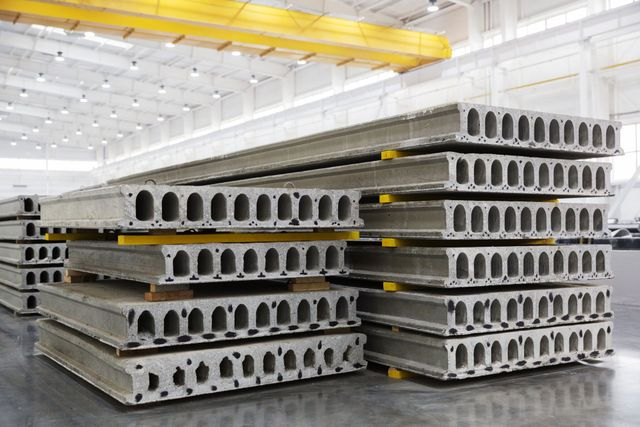
Stacked precast hollow-core concrete slabs in a factory, shown as a structural alternative to a post tension slab for large spans.
Hollow-core precast slabs provide an efficient alternative to an on-site post tension slab, offering reduced weight and accelerated construction timelines.

Precast and prestressed concrete elements, including hollow-core planks, double-tees, and inverted-tee beams, are themselves a form of factory-applied prestress. When we cannot execute a cast-in-place PT slab on-site, precast offers some of the same structural efficiency in a different delivery model.

Performance Characteristics

Hollow-core planks routinely achieve clear spans of 20 ft to 40 ft at depths of 6 in. to 12 in., making them competitive with PT flat plates for one-way spanning conditions. The factory production environment produces more consistent concrete quality than field-poured concrete, and the prestress is already applied before the element leaves the plant. For parking structures with repetitive bay geometries, double-tee construction remains one of the most cost-effective structural systems available.

Site and Project Constraints

The constraints are logistical. Precast requires crane access for erection, tolerance management at bearing conditions, and a site geometry that accommodates long element lengths (precast double-tees can be 60 ft or longer). On infill sites in Dallas's dense urban neighborhoods, crane radius and haul route limitations have made precast impractical even when it was the structurally superior choice. Precast also introduces a tolerance stack-up at joints that requires careful detailing to prevent water infiltration.

The sustainability implications of switching from PT to precast or conventional RC are also worth quantifying. A PT slab requires less concrete volume than a conventional RC slab of equivalent performance, which directly reduces the embodied carbon footprint of the structure. For a detailed analysis of that environmental dimension, see The Green Advantage: How Post-Tension Slabs Reduce Concrete Volume and Carbon Footprint.

Hybrid Systems: When No Single Solution Wins

In practice, the most defensible designs for complex Texas projects are rarely pure systems. We have designed and reviewed hybrid structural approaches that combine elements from multiple systems to extract the best performance within real-world constraints.

A concrete podium with a steel superstructure is a classic example: the podium handles heavy program loads and parking at grade, while the steel frame above minimizes weight on the structure below. PT slabs within the podium can span efficiently over parking bays, while the steel frame above uses metal deck with composite action.

For parking garage projects specifically, PT framing typically delivers the best ROI in terms of long-span efficiency and reduced structural depth. The financial case is detailed in Maximizing Spans, Minimizing Depth: The ROI of Post-Tensioning in Parking Garage Design. Understanding that baseline helps when evaluating whether a hybrid approach genuinely improves on a full PT solution or simply adds complexity without a corresponding benefit.

Decision Matrix: Matching the Alternative to Your Project

We use a simplified decision matrix in our pre-schematic reviews to screen structural systems against project-specific constraints. This is not a substitute for full structural analysis, but it eliminates non-starters before design hours are committed.

Constraint or Driver Conventional RC Structural Steel Precast Concrete Hybrid
Spans > 30 ft Marginal Good Good (1-way) Best
Schedule < 18 days to strip Good Best Best Varies
Corrosive environment (parking, coastal) Good (if detailed) Poor (needs protection) Good Varies
Owner restriction on PT Best Good Good Good
Dense urban site, limited crane access Best Good Poor Good
Long-term deflection control (spans > 26 ft) Poor to Marginal Good Good Best
Embodied carbon sensitivity Marginal Poor Good Varies
Initial cost (materials) Moderate High (volatile) Moderate High

This matrix reflects general field observations on Texas commercial and residential projects. Project-specific conditions always govern.

For a full financial model of what PT savings look like across material, formwork, and schedule variables, see ROI of Post Tension Slabs: Calculating Savings on Materials, Formwork, and Project Timeline. That article provides the cost baseline that makes the "PT is too expensive" objection easy to test with real numbers.

Frequently Asked Questions

Can you add post-tensioning to a slab that was originally designed as conventional reinforced concrete?

In principle, yes, but it is rarely straightforward in practice. Retrofitting PT into an existing RC slab design requires verifying that the existing slab thickness and reinforcement layout can accommodate tendon routing and stressing hardware. The anchor zones also need to be checked for local bearing stress. We have reviewed retrofit proposals where the existing rebar density made tendon routing geometrically impossible without redesigning the slab entirely. This is a case-by-case determination that requires a full review of the original design documents.

How does a post tension slab lifespan compare to a conventional RC slab?

A properly detailed unbonded PT system has a design service life comparable to conventional RC, typically 50 years or more under standard exposure conditions per ACI 318 and PTI DC80.3 guidelines. The critical maintenance item for PT is maintaining the integrity of the corrosion-inhibiting grease and HDPE sheathing on unbonded monostrand. Where that is compromised, tendon replacement is more involved than replacing a corroded rebar. Conventional RC slabs degrade more gradually but are easier to repair in kind. Neither system is maintenance-free.

Is post tension concrete the same as prestressed concrete?

Post-tensioning is a subcategory of prestressed concrete. Prestressed concrete includes both pre-tensioning (where tendons are stressed before the concrete is cast, typically in a precast plant) and post-tensioning (where tendons are stressed after the concrete achieves sufficient strength). The structural principle is the same, introducing a compressive preload to control cracking and deflection, but the execution and typical applications differ. Precast prestressed elements like hollow-core planks use pre-tensioning. Cast-in-place slabs use post-tensioning.

What is the minimum slab thickness for a post tension slab under ACI 318?

ACI 318-19 does not prescribe a minimum PT slab thickness directly, but Section 8.3.1.1 provides minimum thickness limits for non-prestressed two-way slabs. PT slabs can typically be thinner because the prestress actively controls deflection. In practice, we rarely design unbonded PT flat plates below 5 in. for residential or 6 in. for light commercial, governed more by cover requirements, punching shear demand, and the practical minimum for tendon clearance than by an ACI table. Always verify against your specific load conditions; do not treat these as design values without independent engineering review. [VERIFY]

When does it make sense to use structural steel instead of a post tension slab?

Steel framing typically makes more sense when the program demands very long spans (above 32 ft), when the project is on a tight erection schedule that cannot accommodate a concrete cure and stressing window, or when the owner requires significant future floor plan flexibility (large openings that would sever PT tendons are much less complicated in steel). The tradeoff is initial cost volatility and a more demanding long-term maintenance profile. On most mid-rise concrete building types in Texas, PT remains the more cost-competitive solution across the lifecycle.

Work With TensionOne on Your Next Slab Design

If you are navigating a project where a post tension slab is the preferred system but site conditions or constraints are complicating the structural approach, we can help you work through it. TensionOne provides freelance structural engineering services for PT slab design, including preparation of tendon layout drawings, calculation notes covering serviceability and strength limit states, punching shear verification, and elongation documentation packages.

We work directly with contractors, drafters, and small engineering firms across Texas who need PT-specific technical support without retaining a full structural engineer of record. Our deliverables are calculation-based, clearly documented, and ready for review by the engineer of record on your project.

Freelance PT Slab Design Services

We prepare complete tendon layout drawings and calculation notes for post-tensioned slabs, serviceable for submission to the engineer of record. Scope includes load analysis, tendon profile, deflection checks, punching shear, and stressing documentation. Inquiries welcome from contractors, drafters, and design-build teams across Texas.

Submit a project inquiry at TensionOne Freelance Services. Include your slab dimensions, loading requirements, and your timeline and we will provide a scope and fee within two business days.


Related Articles from TensionOne


TensionOne provides structural engineering support services. All deliverables are prepared for review and use by a licensed Professional Engineer. TensionOne does not provide PE-stamped documents directly.

References: ACI 318-19: Building Code Requirements for Structural Concrete, American Concrete Institute.  PTI DC80.3: Specification for Unbonded Single Strand Tendons, Post-Tensioning Institute.

About the Author: Joseph is a Civil Engineer and Founder of TensionOne LLC, specializing in post-tensioned slab design, structural calculations, and tendon layout for projects across Texas and internationally. All content is based on field experience and published engineering standards. No PE-stamped structural guarantees are expressed or implied by this article.