
Introduction
Post-tension slabs are engineered for performance, but a single corroded tendon can silently compromise the entire system. In U.S. residential and commercial construction, particularly across Texas, unbonded PT slabs are the foundation of choice because they reduce slab thickness, control cracking, and deliver long-term serviceability. But that efficiency comes with a condition: the steel strand must remain protected throughout the slab's service life.
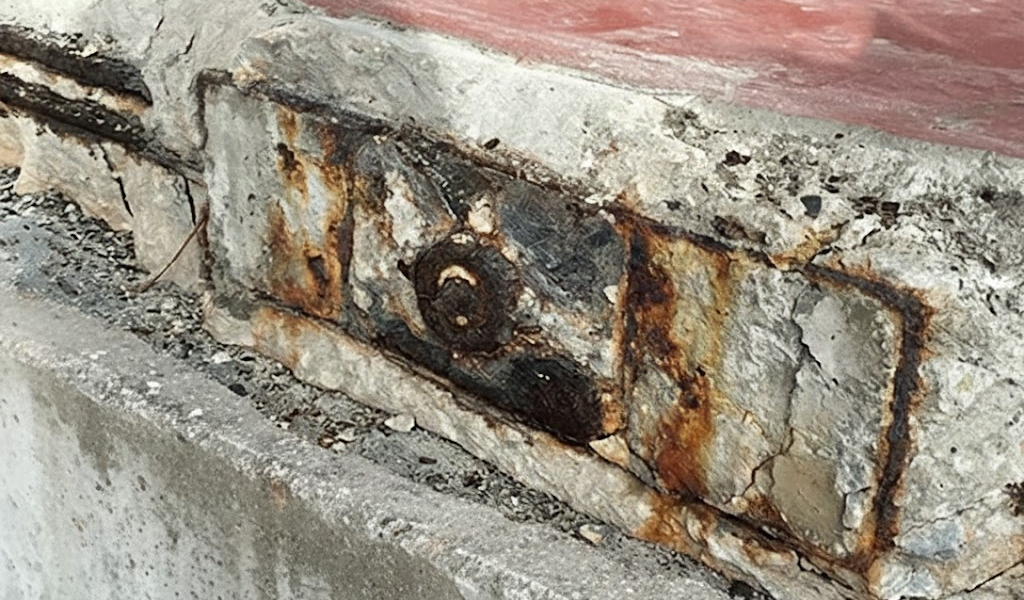
The problem is corrosion. When the HDPE sheathing or end anchorage protection is breached, moisture and chlorides attack the 270 ksi strand. And in a post tension slab, a fractured tendon does not just lose section — it loses prestress. The consequences range from post-tension slab cracking and differential settlement to sudden tendon pop-out. Left unaddressed, a corroded tendon system drives costly repair programs, structural assessments, and in the worst cases, complete slab replacement.
This guide addresses the full cycle: understanding how tendon corrosion develops, performing a systematic post-tension slab inspection, evaluating post tension slab repair options and their associated costs, and implementing a preservation strategy that extends service life.
Why Tendon Corrosion Is a Structural Threat You Cannot Ignore
Most structural engineers understand the theory of corrosion. Far fewer have stood over a stressing pocket during demolition and seen a 0.5-in diameter strand corroded down to a fraction of its original cross-section. That visual alone is a reliable motivator for taking corrosion seriously, well before a tendon reaches failure.
In unbonded post-tensioned systems, each tendon consists of a 270 ksi low-relaxation strand coated in corrosion-inhibiting grease and enclosed in a high-density polyethylene (HDPE) duct. According to PTI DC80.3-17, the grease coating must provide a minimum 0.030-in coverage around the strand and the duct must maintain continuity from anchor to anchor. When either condition is compromised, the tendon is exposed to its service environment.
How Corrosion Develops in PT Systems
- Anchor pocket exposure: End caps left ungrouted or grouted with inadequate cover allow moisture ingress at the stressing end. This is the most frequent initiation site we observe across the Dallas metro area.
- Duct punctures during construction: Reinforcement chairs, vibration probes, and foot traffic can breach the HDPE sheathing. A 1/4-in puncture is sufficient to displace grease and allow direct moisture contact with the strand.
- Slab edge conditions in high-chloride environments: In areas near the Gulf Coast or where deicing compounds are applied, chloride-induced corrosion accelerates significantly. Northern Texas projects should also evaluate this risk.
- Strand fretting at anchorage: High stress concentrations at the anchor bearing plate cause fretting wear that removes the protective grease layer, leaving bare high-strength steel in direct contact with the concrete environment.
Once the strand loses cross-sectional area, its tensile capacity drops in direct proportion. At a loss of approximately 5% of cross-sectional area [VERIFY per PTI and ASTM thresholds], the tendon should be treated as structurally compromised. At 10% or more, it is a replacement candidate.
What Happens When a Tendon Fractures
When a corroded tendon fractures under prestress, the stored elastic energy releases instantaneously. In residential slabs, this produces a loud, sharp report and a blowout through the slab edge, sometimes ejecting the anchor assembly entirely.
Beyond the immediate safety hazard, each fractured tendon redistributes its tributary prestress load to adjacent tendons and passive reinforcement. Over time, this redistribution accelerates slab deflection, widens existing cracks, and initiates new ones. A single neglected tendon can set off a cascading deterioration sequence across the slab panel.
How to Inspect a Post-Tension Slab for Tendon Damage
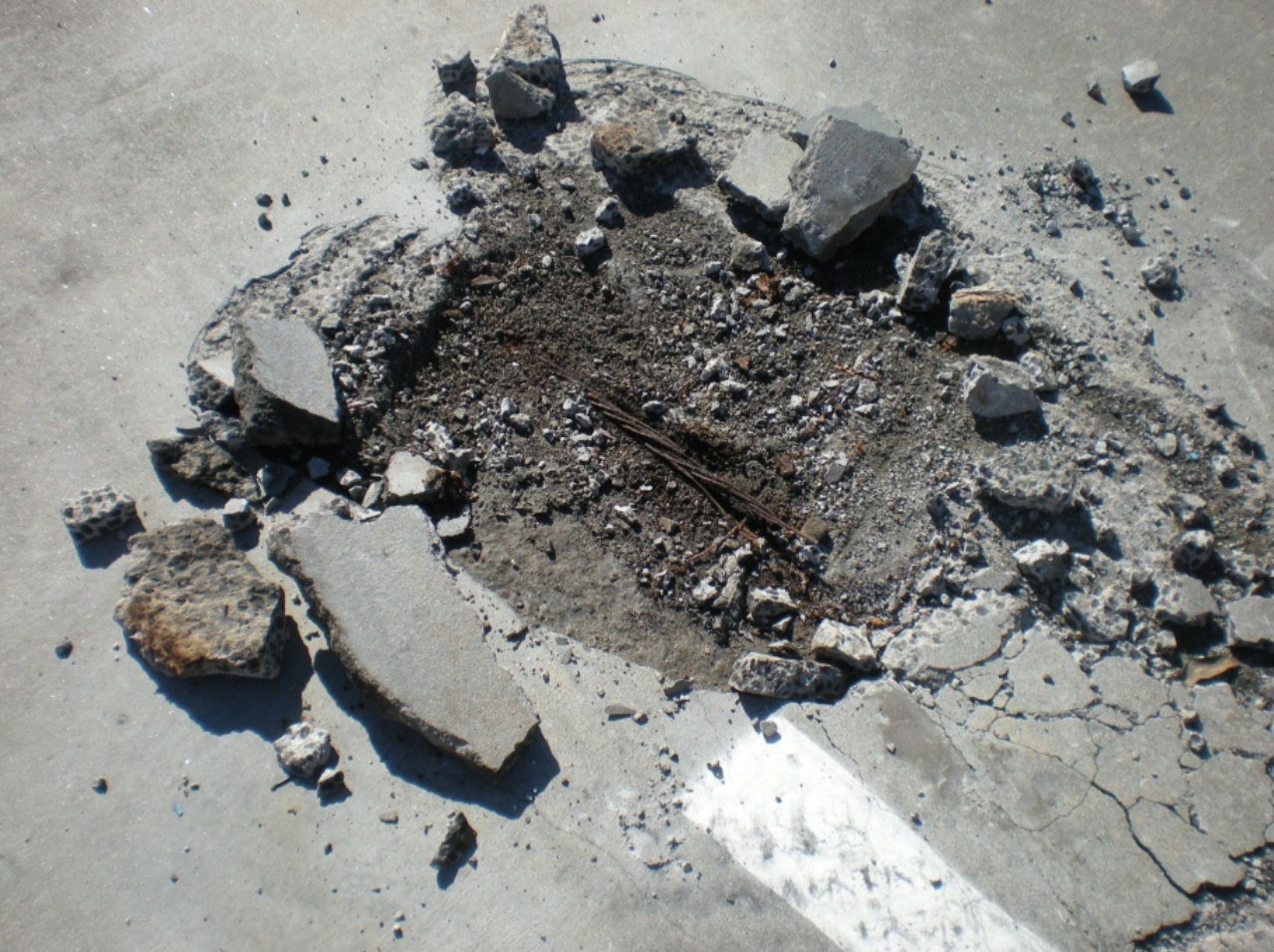
A thorough inspection does not begin at the slab surface. It starts with documentation review. Before we set foot on a project, we request the original PT design drawings, the stressing records, and any previous repair logs. These documents define tendon spacing, profile, elongation targets, and design parameters under ACI 318-19 and PTI DC80.3-17. Without them, field observations are substantially harder to interpret and act on.
Step 1: Visual Survey and Crack Mapping
Walk the slab systematically and map all cracks using a 1/16-in crack comparator gauge. In a properly designed PT slab, crack widths should remain below 0.013 in under service loads, consistent with ACI 318-19 serviceability provisions [VERIFY applicable table reference per ACI 318-19 Chapter 24]. Cracks wider than this threshold, particularly those oriented parallel to the tendon direction, suggest tendon stress loss or strand fracture.
Document crack length, width, and pattern for every defect. Photograph each crack with a reference scale. This baseline record becomes the comparative reference for all future inspection cycles.
Step 2: Anchor Pocket and End Cap Inspection
Every accessible anchor pocket must be physically examined. Remove formers or grout plugs and inspect:
- Presence and condition of the end cap (the plastic cover protecting the strand tail)
- Completeness and quality of the grout fill: verify no voids, carbonation, or cracking
- Rust staining, orange or brown seepage around the anchor plate face
- Strand tail condition: visible pitting or section loss at the tail is a reliable proxy for strand condition inside the slab
We use a 10x hand magnifier at every anchor tail inspection. Confirmed pitting corrosion or measurable section loss at the tail is sufficient to escalate the investigation to non-destructive and invasive testing without further delay.
Step 3: Chain Drag and Sounding
Chain drag identifies delaminated concrete at shallow depths, typically the concrete cover zone directly above the PT tendons and passive reinforcement. A hollow acoustic response indicates debonding between the concrete matrix and the reinforcement layer, often corresponding to corrosion-induced expansive pressure fracturing the cover.
This is a fast and low-cost method that we run across all slab panels before committing to more expensive testing. It provides an effective initial triage.
Step 4: Ground-Penetrating Radar (GPR)
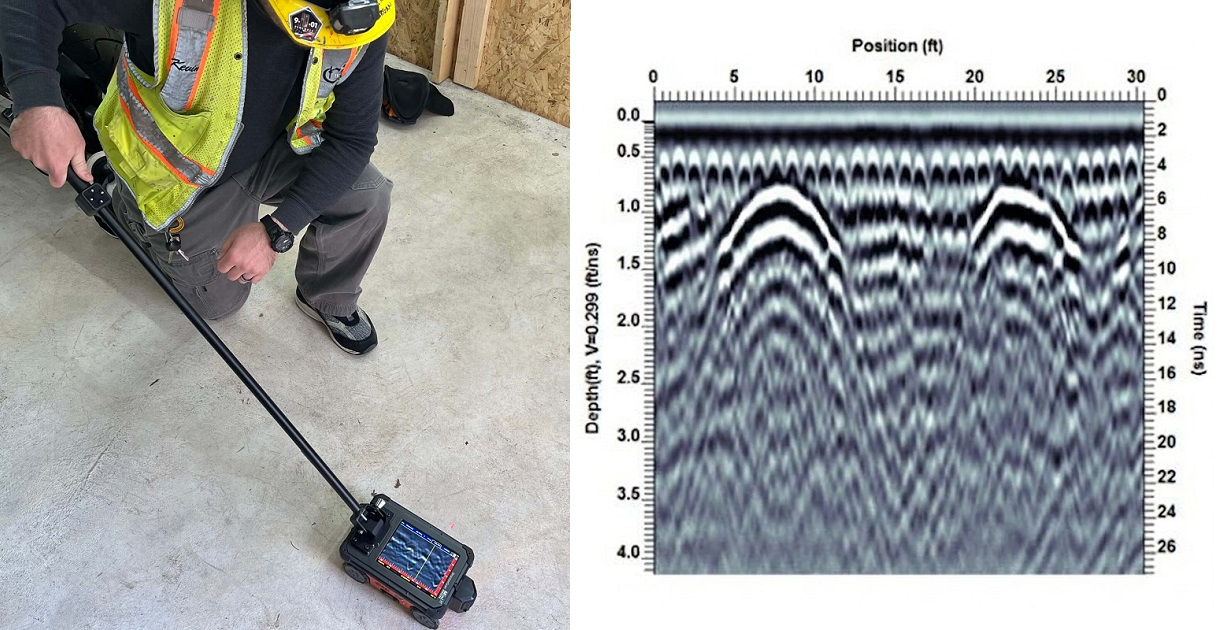
For larger projects, or where anchor pocket inspection raises corrosion concerns, we specify a GPR scan. A 1.5 GHz or 2.0 GHz antenna provides adequate resolution for tendon mapping at typical PT slab cover depths of 3 in to 5 in [VERIFY]. GPR identifies tendon discontinuities, duct voids, and anomalies in the anchor zone. GPR does not directly image corrosion state, but it accurately flags suspect zones for targeted core sampling.
Step 5: Selective Coring and Visual Strand Assessment
Where GPR flags an anomaly, we core through the slab to the tendon level, extract the core with HDPE duct segment intact, and inspect the strand and duct directly. We record grease condition, duct integrity, wire surface condition, and any visible fractures within the 7-wire strand assembly.
A single broken wire within the strand triggers immediate escalation. While ACI 318-19 does not define a specific in-service wire fracture threshold for existing slabs [VERIFY], PTI guidance and conservative engineering practice treat any single-wire fracture as warranting full tendon assessment and likely replacement. For a concise field reference on the most critical failure signals, see our guide to the 5 warning signs your post-tension slab needs immediate expert repair.
Interactive: PT Slab Inspection Severity Checker
Once you have reviewed the inspection steps above, use this tool to triage your situation based on field-observable conditions. Answer six questions to receive one of three actionable outcomes.
PT Slab Inspection Severity Checker
This tool is a field triage aid — not a substitute for a licensed structural engineer’s evaluation.
No immediate action required. Continue scheduled monitoring.
The observable indicators do not suggest active tendon distress at this time. The slab falls within a low-risk profile for the conditions described.
Recommended action: Maintain your scheduled inspection program. Enclosed residential slabs every five years; commercial or exposed slabs every three years. Document this assessment as your baseline.
If conditions change — new cracking appears, staining develops, or audible events are reported — reassess immediately.
A professional PT inspection is recommended within 90 days.
One or more risk factors warrant a formal engineering inspection before the next scheduled maintenance cycle. Deferring increases the likelihood of costlier repair scope.
Recommended action: Engage a structural engineer with PT-specific experience to perform anchor pocket inspection and, if indicated, chain drag sounding. Review original stressing records to establish the design baseline.
Contact a PT structural engineer now. Do not defer.
High-risk condition consistent with active tendon distress or failure. Audible events, visible spalling, exposed or stained anchorages, or major cracking require immediate engineering evaluation before the condition progresses further.
Recommended action: Do not wait. If a loud tendon fracture event has occurred, restrict access to the affected area until a structural assessment confirms it is safe.
The Real Cost of Post-Tension Slab Repair (And What Drives It Up)
Post tension slab repair is not a single cost item. It is a sequence of activities that each carry their own labor, material, and engineering overhead. A mid-size commercial slab repair in the Dallas-Fort Worth area in 2024 — involving five corroded tendons, associated crack remediation, and anchor pocket reconstruction — illustrates how the scope breaks down:
| Repair Activity | Estimated Unit Cost |
|---|---|
| GPR scan (2,000 SF slab area) | $1,800 – $3,500 [VERIFY] |
| Selective core extraction (per location) | $250 – $400 [VERIFY] |
| Tendon replacement, unbonded (per tendon) | $800 – $2,200 [VERIFY] |
| Anchor pocket repair (per location) | $300 – $700 [VERIFY] |
| Slab crack injection, epoxy (per LF) | $25 – $60 [VERIFY] |
| Structural engineering assessment (project) | $2,500 – $8,000 [VERIFY] |
Table 1 — Indicative post tension slab repair costs, DFW market 2024. All figures [VERIFY] against current contractor pricing and ACI 562-19 scope requirements before publication.
What Drives Post Tension Cable Repair Cost Up
- Tendon accessibility: Tendons beneath tile, hardwood flooring, or structural topping slabs require additional demolition and full surface reinstatement, which can double or triple the base repair cost.
- Adjacent damage propagation: A single corroded tendon rarely fails in isolation. Adjacent tendons bearing redistributed load often show accelerated stress concentrations and should be assessed as part of the same repair scope.
- Restressing feasibility: On older slabs, restressing may not be possible without anchor plate replacement. This requires saw-cutting, anchor reconstruction, and re-stressing with a hydraulic jack, adding significant mobilization and setup cost.
- Engineering documentation requirements: A proper repair requires an engineered repair scheme, documentation of restressed elongation, and in some cases a structural assessment report — all non-optional under ACI 318-19 and the applicable IBC edition.
Preservation Strategies That Extend Post-Tension Slab Service Life
The most cost-effective strategy for a post tension slab is not repair. It is prevention through a structured preservation program. Based on PTI industry guidance, ACI committee reports, and our own multi-project field experience, we recommend the following framework.
Anchor Pocket Maintenance
Every exposed anchor pocket should be inspected at minimum every five years for enclosed residential slabs and every three years for commercial, exposed, or parking structure slabs. At each inspection cycle:
- Remove the grout plug and inspect the anchor plate face and strand tail using a hand magnifier
- Re-apply corrosion-inhibiting compound to the strand tail and bearing plate face
- Regroute the pocket with non-shrink, low-permeability grout meeting ASTM C1107 [VERIFY applicable grade and coverage thickness]
- Confirm the end cap is correctly seated and undamaged before regrout
Surface Waterproofing and Joint Sealing
On-grade PT slabs exposed to weather or landscape irrigation are particularly vulnerable to moisture intrusion. Surface waterproofing systems, elastomeric coatings meeting ASTM D412, and joint sealants compliant with ASTM C920 significantly reduce moisture penetration. Pay particular attention to slab perimeters and construction joints, where water channels naturally toward the anchor zones.
Drainage Management
Standing water at slab edges is a primary corrosion accelerant. Finish grading around residential PT slab foundations should direct surface drainage away from the perimeter at a minimum of 6 in drop over 10 ft, consistent with FHA Minimum Property Standards guidance [VERIFY current FHA/HUD reference]. We routinely identify drainage failures as the primary contributing factor in anchor pocket corrosion on Dallas-area residential slabs.
Scheduled Engineering Inspections
We recommend involving a structural engineer with PT-specific experience in periodic slab assessments, not just a waterproofing or restoration contractor. An engineer familiar with PT behavior can interpret crack patterns in context, evaluate anchor conditions against design intent, and distinguish between distress requiring immediate intervention versus distress warranting continued monitoring.
On a 2023 Dallas residential project, early anchor pocket regrout and end cap replacement at six compromised pockets totaled approximately $4,200. Deferring that scope would have exposed the owner to a repair program of $15,000 to $25,000 or more at the point of tendon failure.
On a PT parking deck project, the owner applied a penetrating silane sealer without first addressing cracked joints or open anchor pockets. Within 18 months, moisture was again entering through the unaddressed penetrations. The sealer provided no measurable benefit at the anchor zones.
Frequently Asked Questions
How do I know if my post-tension slab has a corroded tendon?
Early indicators include audible reports (a sharp crack or bang from the slab floor level), visible rust staining near anchor pockets or slab edges, concrete spalling at the slab perimeter, and new crack patterns that appear or widen between observation cycles. A systematic inspection following the steps in this guide is the only reliable method for assessing actual tendon condition. Surface observations alone are insufficient for a definitive assessment.
Can a single corroded tendon be replaced without restressing the entire slab?
In most unbonded PT slab configurations, individual tendon replacement is feasible. The standard procedure involves saw-cutting at both anchor ends, extracting the damaged tendon, installing a new pre-greased strand with compatible anchors, stressing to the design load, and recording the elongation against the theoretical target. This work requires an engineered repair scheme and a licensed, experienced stressing crew.
What is the typical post tension cable repair cost for a residential slab in Texas?
Based on 2024 project data for the Dallas-Fort Worth area, individual tendon replacement in a residential unbonded PT slab ranges from approximately $800 to $2,200 per tendon [verify current pricing], exclusive of engineering fees and surface reinstatement. Projects involving more than three or four corroded tendons, or requiring demolition of tile or hardwood finishes, should be budgeted significantly higher. Always obtain an engineered repair scope before pricing.
How does post-tension slab cracking relate to tendon condition?
Not all post-tension slab cracking indicates tendon failure. Plastic shrinkage cracks and early thermal cracking during construction are common and are generally non-structural under ACI 318-19 provisions. However, progressive cracking that widens over successive inspections, particularly near anchor zones or slab edges, warrants engineering evaluation. The combination of crack pattern and anchor pocket condition is the most reliable on-site diagnostic pairing available without laboratory testing.
How often should a post-tension slab be professionally inspected?
PTI and ACI literature does not prescribe a universal mandatory interval, but our recommended framework is every five years for enclosed residential slabs and every three years for commercial, exposed, or high-traffic slabs. Any observable distress, including new or widening cracks, edge spalling, anchor pocket staining, or audible tendon events, should trigger an immediate out-of-cycle inspection regardless of the scheduled interval.
Work With TensionOne on Your PT Slab Project
If your inspection has flagged corroded tendons, unexplained slab cracking, or compromised anchor conditions, a qualified engineering assessment is the necessary next step before any repair scope is defined or contracted.
At TensionOne, we prepare complete engineering documentation for post-tensioned slab projects: tendon layout drawings, stressing schedules, calculation notes for serviceability and strength limit state checks under ACI 318-19 and PTI DC80.3-17, and repair scheme documentation. Our work is delivered as a freelance engineering assignment, giving general contractors, architects, and property owners access to PT-specialized engineering without the overhead of a large firm.
Request a Freelance PT Slab Engineering Assignment
Submit your project details and we will respond within one business day with a scope confirmation and fee estimate.
Discuss your PT slab project with TensionOneExternal references: ACI 318-19 & ACI 562-19, American Concrete Institute. PTI DC80.3-17, Post-Tensioning Institute. ASTM C1107, C920, D412. ASCE 7, ASCE. IBC 2021, ICC. HUD/FHA Minimum Property Standards.