Why Drilling Into a Post Tension Slab Is a Structural Decision
A hole through a post tension slab looks like a five minute job. Anchor bolts for a rack, a plumbing sleeve, a rail post, a core for new conduit. The crew has a hammer drill and a layout mark, and nobody on the floor knows where the tendons run.
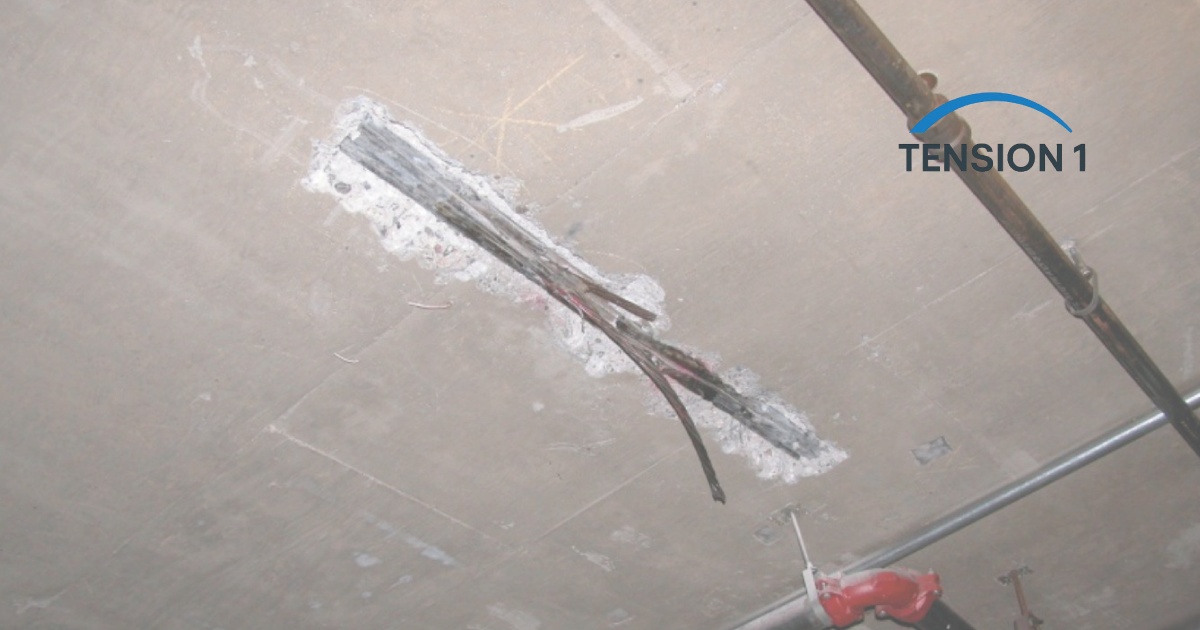
Cut one tendon and the job stops. The strand releases its stored force instantly, the anchorage can blow out at the slab edge, and the bay loses prestress that is invisible from below. The engineer of record has to be brought back in, the area shored, and the repair measured in weeks rather than hours.
So the answer is no. It is not safe to drill into a post tension slab without locating the tendons first. What follows is why: the force actually stored in the strand, what the code requires before a penetration is cut, the five mistakes behind most cut tendons, and how the locating methods compare.
How Much Force Is Stored in a Single Tendon
The habits that work on conventionally reinforced concrete do not transfer. Clipping a rebar with a core bit is a nuisance. Clipping a stressed monostrand is an energy release event, and the difference is in the numbers.
Per ASTM A416/A416M-18, a 0.5 in nominal diameter Grade 270 seven wire strand has a steel area of 0.153 in2 and a specified minimum breaking strength of 41,300 lbf, that is 41.3 kip. Jacking is commonly specified at 0.80 of that ultimate strength, which puts roughly 33.0 kip into a single strand at the jack, before friction, wobble and anchor set losses.
That force is present at all times. It is not activated by applied load and it gives no warning. The greased sheath around the strand offers no resistance to a drill bit and no tactile feedback before the wire is reached. PTI DC80.3 / ICRI 320.6, the Post-Tensioning Institute guide on evaluating and repairing unbonded post-tensioned structures, lists coring and drilling after construction alongside corrosion and impact as causes of tendon failure, and notes that such a failure reduces load carrying capacity and can release energy suddenly.
Safety
A stressed tendon is not a demolition problem you solve with a saw. Locating, de-tensioning and repair on a post tension slab are specialist operations. PTI DC80.3 recommends that firms and on site supervisory personnel working on post-tensioned structures carry a minimum of five years of experience with these systems, including PTI field certification.
What ACI 318-19 Requires Before a Penetration Is Cut
ACI 318-19 addresses openings in slab systems in Section 8.5.4. Openings of any size are permitted provided the analysis demonstrates that strength and serviceability are still satisfied, and the reinforcement interrupted by the opening is accounted for. This is a design requirement, not a courtesy notification.
One change between editions matters directly to penetration work. In ACI 318-19, Section 8.5.4.2(d), the distance within which an opening triggers a two way shear check was reduced from 10h to 4h from the periphery of a column, concentrated load or reaction area. An opening inside a column strip, or closer than four slab thicknesses to a column face, has to be checked against the punching shear provisions.
In practice that puts the code trigger exactly where the tendon density is highest. Banded tendons are concentrated over the column lines in a two way post tension slab, and column strips are also where mechanical and structural penetrations get requested most often. The conflict is structural, not administrative.
Code editions cited
ACI 318-19, Sections 8.5.4 and 20.3.2.5. PTI DC80.3 / ICRI 320.6, Guide for Evaluation and Repair of Unbonded Post-Tensioned Concrete Structures, second edition. PTI M10.2-17, Specification for Unbonded Single Strand Tendons. Where your jurisdiction has adopted a different ACI 318 edition through the IBC or a state amendment, that edition governs.
Five Mistakes That Cut a Tendon in a Post Tension Slab
1. Treating the tendon like a rebar
A nicked bar in a reinforced slab is documented and moved past. A nicked strand in a post tension slab is a wire by wire loss of a 41.3 kip element, and the remaining wires can fail later. There is no partial credit on a seven wire strand.
2. Using the design drawings as an as built map
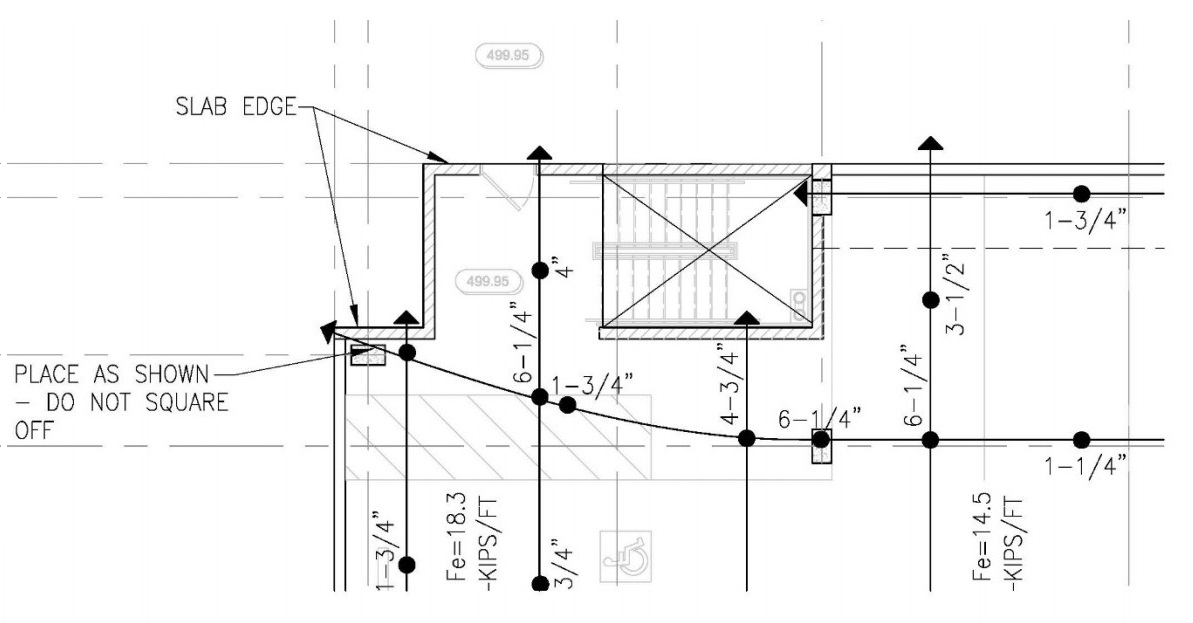
Design and shop drawings establish intent. They establish which direction is banded, which is distributed, and roughly where the high and low points fall. They do not record where the placing crew actually ended up after rerouting around a drain, a sleeve or a congested anchorage.
3. Scanning with a covermeter
A covermeter, sometimes called a pachometer or rebar locator, senses ferrous metal near the surface. It cannot tell a tendon from a top mat bar, it returns no usable depth, and its practical range falls short of mid depth tendons in a typical slab. It is the wrong instrument for this task.
4. Drilling near the slab edge
The anchorage zone is the most highly stressed concrete on the floor. Live end anchors, dead end anchors, bursting reinforcement and stressing pockets are all concentrated in the first few inches of the edge, and tendons converge there rather than running parallel.
5. Moving an approved hole in the field
This is the one we see most often. The penetration is scanned, reviewed and approved, then a duct or a beam forces a shift of a few inches on the day. The approval does not travel with the hole. A relocated penetration is a new penetration and goes back for review.
Related Reading
Damage to a tendon is not always mechanical. For how deterioration develops inside an unbonded system and what it looks like before failure, see our pillar guide on the dangers of corroded tendons and post-tension slab inspection.
Four Ways to Locate Tendons, Compared
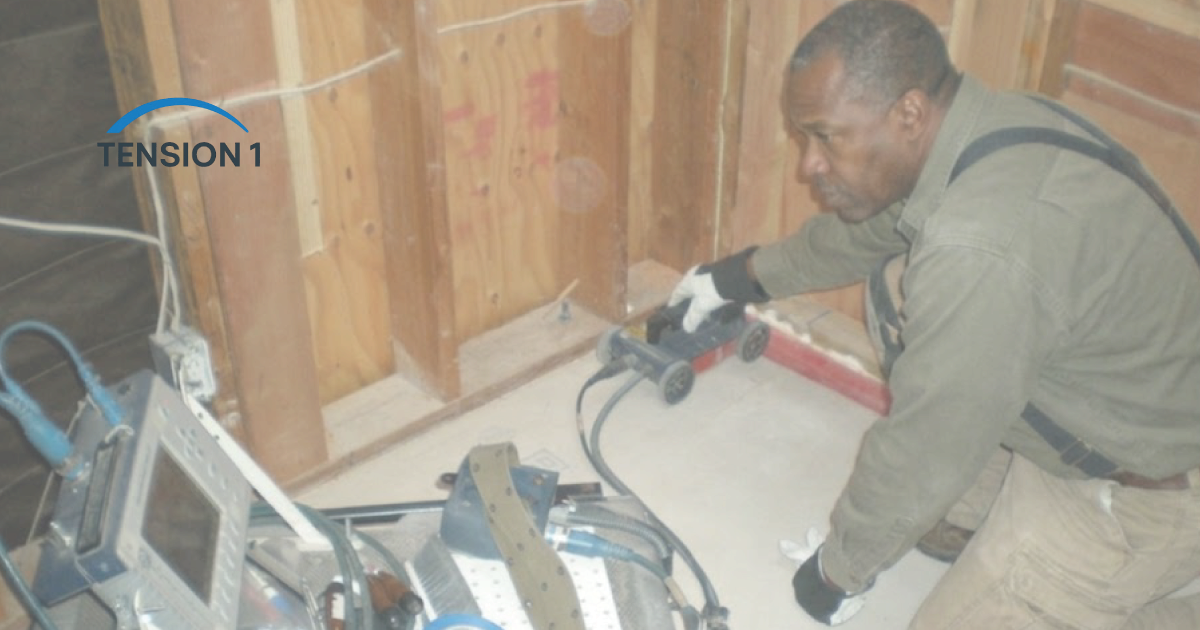
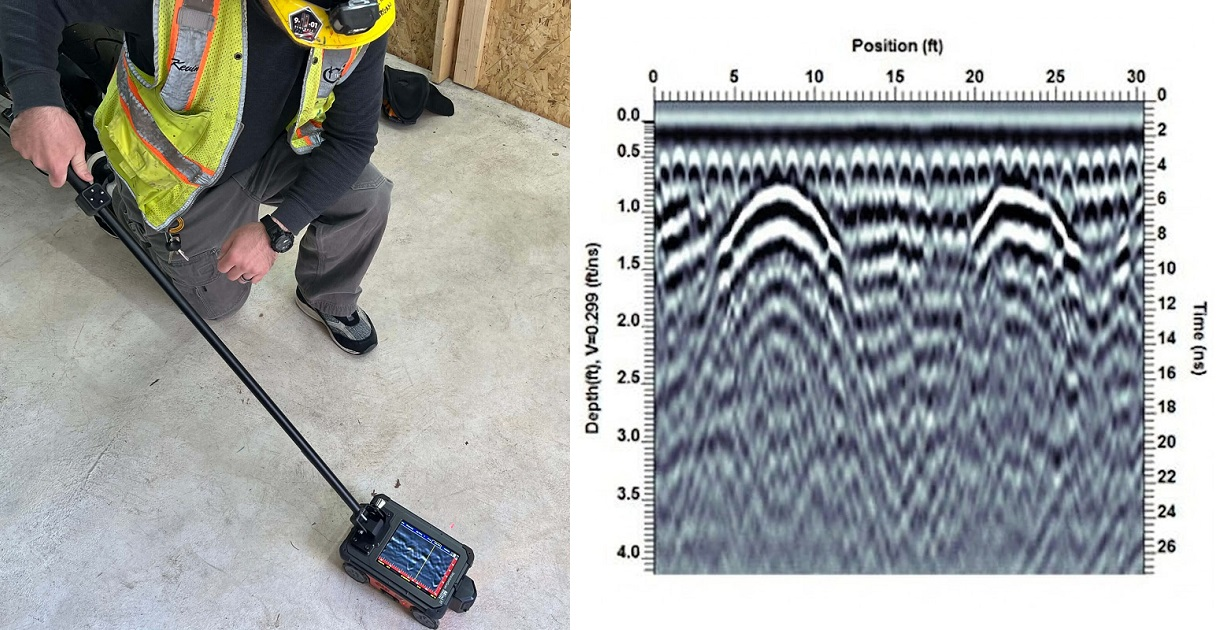
ACI PRC-228.2-13, the ACI report on nondestructive test methods for evaluating concrete in structures, covers ground penetrating radar and covermeters among other methods, and is the reference to read before specifying a scan.
| Method | What it gives you | Where it fails |
|---|---|---|
| 1 Ground penetrating radar | Tendon position in plan, with depth, marked on the slab surface | Congested two way slabs with top and bottom mats; cannot tell an intact strand from a previously severed one |
| 2 Shop and as built drawings | Banded and distributed zones, design intent, anchorage layout | Placement differs from drawing. Reference only, never a substitute for a scan |
| 3 Covermeter or rebar locator | Presence of ferrous metal near the surface | No depth, no discrimination between rebar and tendon, limited penetration |
| 4 Stressing and elongation records | Confirmation that a tendon exists, was stressed, and from which end | No plan view geometry. Supplemental evidence only |
Working reference for planning a scan. It does not replace the review required under ACI 318-19 Section 8.5.4, and it is not a project specific engineering determination.
What works
Reading the drawings first, then scanning. The drawings tell the technician which direction should be banded and where anchorages sit, so an anomaly in the scan is recognized as an anomaly instead of being read as a normal tendon line. Scanning blind takes longer and yields a weaker result.
What to watch
Scan coverage that stops at the hole. A scan sized to the bit diameter tells you nothing about where to move if the first location is rejected. Scan the zone you might need, not the point you hope to use, and have the exclusion lines marked on the slab before the drill arrives.
On cost, ask for the scan to be priced by area and by access condition rather than by hole. The drivers are floor area, congestion, whether the ceiling below is open, and whether the technician has to work around occupancy. Published unit rates for concrete scanning in the Dallas market are not something we can source reliably, so treat any figure you are quoted as a quote and not a benchmark.
What to Do in the First Hour After a Tendon Is Cut
- Stop drilling in the bay, clear personnel from the slab edge and the soffit below, and restrict access.
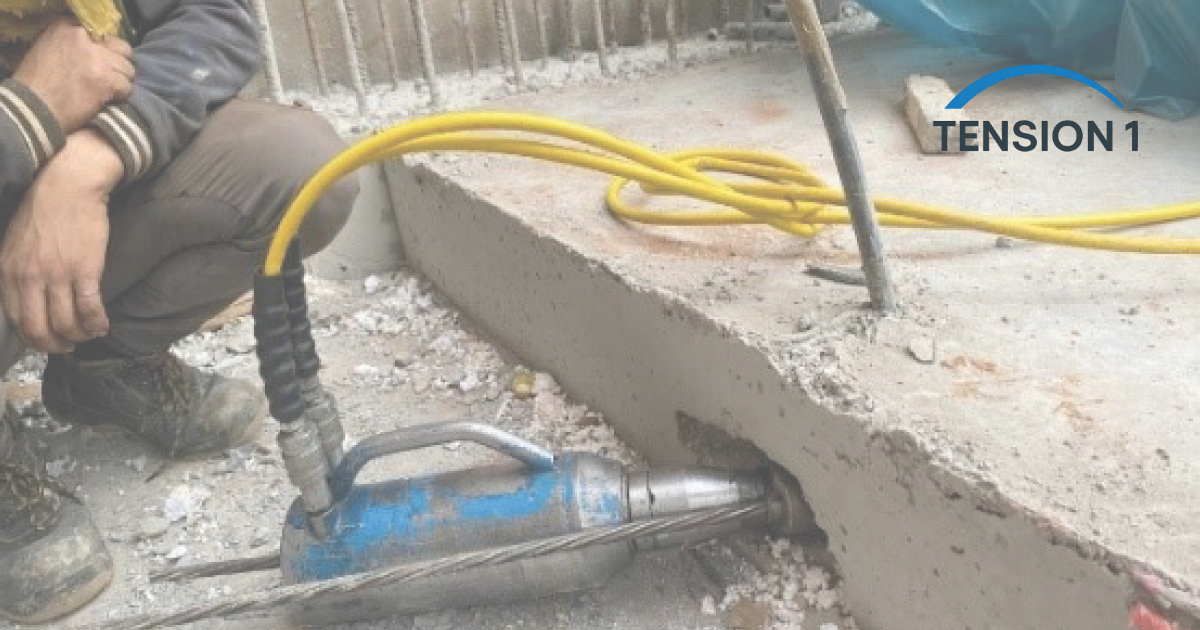
- Do not attempt a field splice or a re-stress. A repair on a post-tensioned element is an engineered operation with its own specification.
- Record the location from two fixed references, the bit diameter, the depth reached, and photograph the cut end and any anchor movement.
- Contact the engineer of record before any additional load, stored material or equipment goes onto the affected bay.
- In an occupied existing building with no active engineer of record, engage a structural engineer experienced in unbonded post-tensioning to assess the slab in its reduced prestress condition.
Related Reading
Owners arriving here after damage has already happened will find the symptom side of this covered in 5 warning signs your post-tension slab needs expert repair.
TensionOne provides independent technical support: calculations, layouts, drawings and documentation. We do not issue PE-stamped documents and we do not act as engineer of record. Sealing, approval and code compliance verification remain with the licensed engineer of record and the authority having jurisdiction. Nothing here is a design opinion on a specific project or structure. Our sourcing and correction practice is described in our editorial policy.
References: ACI 318-19, Building Code Requirements for Structural Concrete, American Concrete Institute. ACI PRC-228.2-13, Report on Nondestructive Test Methods for Evaluation of Concrete in Structures, American Concrete Institute. PTI DC80.3 / ICRI 320.6, Guide for Evaluation and Repair of Unbonded Post-Tensioned Concrete Structures, second edition, and PTI M10.2-17, Specification for Unbonded Single Strand Tendons, Post-Tensioning Institute. ASTM A416/A416M-18, Standard Specification for Low-Relaxation, Seven-Wire Steel Strand for Prestressed Concrete, ASTM International.