When a structural team in Texas selects a slab system, seismic performance rarely tops the checklist the way it does in California or the Pacific Northwest. Texas sits primarily in low-to-moderate seismic zones, but that does not make the question irrelevant. Contractors, architects, and small engineering firms regularly encounter projects close to zone boundaries or work with clients who own properties in multiple states. The comparison between a post tension slab and a conventional reinforced concrete (RC) slab in earthquake conditions deserves a direct, technically honest answer.
The short answer is: it depends on the seismic zone, the structural system, and how the slab is detailed. A post-tension slab is not unconditionally more earthquake-resistant than a conventional RC slab. In high-seismic zones (SDC D, E, or F under ASCE 7-22), the ACI 318-19 code imposes specific restrictions on unbonded PT in lateral force-resisting elements. In low-to-moderate zones, PT slabs offer measurable structural advantages. The following sections walk through why.
Before evaluating seismic performance, understanding the warning signs of a compromised system is equally important. See: What Are the Visible Signs of a Post-Tension Cable Failure?
How Seismic Forces Actually Interact With a Post-Tension Slab
The Role of the Slab as a Horizontal Diaphragm
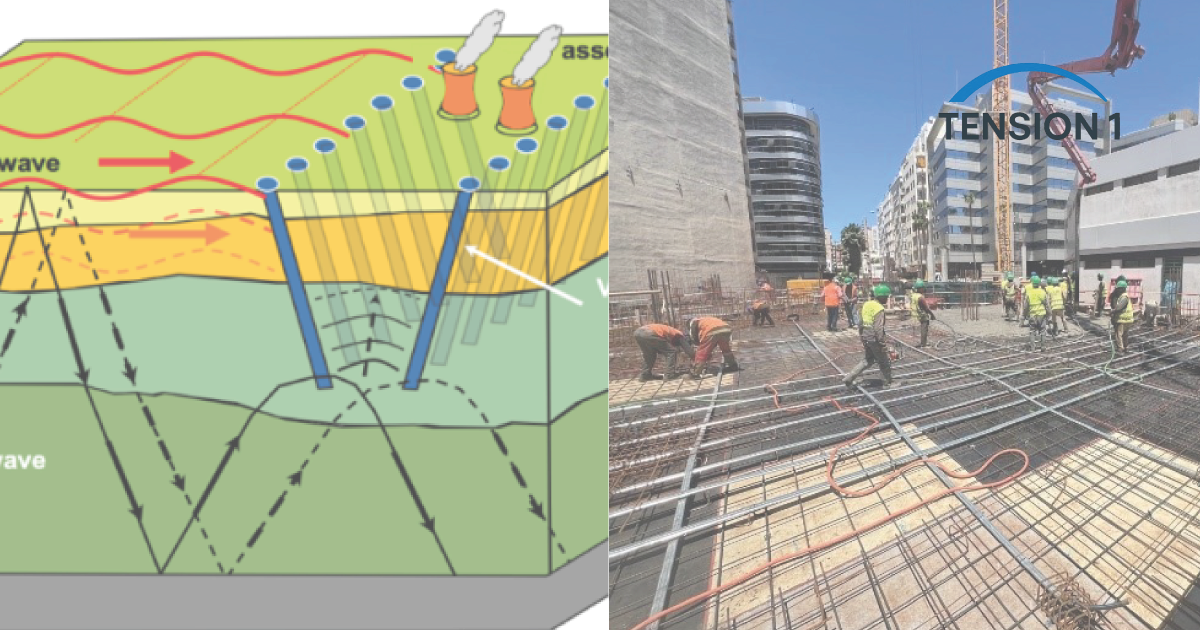
In any multi-story or elevated structure, the floor slab acts as a horizontal diaphragm: it collects lateral forces generated by ground motion and transfers them to the vertical lateral force-resisting system (shear walls, moment frames, or braced frames). How well the slab performs in that role directly affects the integrity of the entire structure under seismic loading.
A post-tension slab benefits from the prestress force applied through the tendons. That compressive stress keeps the concrete section in a state of controlled compression, which translates into two seismic-relevant advantages:
- Fewer and narrower flexural cracks form under lateral drift cycling, reducing stiffness degradation between load cycles.
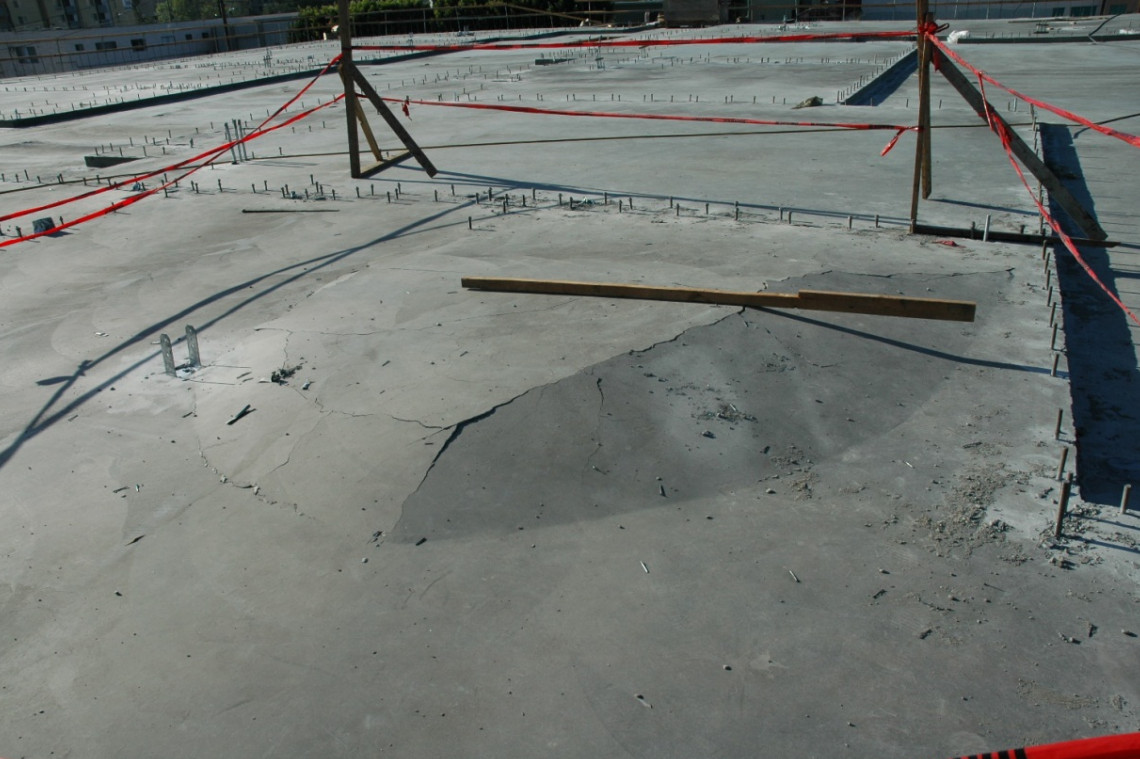
- The continuous, unjointed slab plane typical of unbonded PT construction creates a more coherent diaphragm compared to conventionally reinforced slabs with construction joints at every pour break.
Where PT Slabs Fall Short: Ductility and Column-Slab Connections
Ductility is the capacity of a structural element to deform significantly before reaching ultimate failure. In seismic design, ductility is not optional -- it is the mechanism that prevents brittle collapse. This is where the honest engineering comparison becomes more complex.
High-strength prestressing steel (ASTM A416, Grade 270) used in unbonded monostrands has a much lower elongation-at-rupture ratio than mild reinforcing steel (ASTM A615 or A706 Grade 60). When a PT slab undergoes large lateral deformations during a severe earthquake, the relatively inextensible strand provides less ductile energy absorption than well-detailed mild steel bars. ACI 318-19 Section 18.14.5 directly addresses this by requiring a minimum amount of bonded mild steel reinforcing within the column strip of PT two-way slabs in all Seismic Design Categories (SDCs).
The column-slab connection is the most vulnerable point in a PT flat-plate under seismic loading. Unbalanced moments at the slab-column interface can drive punching shear failures, and prestress improves the shear capacity there, but not unconditionally. ACI 318-19 Section 18.14 limits the use of PT two-way slabs as part of the seismic force-resisting system in SDC D and above, unless bonded PT or special detailing is provided.
Post-Tension Slab vs. Conventional RC Slab: Seismic Performance at a Glance
The table below summarizes the key seismic performance criteria for each system. This is a field-level comparison based on ACI 318-19, ASCE 7-22, and PTI DC80.3 provisions:
| Performance Criterion | Post-Tension Slab (Unbonded PT) | Conventional RC Slab |
|---|---|---|
| Diaphragm stiffness | High -- fewer joints, continuous slab plane | Moderate -- depends on pour breaks and joints |
| Crack control under lateral drift | Strong -- prestress closes cracks after cycling | Weaker -- cracks widen and remain open |
| Shear transfer at column-slab joint | Requires special detailing (ACI 318-19 Sec. 18.14) | Well-established ductile detailing (special RC) |
| Elongation under seismic drift | Tendons may develop unintended restraint forces | Mild steel yields predictably -- more ductile |
| Post-event repairability | Difficult if tendons are damaged | Easier -- bar replacement or overlay feasible |
| Code coverage in high-seismic zones | ACI 318-19 Sec. 18.14 applies; bonded PT preferred | Fully covered by ACI 318-19 Chapter 18 (Special RC) |
Reading this table carefully, the conclusion is not that one system is globally superior. The correct framing is: a post-tension slab performs well as a diaphragm and for crack control, but conventional RC with special moment frame detailing is the more ductile and code-proven option for the lateral force-resisting system in high-seismic regions.
What Worked on Site and What Did Not: A Direct Field Assessment
In low-to-moderate seismic zones (SDC A, B, and C), which covers the vast majority of Texas, the benefits of the PT slab are available without the full weight of Chapter 18 special system requirements applying. In several concrete framing projects in the DFW area, the PT flat-plate system was chosen specifically because:
- The prestress force balanced a significant portion of the dead load, reducing slab thickness compared to an equivalent RC flat plate. Thinner slabs mean lower seismic weight, which directly reduces the base shear demand at the foundation.
- The elimination of construction joints across large floor plates improved diaphragm uniformity. Seismic force collectors were simpler to design and detail.
- Crack control under service loads was visibly better than comparable RC slabs observed post-construction on neighboring projects. This reduces the risk of pre-existing cracks opening further under low-level seismic events.
These are not trivial benefits. Reducing the seismic weight of a building by even 5% through thinner slabs has a compounding effect: lower base shear, lighter footings, smaller shear walls. For a five-story building in Dallas, that can translate to measurable cost savings across the structural system.
The critical weakness observed in field reviews is detailing at the column-slab interface. When PT slabs are designed to the minimum requirements without careful attention to the slab-column connection under lateral loads, punching shear vulnerabilities are introduced. On projects where the structural drawings did not include a specific seismic drift check for the column-slab joint (per ACI 318-19 Section 8.11.9), the post-tensioning contractor flagged it during tendon layout review. It was corrected, but it highlights that PT slab seismic performance is sensitive to complete design execution, not just the choice of PT over RC.
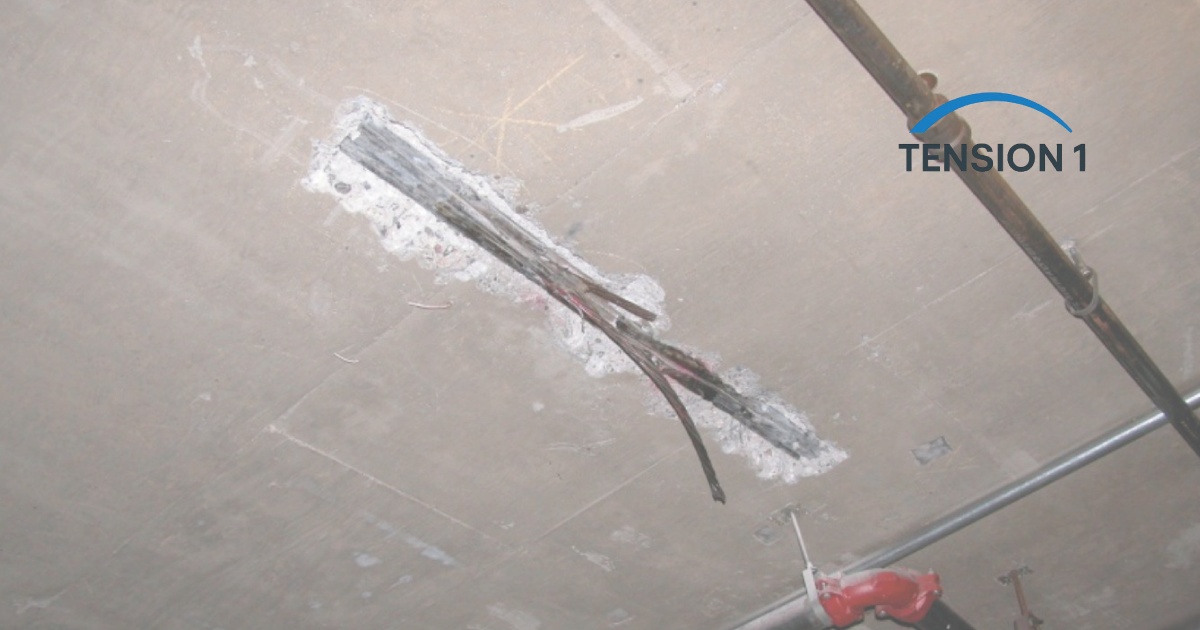
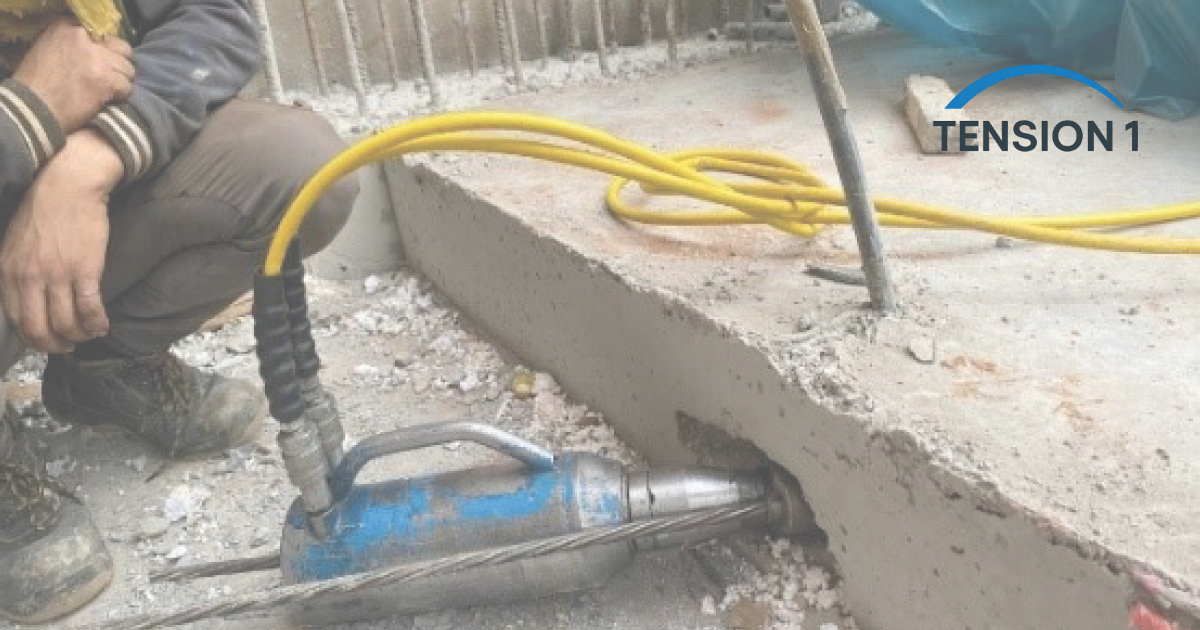
Post-earthquake repairability is a second legitimate concern. A post-tension slab with a severed or damaged tendon requires specialized repair techniques: locating the strand break, destressing adjacent strands, cutting, coupling, and restressing. This process requires certified PT crews and is significantly more complex than patching a fractured rebar in a conventional RC slab. For critical post-disaster facilities (hospitals, emergency operations centers), this repairability factor should influence system selection regardless of seismic zone.
For a deeper treatment of how tendon degradation develops and propagates through a prestressed system, see our full inspection guide: The Dangers of Corroded Tendons: A Guide to Post-Tension Slab Inspection and Preservation.
ACI 318-19 and PTI DC80.3: What the Codes Actually Say
Practitioners working on PT slab projects in seismic regions must be familiar with the following specific code provisions. These are not optional interpretations; they are design minimums:
ACI 318-19 Section 18.14 -- Two-Way Slabs Without Beams in Seismic Systems
- In SDC D, E, or F: PT two-way slabs can only be used as part of the seismic force-resisting system if they comply with Section 18.14.5 through 18.14.8, which includes minimum bonded mild reinforcement, drift checks, and punching shear verification under combined gravity and seismic loads.
- Section 18.14.5.1 requires that the factored slab shear stress at the critical section not exceed defined limits when the slab-column frame is the designated SFRS.
- Section 18.14.8 requires that the slab accommodate the design drift without initiating punching failure.
PTI DC80.3 -- Design Specification for Unbonded Single Strand Tendons
- PTI DC80.3 guides the design of the unbonded monostrand system itself. It governs minimum prestress levels, tendon spacing, cover, and anchorage zone requirements -- all of which affect seismic performance indirectly through crack control and shear capacity.
ASCE 7-22 -- Seismic Design Categories
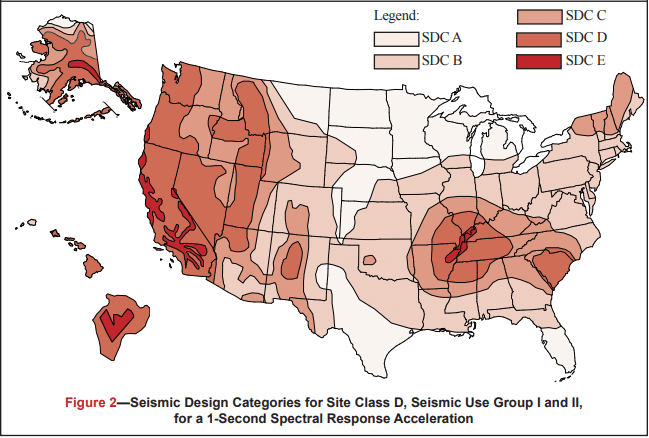
Texas jurisdictions vary in SDC classification. Downtown Dallas and Fort Worth typically fall in SDC B. Parts of West Texas near the Permian Basin have been reclassified in recent USGS hazard maps following increased induced seismicity from oilfield injection wells.
Engineers designing PT slabs in Texas must confirm the applicable SDC from the project's geotechnical report and local building department before applying Chapter 18 provisions. The IBC 2021 is the current model code reference for SDC determination in most Texas jurisdictions.
Making the Right System Choice: PT Slab vs. Conventional RC in Seismic Context
Based on a direct reading of ACI 318-19, field-level observations in Texas projects, and the structural logic of prestressed concrete behavior, the following selection framework applies:
Choose a post-tension slab when:
- The project is in SDC A, B, or C (most of Texas) and the slab is not part of the seismic force-resisting system.
- Span-to-depth efficiency, crack control, and reduced slab self-weight are project priorities.
- The structural system uses shear walls or moment frames separately from the flat-plate slab to carry lateral loads.
- The benefits of post-tension slabs in reducing long-term deflection and serviceability cracking are priorities for the building owner.
Choose conventional RC or hybrid PT+RC when:
- The project is in SDC D, E, or F and special ductile detailing is required.
- The slab must function as part of the seismic force-resisting system without a separate dedicated lateral system.
- Post-event repairability is a design criterion (hospitals, emergency facilities).
- Bonded PT is not feasible, and the unbonded system cannot meet Section 18.14 special requirements.
In practice, many Texas projects use unbonded PT slabs with separate concrete shear walls as the SFRS. This hybrid approach captures the full benefits of PT slab design for gravity loads while satisfying seismic resistance through properly detailed walls. It is the most common and defensible strategy for mid-rise construction in DFW.
Frequently Asked Questions
Can I use an unbonded PT slab in a Seismic Design Category D building?
Yes, but with significant detailing requirements. ACI 318-19 Section 18.14 permits PT two-way slabs in SDC D if specific minimum bonded mild reinforcement, punching shear checks under lateral drift, and connection detailing requirements are satisfied. For most projects, separating the slab from the seismic force-resisting system (using shear walls or moment frames) is the more straightforward approach.
Does the prestress in a PT slab help resist seismic shear?
Partially. The prestress force increases the slab's punching shear capacity at columns by keeping the concrete in compression. However, under combined gravity and seismic loading, the unbalanced moment demand at the slab-column connection can still govern design. ACI 318-19 Section 18.14.8 requires a specific check for this condition in seismic systems.
Is a PT slab more expensive than a conventional RC slab in seismic zones?
In low-to-moderate seismic zones, PT slabs are often cost-competitive or cheaper overall due to reduced slab thickness (lower concrete and mild steel volume), faster formwork cycles, and lower dead load (which reduces foundation costs). In high-seismic zones where PT requires additional bonded reinforcement and special connection detailing to meet ACI 318-19 Chapter 18, the cost premium over conventional RC narrows significantly.
What is the difference between bonded and unbonded PT for seismic design?
Bonded PT (grouted duct systems) provides higher ductility and post-crack strength retention compared to unbonded monostrand because the strand is engaged with the surrounding concrete along its full length after cracking. ACI 318-19 Section 18.14 gives more favorable treatment to bonded PT in high-seismic systems for this reason. Unbonded monostrand (the standard system in Texas residential and light commercial construction) relies on end anchorages only, which limits its contribution to post-yield behavior.
Does Texas have seismic design requirements that affect PT slab selection?
Yes. While most of Texas falls in SDC A or B under ASCE 7-22, local conditions vary. The Permian Basin region has experienced increased seismic activity related to oilfield injection operations, and SDC classifications should be verified from current USGS hazard maps and the applicable IBC edition adopted by the local jurisdiction. Engineers should not assume SDC A or B without a site-specific confirmation from the geotechnical report.
Work With TensionOne on Your Next PT Slab Project
TensionOne LLC provides freelance PT slab engineering services to general contractors, architecture firms, and structural drafters across Texas. Services include tendon layout drawings, stressing sequence documentation, elongation calculation notes, and ACI 318-19 / PTI DC80.3 compliance review.
Whether you are a contractor managing a Dallas slab pour or a small firm needing supplemental PT design capacity, we deliver precise, field-ready documentation. Visit our freelance services page to submit an inquiry or request a scope estimate for your project.
Need PT Slab Drawings and Calculation Notes?
TensionOne provides freelance PT slab engineering services: complete tendon layout drawings, stressing calculations, and calculation notes prepared to ACI 318-19 and PTI DC80.3 standards.
- Tendon Layout Plans and Profiles — one-way and two-way systems
- Stressing Schedules and Elongation Calculation Notes
- ACI 318-19 Flexural and Serviceability Checks
- Punching Shear Verification — at columns and slab edges
- Seismic Drift Compatibility Check — ACI 318-19 Section 8.11.9
TensionOne provides structural engineering support services. All deliverables are prepared for review and use by a licensed Professional Engineer. TensionOne does not provide PE-stamped documents directly.
References: ACI 318-19: Building Code Requirements for Structural Concrete, American Concrete Institute. PTI DC80.3: Specification for Unbonded Single Strand Tendons, Post-Tensioning Institute. ASTM A416: Standard Specification for Low-Relaxation Seven-Wire Strand for Prestressed Concrete, ASTM International. ASCE 7-22: Minimum Design Loads and Associated Criteria for Buildings and Other Structures, American Society of Civil Engineers. IBC 2021: International Building Code, International Code Council. TEK 14-18B: Seismic Design Categories, Concrete Masonry & Hardscapes Association.
This article is intended as a technical reference and does not constitute a PE-stamped engineering opinion or project-specific structural recommendation. All design decisions should be reviewed and approved by the licensed engineer of record for your project.