Concrete is the most widely used construction material in the world, and one of the most carbon-intensive. The global cement sector accounts for roughly 5 to 8 percent of global CO2 emissions, according to a Columbia Business School climate brief (2024) drawing on IEA data.
Specify a conventional reinforced slab without testing material efficiency, and you commit to more concrete, more mild steel and a heavier carbon line before anyone has measured it. With embodied carbon now a LEED v5 prerequisite, that gap is no longer invisible.
A post tension slab is one of the few structural decisions that cuts concrete and steel at the same time. This article walks through the mechanism, the numbers with their sources, and where the savings stop.
Why Concrete Volume Is the First Carbon Lever in a Post Tension Slab
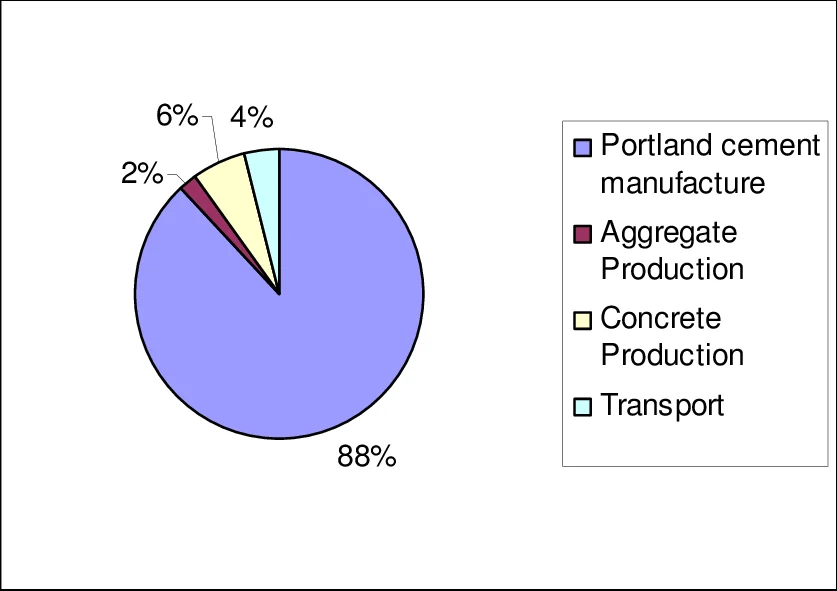
The embodied carbon of a slab tracks its cement, and cement tracks concrete volume. Within cement, clinker production accounts for 80 to 90 percent of manufacturing emissions, per the same Columbia brief. Every cubic yard you do not pour is cement you do not make.
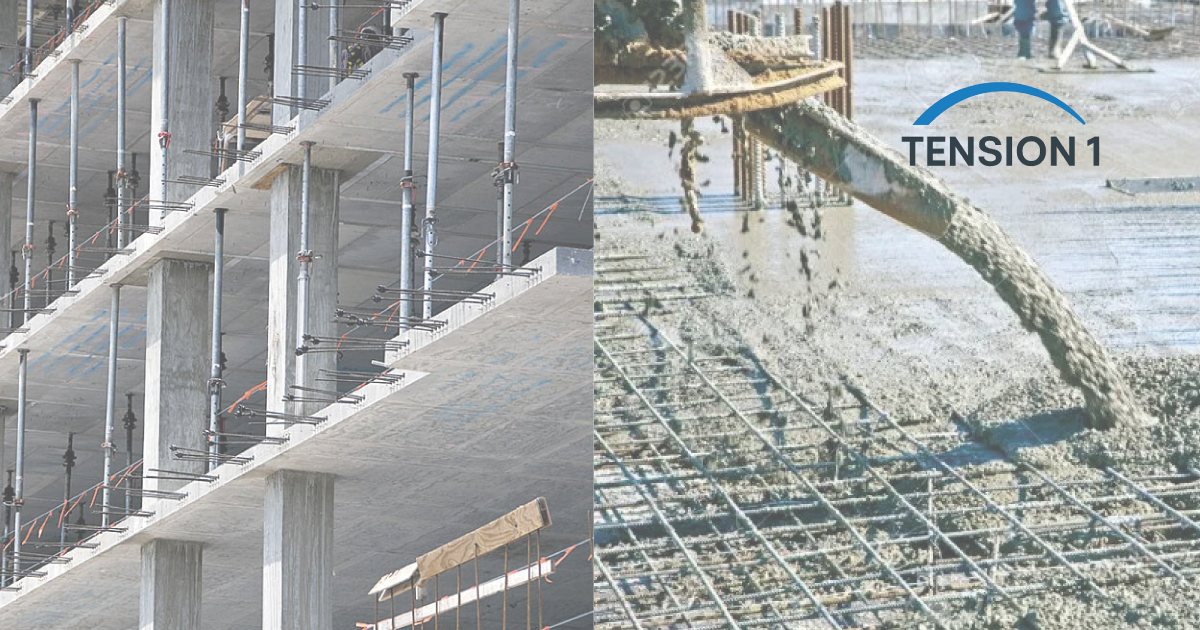
Thickness moves volume. A post tension slab counteracts gravity load through the upward force of its draped tendons, so the engineer can thin the slab and still meet serviceability and strength under ACI 318. A Portland Cement Association design article (2005) reports a typical reduction of 25 to 35 percent in slab thickness against mild reinforced slabs.
On two-way flat plates, the PCA article on two-way PT flat plate construction (2005) reports a typical slab thickness reduction of 25 to 35 percent when moving from a mild reinforced slab to post-tensioning.
Worked example: a 10,000 ft2 floor on a 30 ft grid
Take a 30 ft by 30 ft bay with 24 in columns. ACI 318-19 sets the minimum thickness of a nonprestressed flat plate at 10.2 in for an interior panel. The PCA ratio of span over 45 puts the PT flat plate at 8 in. On a 10,000 ft2 floor:
- RC slab: 10,000 x 10.2 / 12 / 27 = about 315 yd3
- PT slab: 10,000 x 8 / 12 / 27 = about 247 yd3
- Difference: about 68 yd3, or 22 percent less concrete
The NRMCA industry-wide EPD benchmark for 4,000 psi ready-mix is about 236 kg CO2e per yd3, or roughly 520 lb, according to NRMCA's industry-wide EPD presentation (2023). At that rate, 68 yd3 is about 35,000 lb of CO2e avoided per floor, and a post tension slab usually widens that gap once the RC slab is checked for deflection.
From our design work: a parking structure
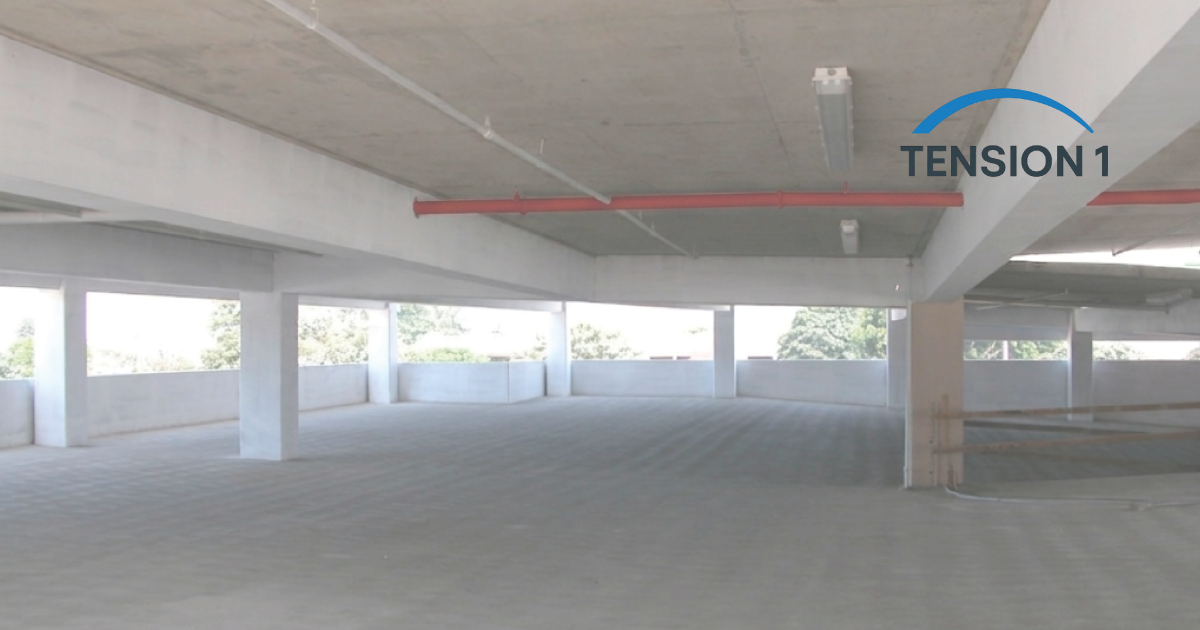
On a multi-level parking structure, we ran an unbonded PT flat plate in parallel with an RC slab on downstand beams. The take-off came out at 773.26 yd3 for RC and 544.11 yd3 for PT, 229.15 yd3 less, about 29.6 percent. Applying the same NRMCA benchmark, that is roughly 119,000 lb of CO2e avoided in concrete alone. The full case is in our pillar comparison, post-tension vs reinforced concrete: 6 criteria to choose the right system, and the parking-specific analysis in post tension slab ROI for parking garages.
| Metric | Worked example, 10,000 ft2 | Parking case study |
|---|---|---|
| RC thickness / PT thickness | 10.2 in / 8 in | 14 in / 10 in |
| Concrete saved | About 68 yd3 (22 percent) | 229.15 yd3 (29.6 percent) |
| CO2e avoided at NRMCA 4,000 psi benchmark | About 35,000 lb | About 119,000 lb |
These are preliminary estimates. For a carbon report, use the EPDs of the actual mixes supplied to your project.
Reduced Mild Steel: The Second Carbon Lever of a Post Tension Slab
Post-tensioning does not eliminate mild steel. ACI 318-19 still requires bonded reinforcement over columns, structural integrity bars and punching shear reinforcement where needed. But the tendons carry the primary flexural demand, so the rebar quantity drops. In our experience with unbonded PT flat plates, mild steel densities run approximately 30 to 50 percent below an equivalent RC design on the same floor plan.
U.S. rebar is mostly recycled scrap, which lowers its carbon intensity. The CRSI industry-wide EPD for fabricated reinforcing bar reports about 854 kg CO2e per metric ton, roughly 1,700 lb per short ton, with recycled content above 97 percent. Strand and anchors add back part of that carbon, so count them in the take-off of the post tension slab.
What did not work without early coordination
The savings only hold when the PT design is coordinated with the mix design before the pour schedule is set. On one project, the specified mix was a standard 4,000 psi design with a target 28-day strength. Stressing needs a minimum strength at transfer, commonly about 3,000 psi, a value the PCA article ties to the bearing capacity of a typical anchor. A slower-gaining mix without an accelerated curing protocol pushed the stressing window back by two days, creating a cascade on the formwork release schedule. The lesson: specify early-strength verification in the project documents, not as a field conversation.
Formwork Cycles and the Construction-Phase Carbon Case
A complete carbon analysis also counts equipment fuel, deliveries and form reuse. A post tension slab can release its forms once the tendons are stressed, often a few days after the pour depending on the mix and curing. Faster turnover means fewer form sets and crane hours.
That gain is not automatic. A Penn State architectural engineering study (2006) scheduled 8 days per floor for a PT flat plate against 7 for its RC redesign, because of tendon placement and stressing. Claim the construction-phase saving only when your schedule shows it. The schedule and cost side is covered in post tension slab ROI on materials, formwork and timeline.
Post Tension Slabs and Green Building Certification
USGBC released LEED v5 in April 2025. Its Materials and Resources category opens with a prerequisite to quantify and assess embodied carbon for structure, enclosure and hardscape, followed by a credit for reducing it, as summarized by DCI Engineers (2025). Projects still registered under LEED v4.1 use its Building Life-Cycle Impact Reduction credit.
A documented post tension slab versus RC take-off is one of the most defensible reductions a team can report. Feed the whole-building LCA with real quantities from both schemes, and the slab becomes a traceable line in the scorecard.
Where the Green Advantage Applies, and Where It Does Not
- Strongest: repeated floor plates on regular grids with spans above about 20 ft, the territory of PT vs RC slab efficiency in high-rise construction and PT vs rebar for commercial builders.
- Different logic: residential slabs on ground, where the comparison turns on soil movement, covered in post-tension vs rebar for residential construction.
- Weakest: small, irregular slabs where a post tension slab barely thins the section. Our builder's guide to post tension slab alternatives covers other routes.
Quantify the Carbon Difference on Your Project
The governing code edition and project documents take precedence over this article, and sealing and approval belong to the licensed engineer of record. How we source and date figures like the benchmarks above is set out in our editorial policy.
We prepare side-by-side post tension slab and RC take-offs, floor by floor, ready to feed your LCA, as independent technical support for your engineer of record. See our post-tension slab design, optimization and diagnostics services.