
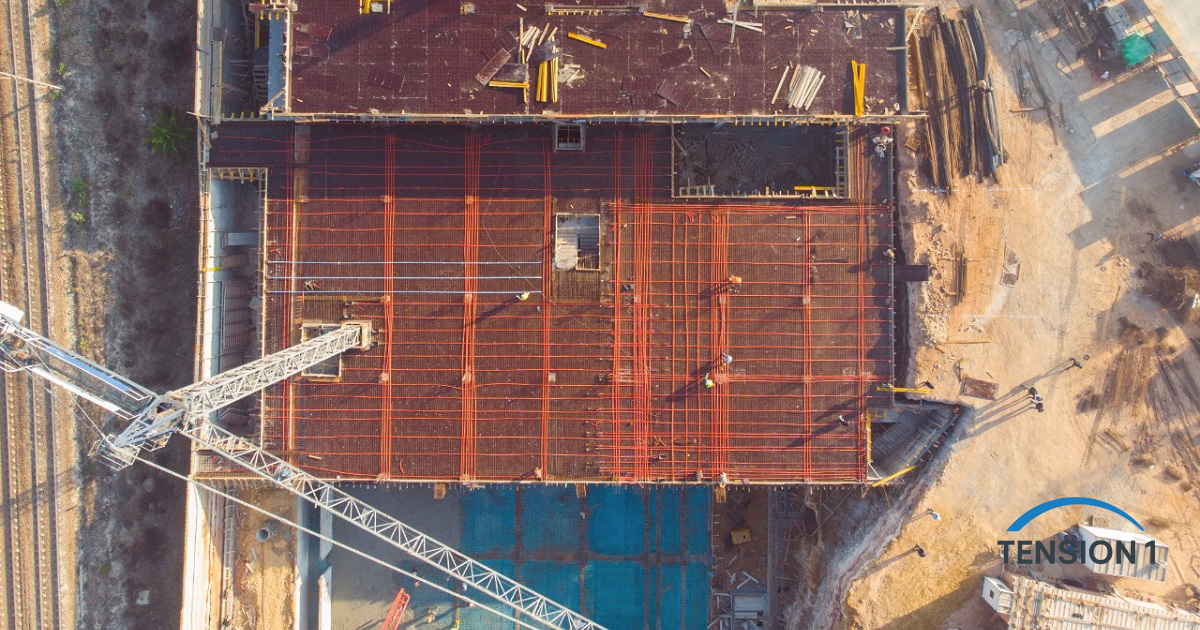
Conventional reinforced concrete slabs crack. That is not a design flaw we can engineer away entirely — it is an inherent consequence of concrete's tensile weakness and thermal shrinkage. What we can control is how much cracking occurs, where it occurs, and how it affects long-term structural performance. The post tension slab addresses that problem at a fundamental level by introducing a continuous compressive force into the concrete before service loads are ever applied.
In over five years of experience designing and reviewing PT systems across Africa, Europe, and more recently the Texas construction market, we have seen what happens when a PT slab is properly designed — and when it is not. A well-executed post-tensioned concrete system routinely outperforms conventional reinforced concrete in span capability, slab thickness efficiency, crack control, and service life. A poorly designed one, whether due to incorrect tendon profiling, inadequate friction losses, or insufficient cover, creates problems that are expensive and disruptive to remedy.
This guide covers the full picture: how PT slabs work structurally, the clear advantages they offer over conventional RC, the design parameters that govern ACI 318 PT compliance, and what drives long-term longevity in the field. Whether you are a general contractor evaluating system selection, a structural drafter laying out tendon plans, or an engineering technician checking stressing records, this article gives you the grounded, field-tested perspective you need.
If you are working on a residential foundation in the Dallas-Fort Worth area where expansive clay soils dominate, see our companion article: Post-Tension Foundations 101: Preventing Slab Movement and Cracking in Expansive Clay Soils.
1. What Is a Post-Tension Slab and How Does It Work?
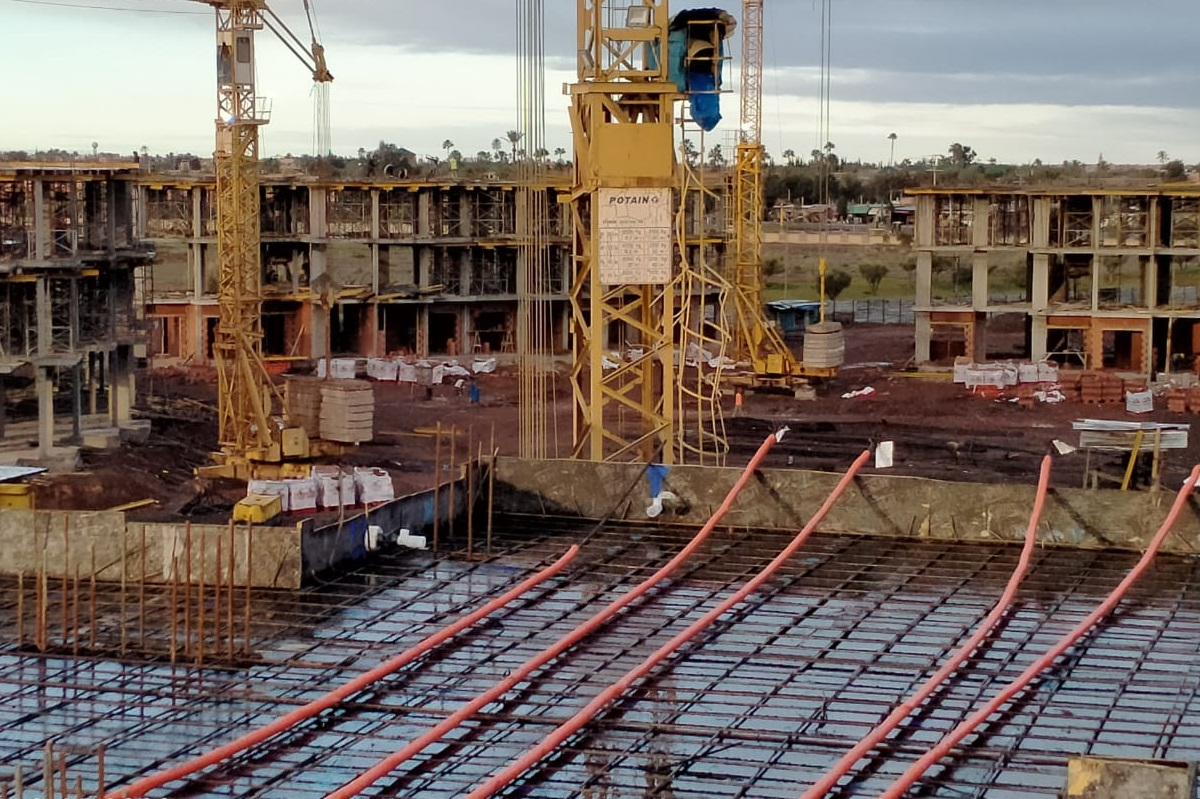
A post-tension slab is a concrete slab in which high-strength steel tendons — typically 270-ksi low-relaxation monostrand in the residential and light commercial sector — are tensioned after the concrete has reached a specified minimum compressive strength. In the unbonded PT system most common in the U.S. market, each tendon consists of a 0.5-in. or 0.6-in. diameter strand coated in corrosion-inhibiting grease and enclosed in a plastic sheath. The sheath prevents the strand from bonding to the surrounding concrete, allowing it to move freely during the stressing operation.
The Mechanism of Pre-Compression
The structural logic is straightforward. When a hydraulic jack engages the tail end of the tendon and pulls against the hardened concrete through a bearing plate and wedge anchor, it creates two simultaneous effects. First, the tendon itself enters a sustained tensile stress of approximately 175–185 ksi (per standard unbonded PT jacking practice). Second, the reaction against the anchor plate compresses the concrete slab along the tendon's path. That compression is the defining characteristic of post-tensioned concrete.
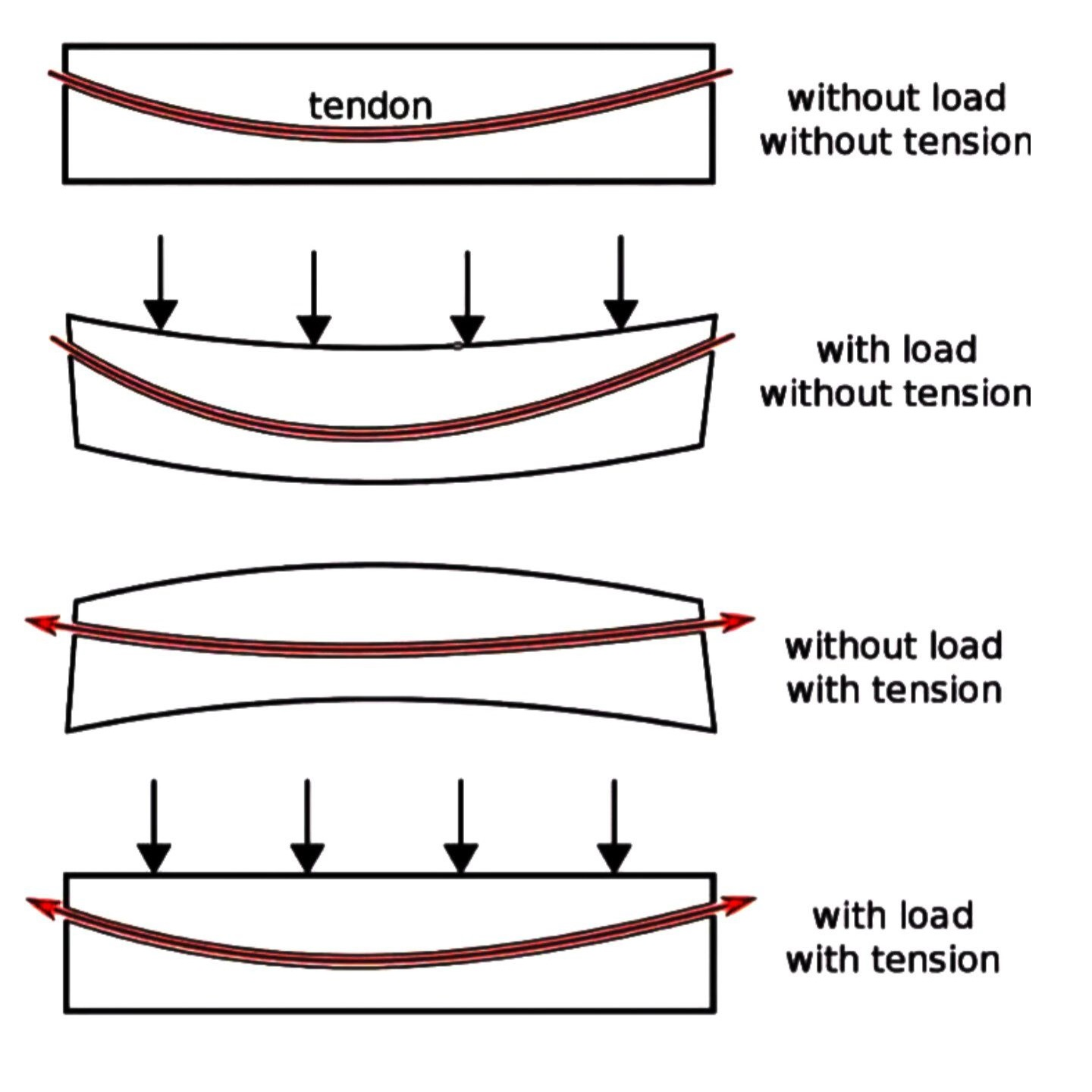
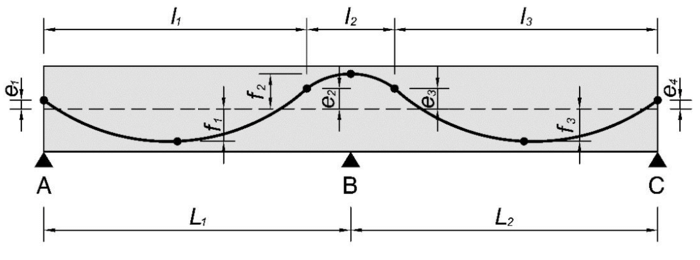
In a flat-plate slab, the tendon is not run straight through the section; it follows a parabolic profile that rises toward mid-span and drapes down near the columns or supports. This profile geometry generates an upward equivalent load at mid-span that directly counteracts a portion of the gravity loads. Under the PTI DC80.3 load-balancing design philosophy, engineers typically target balancing 60–80% of the sustained dead load, which keeps the slab close to a flat, undeflected state under typical service conditions.
Unbonded vs. Bonded PT: What We See in Texas
In most residential and light commercial post-tension slabs across Texas, unbonded monostrand is the standard. Bonded post-tensioning — where the tendon duct is grouted after stressing to create composite action — is more common in bridges and large-scale structural applications such as parking structures and transfer beams. For the single-family foundations and podium slabs we encounter most frequently in the Dallas market, unbonded PT is cost-effective, well-understood by local contractors, and fully addressed by ACI 318 Chapter 26 provisions.
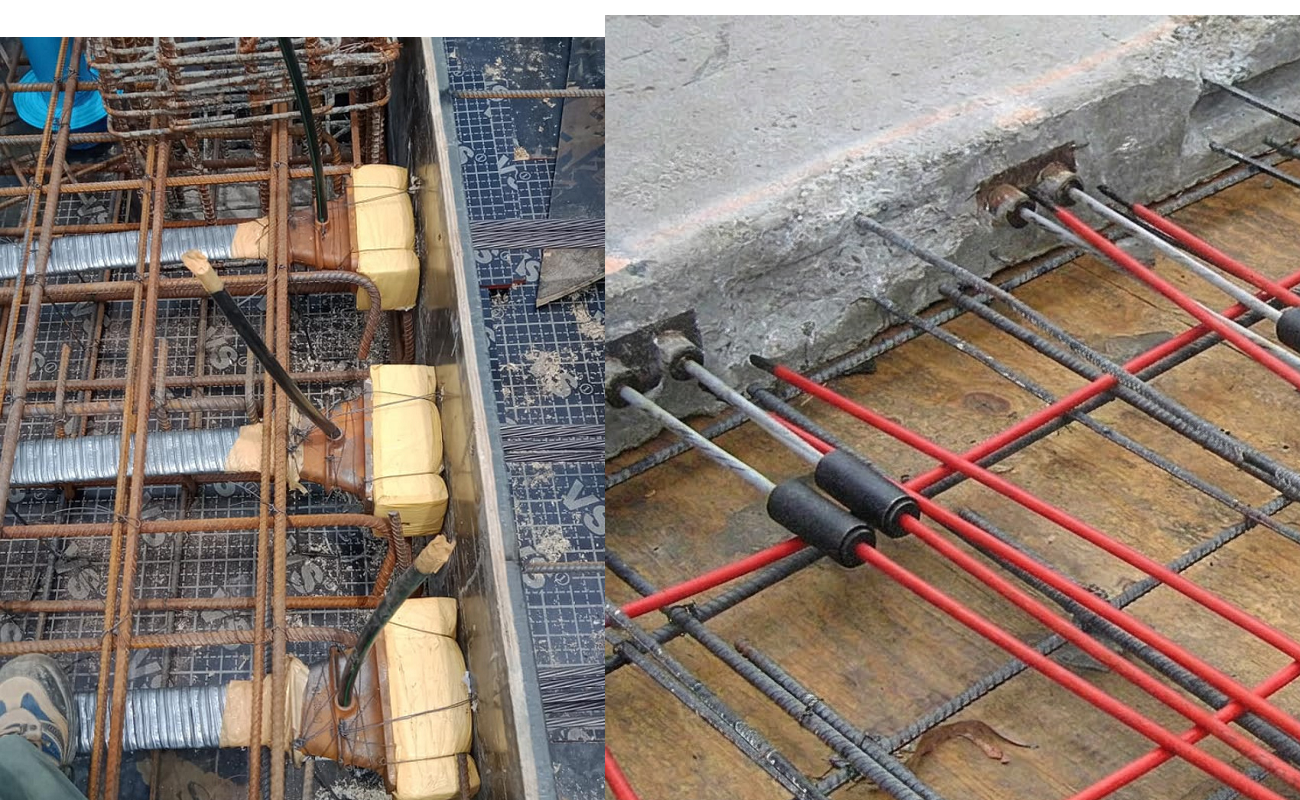
On a recent Dallas foundation pour, we specified a tendon profile that placed the high point 1 in. below the top slab surface at slab edges and the low point 1.5 in. above the bottom at mid-panel. Getting that profile elevation verified before the concrete truck arrives matters more than most contractors realize. A tendon that runs flat through the section instead of following the specified drape delivers a fraction of the intended load balancing, and the resulting mid-panel deflections can become visible within the first year of service.
2. The Structural Advantages of PT Slabs Over Conventional RC
The decision between post-tensioned concrete and conventional reinforced concrete is an engineering and economic question, not purely a materials question. We evaluate that decision by comparing performance metrics under the actual project constraints: span lengths, supported loads, slab depth limitations, and long-term serviceability requirements.
Span Efficiency
The most immediate advantage of a post-tension slab is span efficiency. In a conventional RC flat plate, practical span-to-depth ratios are typically in the range of 28–32 for interior panels without significant deflection problems. In an unbonded PT flat plate, span-to-depth ratios of 40–48 are achievable while still satisfying ACI 318 Section 24.2 deflection limits. In a real-world scenario we analyzed for a Dallas-area multi-tenant office fit-out, switching from conventional RC to unbonded PT allowed the structural depth to drop from 9 in. to 7 in. for a 28-ft bay, freeing 2 in. of floor-to-floor clearance that was critical for MEP routing.
Structural Tool · ACI 318 Reference
Slab Depth Calculator
Compare recommended slab thickness between Post-Tensioned and Conventional RC flat plates based on span and occupancy type.
Enter a span to see results
Results are indicative estimates based on ACI 318 span-to-depth ratios for unbonded PT flat plates (L/d ≈ 40–48) and conventional RC flat plates (L/d ≈ 28–32), adjusted for typical live loads by occupancy type. Values do not constitute a structural design and must be verified by a licensed structural engineer for any specific project.
Crack Control Through Active Pre-Compression
Conventional reinforced concrete relies on passive crack control: the design permits cracking (per ACI 318 Section 24.3 bar spacing limits) and then relies on the reinforcing bars to limit crack widths to acceptable values. Post-tensioned concrete takes an active approach. The compressive stress maintained in the concrete section by the tendons must be overcome before net tension develops. Under ACI 318 Section 24.5.3, PT slabs are designed so that the tensile stress in the concrete under service loads remains below the cracking stress threshold or, where cracking is permitted, within tightly controlled limits.
In practice, this means properly designed and constructed PT slabs on stable subgrades exhibit far fewer surface cracks than their RC counterparts. We have reviewed slab systems installed in Dallas in the early 1990s that show no structural cracking despite decades of Texas thermal cycling.
Construction Efficiency
Post-tensioned slabs typically use 20–30% less concrete volume than an equivalent conventional RC slab, because the thinner section achieves comparable performance. Lighter slabs also reduce the loads carried by supporting walls, columns, and foundations, creating a compounding efficiency. On projects where forming and shoring costs are significant, PT systems can also accelerate the construction schedule: reduced section thickness can allow earlier form stripping after stressing, depending on the concrete's gain in strength.
What Worked on Site
- Thinner slabs on Dallas residential foundations consistently reduced shrinkage-driven cracking during the initial cure period compared to thicker conventional RC pours under the same conditions.
- The ability to eliminate most intermediate control joints in PT slabs simplified the finishing operation and improved floor flatness results (F-number performance).
- PT tendons provide a practical load path indicator during diagnostics: the tendon profile and stress state can be checked to verify that the slab is performing as designed.
What Did Not Work on Site
- Stressing was delayed on one project due to a dispute over acceptance of concrete cylinders. When the slab sat un-stressed for over 10 days in summer heat, thermal shrinkage cracking developed before pre-compression was applied. Stressing schedule adherence is not negotiable.
- On a renovation project, a mechanical contractor cut through three tendons without contacting the structural engineer. Unbonded PT tendon repair is expensive and disruptive. Post-installation awareness among trades is a persistent challenge.
- In one case, grease contamination on the anchor bearing surface caused three wedge sets to slip. Inspection of anchorage hardware before concrete is placed is a non-optional quality step.
3. Post-Tension Slab Design: Key Parameters and Code Requirements
We evaluate PT slab designs by working through serviceability and strength checks in sequence, using load combinations from ASCE 7-22 and design provisions from ACI 318-19. The PTI DC80.3 standard provides additional guidance specifically for unbonded single-strand systems, and we treat it as a companion document to ACI 318 on all residential and light commercial PT work.
Minimum Average Pre-Compression
ACI 318 Section 8.6.2.1 requires a minimum average effective pre-compression stress of 125 psi across the gross concrete section for two-way PT slab systems. This is a floor, not a target. In practice, most residential PT slabs in Texas run in the 175–275 psi range of effective pre-compression after accounting for friction and anchor set losses. The actual effective pre-stress is what matters for both serviceability and strength checks, which is why accurate loss calculations are essential before the design is finalized.
Tendon Profile and Drape
The parabolic tendon profile governs the equivalent transverse load the tendon exerts on the concrete. The drape — defined as the vertical distance between the high point of the tendon path and the low point within a span — directly controls the magnitude of the upward equivalent load per ACI 318 Section 8.12. We calculate drape carefully for each tendon band direction, because plan geometry irregularities, slab edge conditions, and column size variations all affect the effective profile that can be physically achieved within the cover requirements.
Friction and Elastic Shortening Losses
For unbonded PT, friction losses are governed by the wobble friction coefficient and the curvature friction coefficient. Both are provided in the tendon manufacturer's published data and should be verified against the specific sheathing and grease system being used. On a recent project with a 65-ft run of tendon, we calculated friction and anchor set losses of approximately 12% of the jacking force, which reduced the effective post-stressing force meaningfully and required adjustment to the number of tendons per band.
Punching Shear at Column-Slab Connections
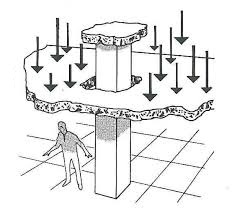
In post-tensioned flat plates, punching shear at column-slab connections is one of the critical failure modes under ACI 318 Chapter 22. The vertical component of the inclined tendon force at the column contributes to the shear resistance of the critical section, which is why the tendon profile near column lines is not just a serviceability consideration. In banded-distributed layouts, the banded tendons concentrated in the column strip provide both bending capacity and shear enhancement at the column perimeter. We verify punching shear under both gravity and unbalanced moment conditions, the latter particularly relevant for edge and corner columns.
4. Long-Term Performance and Longevity: What the Field Tells Us
The longevity of a post-tension slab is not primarily a materials question. The concrete and 270-ksi strand, when properly specified and installed, have design service lives well in excess of 50 years. The longevity question is fundamentally a corrosion protection and detailing question.
Corrosion as the Primary Long-Term Risk
The steel strand carries a sustained tensile stress of roughly 175–185 ksi in service. Stress corrosion cracking and hydrogen embrittlement are failure modes that can develop in stressed high-strength steel exposed to chloride ions or moisture. This is why the grease and sheath system for unbonded PT is not a construction convenience but a primary corrosion barrier. ACI 318 Section 26.10.1 specifies cover requirements for PT tendons, and we treat those as minimums — not targets — particularly in slabs exposed to soil or exterior conditions in the Texas climate.
We have reviewed PT slab systems in the Dallas area where anchor pockets were left unsealed for extended periods after stressing. In several cases, moisture infiltrated through the pocket directly to the strand-anchor interface. That is an avoidable corrosion initiation path, and the industry-standard practice of sealing anchor pockets with non-shrink grout or an equivalent sealant within 24 hours of stressing exists precisely to address it. Per PTI DC80.3, the pocket fill material must be compatible with the grease used and must provide an effective moisture barrier.
Expansive Soils and Slab-Soil Interaction in Texas
The primary service-life challenge specific to Texas post-tension foundations is not the PT system itself but the expansive clay soils under most of the Dallas metropolitan area. When soil moisture varies seasonally, the supporting soil swells and shrinks unevenly, inducing differential movements across the slab panel. A well-designed PT foundation slab handles this by maintaining enough stiffness and internal pre-compression to bridge differential support without cracking. But the design must account for the actual soil conditions, and the as-built slab must match the design.
For a deeper look at soil-slab interaction mechanics and the PTI DC80.3 ribbed foundation design approach, see our companion article: Post-Tension Foundations 101: Preventing Slab Movement and Cracking in Expansive Clay Soils.
Inspection and Maintenance Intervals
Post-tension slabs do not require scheduled preventive maintenance the way mechanical systems do, but they are not maintenance-free. We recommend that building owners understand the location of tendons (as-built tendon shop drawings should be preserved), the number and location of anchor pockets, and the warning signs of PT system distress: sudden loud reports (tendon pop), visible surface cracks at anchor zones, unexpected floor deflection, or water infiltration at anchor pockets. When any of these appear, a qualified PT specialist should evaluate the slab before any cutting, coring, or utility installation proceeds.
5. PT Slab vs. Conventional RC Slab: Side-by-Side Comparison
We evaluated the metrics below across multiple projects and code provisions. All values assume similar gravity loading conditions, normal-weight concrete (unit weight 145 pcf), and Grade 60 mild steel for the RC baseline.
| Criteria | Post-Tension Slab | Conventional RC Slab |
|---|---|---|
| Slab Thickness | 4–5 in. (typical residential) | 6–8 in. (similar loads) |
| Concrete Volume | Reduced 20–30% | Baseline |
| Control Joint Frequency | Minimal to none (PT compression) | Every 15–20 ft required |
| Shrinkage Crack Control | Active compression locks cracks | Passive (depends on steel ratio) |
| Long-span Capability | Excellent (25–35 ft+ economical) | Limited (costly at long spans) |
| Construction Timeline | Faster (fewer shores needed) | Longer (more shoring/staging) |
| Material Cost | Lower net (less concrete/rebar) | Higher net for equiv. span |
| Repair Complexity | Requires PT specialist | Standard rebar repair methods |
| Code Reference | ACI 318 Ch. 26 / PTI DC80.3 | ACI 318 Ch. 9 / 10 |
Note: Actual project-specific performance depends on design inputs, soil conditions, construction quality, and code compliance. The values above reflect typical ranges from our field experience and published ACI/PTI guidance. Verify all project-specific values with a licensed structural engineer.
Frequently Asked Questions
How thick does a post-tension slab need to be for a residential foundation in Texas?
For a typical single-family residential foundation in the Dallas area, post-tension slabs commonly range from 4 to 5 in. in thickness, with ribbed (waffle) foundations used where soil conditions demand greater stiffness. The final thickness depends on span lengths between interior beams or ribs, the soil bearing and plasticity index data, and the engineer-of-record's analysis per PTI DC80.3.
What does it mean when a post-tension slab tendon pops or snaps?
An audible report from a PT slab, often described as a loud crack or snap, can indicate a tendon failure. Tendons under sustained tensile stress can fail due to corrosion, mechanical damage (from drilling or cutting), or wire breaks at the anchor. A single tendon failure redistributes load to adjacent tendons and is not an immediate structural emergency in most cases, but it should be investigated promptly by a qualified PT diagnostics specialist.
Can you cut through a post-tension slab for a plumbing or electrical penetration?
Yes, but only after verifying the tendon layout from as-built drawings and using ground-penetrating radar (GPR) to locate tendon positions before any saw cutting or core drilling. Cutting an active tendon releases the full tensile force suddenly, which is a safety hazard and may require tendon repair to restore structural integrity.
How long after placing concrete can a post-tension slab be stressed?
ACI 318 Section 26.10.2 requires that PT tendons not be stressed until the concrete has reached a compressive strength sufficient to resist the stressing forces without distress at the anchorage zones. A minimum of 2,000 psi is often used as the initial stressing threshold for partial stressing; full stressing typically targets 3,000–3,500 psi or higher. In practice on Dallas residential pours, this corresponds to roughly 3–7 days after placement depending on ambient temperature and mix design.
What is the expected service life of a post-tension slab?
A properly designed, constructed, and maintained post-tension slab system has a practical service life of 50 years or more. The primary variable is corrosion protection integrity at the tendon anchorage points and along the tendon sheath. Slabs where anchor pockets were properly sealed, cover requirements were met, and no post-construction mechanical damage to tendons occurred consistently show excellent long-term performance.
Ready to Optimize Your PT Slab Design?
We provide Post-Tension Slab Design, Optimization & Diagnostics services for contractors, engineering firms, and architects across Texas. Whether you need a full slab design package, a peer review, or a field diagnostic on an existing PT system, our team brings hands-on experience from complex projects in both international and U.S. markets.
Technical consulting TensionOne →Work with TensionOne on Your Next PT Slab Project
We built TensionOne on the principle that field experience and rigorous analysis are not in competition. Every PT slab design we produce is grounded in actual construction site realities, not just theoretical code compliance. Services available to GCs, architects, and engineering firms in the Dallas-Fort Worth area:
- Post-Tension Slab Design — full design packages including tendon layout, profile schedules, stressing calculations, and detailing
- Optimization Reviews — review of existing or proposed PT designs for efficiency improvements in tendon quantity, slab thickness, or construction sequencing
- PT Diagnostics — field assessment of existing PT slabs exhibiting cracking, deflection, or suspected tendon distress
- Digital Tools — engineering calculation spreadsheets and templates for PT slab design and construction verification
External references: ACI 318-19 Building Code Requirements for Structural Concrete is available from the American Concrete Institute. PTI DC80.3-20 is available from the Post-Tensioning Institute. ASCE 7-22 Minimum Design Loads and Associated Criteria for Buildings and Other Structures is available from the American Society of Civil Engineers.