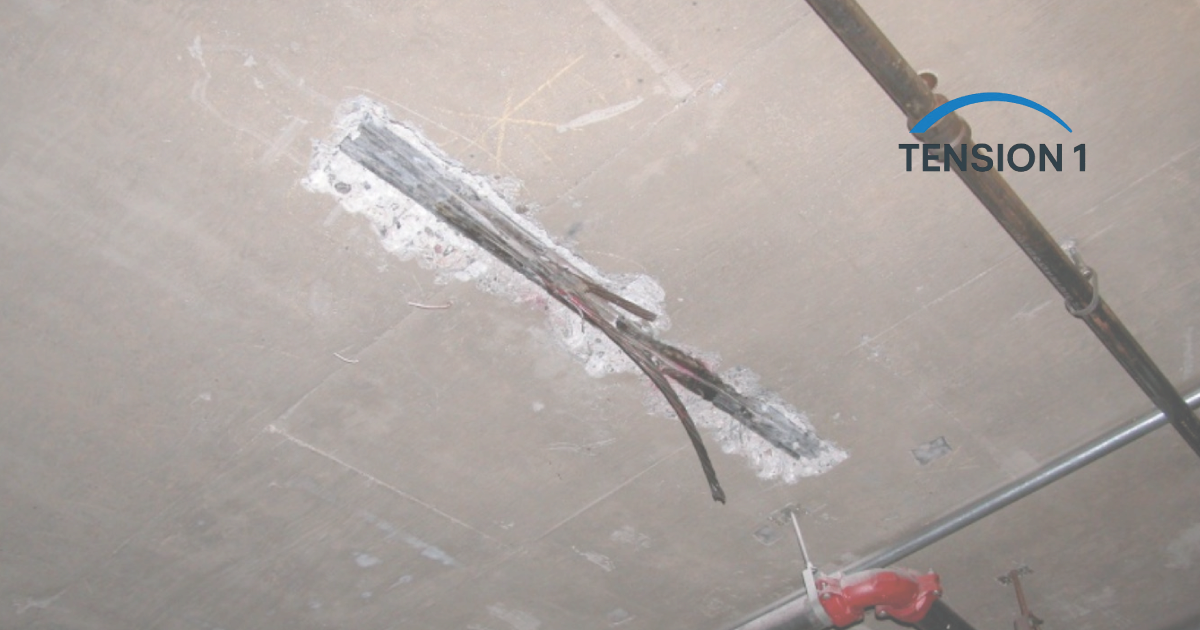
A post tension slab is engineered to last. The unbonded tendons running through the concrete are protected by a high-density polyethylene (HDPE) sheath, individually coated in corrosion-inhibiting grease, and designed to remain tension-free from the surrounding slab environment. In controlled conditions, that system works reliably for decades. The problem is that conditions in the field are rarely controlled.
Chloride ions do not announce their presence. They diffuse slowly through concrete cover, accumulate at the tendon sheath, and initiate electrochemical corrosion over months or years before any surface crack appears. By the time a pocket corrosion failure becomes visible, the cross-sectional loss in the wire strand can already be severe.
The financial and structural consequences of late detection are significant. A single tendon replacement on a residential slab in the Dallas area can range from $800 to $3,500 depending on access conditions, tendon length, and anchorage complexity. Whole-section re-stressing or anchor repairs escalate well beyond that. Understanding how chloride penetration develops and where it attacks is the foundation of any effective post tension slab repair strategy.
How Chloride Penetration Attacks PT Tendons
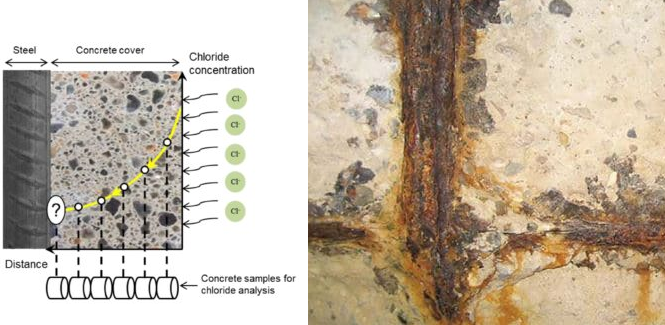
Chloride-induced corrosion is not a surface problem. It is a diffusion problem. Chloride ions from deicing salts, seawater exposure, or contaminated mix water penetrate the concrete matrix and concentrate around steel elements. For conventional reinforced concrete, this triggers rebar corrosion and spalling. For post-tensioned systems, the threat is different in nature and more dangerous in consequence.
The Diffusion Mechanism
Concrete is not a watertight membrane. Under wet-dry cycling, chloride solutions are drawn into the capillary pore network by absorption and then driven further by concentration gradients. The rate of diffusion depends on the water-to-cement ratio, concrete compressive strength, and curing quality. ACI 318-19 Section 26.4 and ACI 308 address exposure conditions and minimum cover requirements that directly affect how fast chlorides reach the tendon system.
For slabs on grade in Texas, the ground water chemistry matters. In areas with high sulfate and chloride soil content, the sub-slab exposure condition is not benign. The chloride threshold for initiating corrosion in high-strength prestressing wire is substantially lower than for mild reinforcing steel, somewhere in the range of 0.10 to 0.20% chloride by weight of cement for prestressing steel versus approximately 0.40% for passive mild steel.
Why the Sheath Does Not Always Protect
The HDPE sheath and grease system is the primary barrier for unbonded PT tendons. When that system is intact, it effectively isolates the strand from the concrete environment. The vulnerability arises when the sheath is breached.
Common sheath breach scenarios include:
- Mechanical damage during concrete placement or vibration, particularly at high-traffic pour zones
- Puncture at tendon deviation points where the profile changes direction and the sheath contacts formwork edges or support chairs
- Inadequate factory grease fill, leaving air pockets at mid-span or at the low points of the tendon profile
- Long-term environmental degradation of the HDPE at the anchor pocket, where UV exposure and temperature cycling affect the seal
Once a breach occurs, the grease barrier is compromised. Chloride-laden moisture enters the sheath, contacts the steel wire, and the electrochemical corrosion cell begins. Because the corrosion is contained within the sheath, it may produce no visible surface signal until the strand cross-section has been significantly reduced. For more detail on identifying these failure points before they escalate, see What Are the Visible Signs of a Post-Tension Cable Failure?
Evaluating Corrosion Risk on a PT Slab: Field Methodology
Assessing chloride-related corrosion risk on an existing post tension slab requires combining visual inspection, concrete sampling, and, where warranted, non-destructive testing (NDT). The objective is to establish whether chloride concentration at the tendon depth has reached or exceeded the corrosion initiation threshold.
Step 1: Concrete Core Sampling and Chloride Profile
Extracted core samples analyzed for acid-soluble chloride content per ASTM C1152 provide the most direct evidence of chloride penetration depth. Cores are taken at representative locations: areas near the slab perimeter (more exposed to surface runoff), at control joints (where sealant may have failed), and near stressing pockets (which are inherently vulnerable points).
A chloride profile is built by analyzing powder samples at incremental depths (0.5 in, 1.0 in, 1.5 in, 2.0 in, etc.) and plotting concentration against depth. If the profile shows chloride levels approaching the critical threshold at the tendon cover depth, active intervention is justified regardless of whether visible cracking is present.
Step 2: Half-Cell Potential Mapping
ASTM C876 half-cell potential testing measures the electrochemical potential at the concrete surface to indicate whether active corrosion of embedded steel is probable. While originally developed for reinforced concrete, the method is applied to PT slabs with proper interpretation. Readings more negative than approximately -350 mV (vs. CSE) indicate a greater than 90% probability of active corrosion.
Step 3: Anchor Pocket and Sheath Visual Inspection
Stressing pockets are the most accessible point of the tendon system. After removing the pocket fill material, the condition of the sheath tail, grease continuity, and strand appearance provide a direct qualitative assessment of the overall tendon environment.
This three-step methodology parallels the evaluation approach described in detail in our broader guide on post-tension slab tendon corrosion inspection and preservation, which covers the full inspection protocol from initial site assessment through documentation.
Corrosion Assessment Methods: What Worked On-Site vs. What Did Not
The following observations are drawn from evaluating corrosion assessment approaches across multiple PT slab inspections, including a review of core sampling results, half-cell survey coverage, and anchor pocket findings.
| What Worked On-Site | What Did Not Work |
|---|---|
| Chloride profiling at 0.5 in increments provided a clear picture of penetration depth | Relying solely on visual surface cracking — tendons with 20% section loss showed no cracks |
| Anchor pocket inspection caught active corrosion where no surface cracking was visible | Single-depth core samples misrepresented the profile; gradient sampling is essential |
| Half-cell mapping efficiently screened large slab areas, reducing core sample count | Half-cell mapping alone was not diagnostic — required chloride data for confirmation |
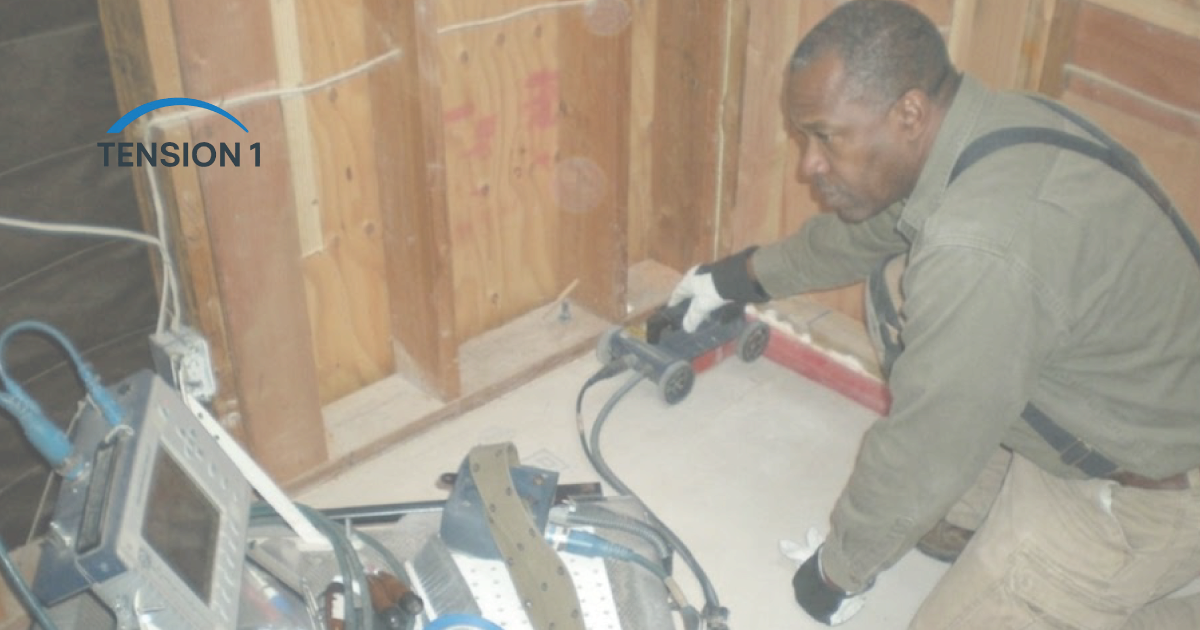
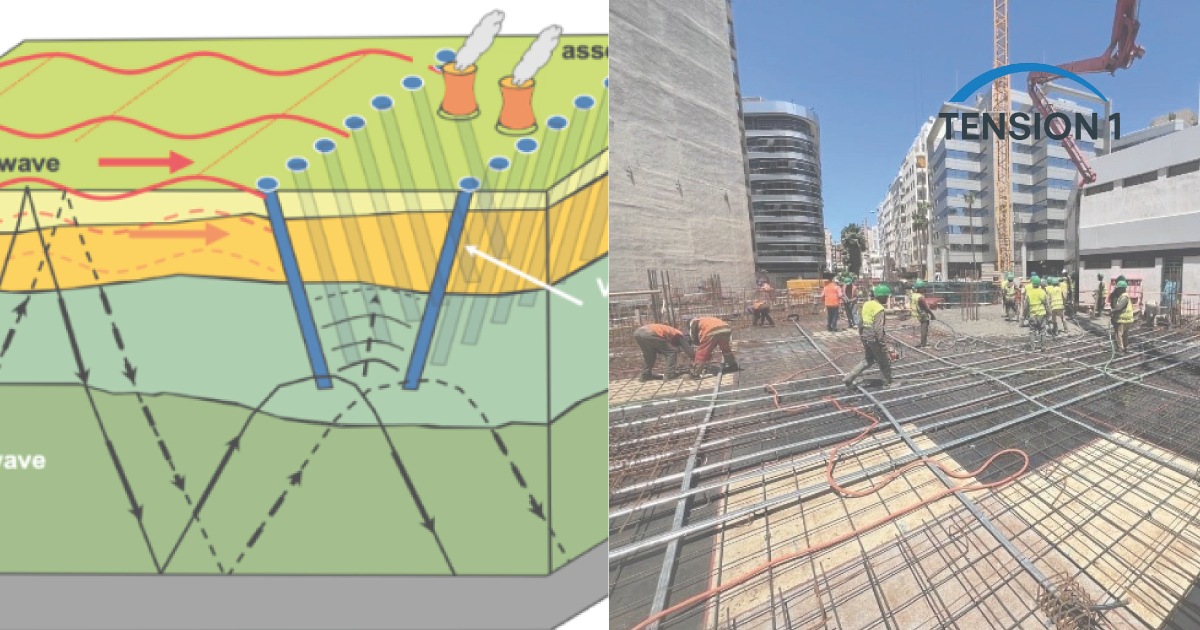
| Photo documentation of sheath breaches at deviation points correlated with deepest chloride readings | GPR profiling without chloride data identified tendon locations but not corrosion state |
Post Tension Slab Repair Options and Cost Considerations
The appropriate post tension slab repair method depends on the extent of corrosion, the accessibility of the affected tendon, and whether the structural reserve capacity of the slab can be maintained during repair. There is no single universal fix.
Tendon Replacement
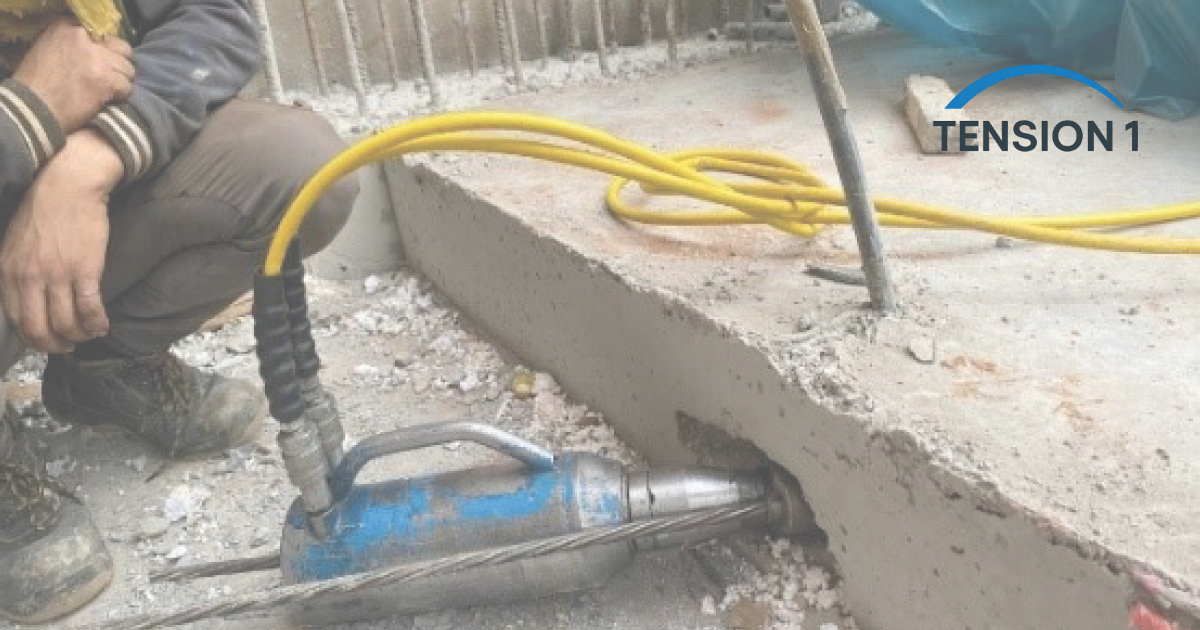
Full tendon replacement is the most structurally reliable repair when a wire strand has experienced significant section loss. The process involves cutting and removing the damaged tendon through the existing conduit, threading a new unbonded tendon of the same specification, re-anchoring at both ends, stressing to the specified jacking load, and recording elongation against the calculated theoretical value per PTI DC80.3.
The elongation check is not a formality. It is the field verification that the installed prestress level is within tolerance. Deviations greater than plus or minus 7% of the theoretical elongation require investigation per ACI 318-19 Section 26.10.3.
Anchor Repair and Regrouting
Where corrosion is limited to the anchor zone and the strand away from the anchorage retains adequate cross-section, anchor repair combined with regrouting the pocket may be sufficient. The corroded anchor hardware is replaced, the stressing pocket is cleaned and dried, the grease fill is restored at the tendon tail, and the pocket is cast with an approved non-shrink grout.
Cathodic Protection
For slabs with moderate, widespread chloride penetration that has not yet reached the critical threshold at all tendons, impressed current cathodic protection (ICCP) is a documented intervention. ICCP systems arrest the electrochemical corrosion process by reversing the current flow at the steel surface. They are most applicable for structures with significant replacement cost or logistical constraints that make tendon-by-tendon replacement impractical.
Post Tension Cable Repair Cost: What to Expect
Cost estimates for PT slab repair vary considerably based on access conditions, slab thickness, tendon length, and local labor rates. The table below provides a representative range for the Dallas area:
| Repair Scope | Estimated Cost Range (Dallas, TX) |
|---|---|
| Single tendon replacement (residential, accessible) | $800 to $2,500 |
| Single tendon replacement (commercial, restricted access) | $1,800 to $4,500 |
| Anchor pocket repair + regrouting | $350 to $900 per pocket |
| Cathodic protection installation (per sq ft) | $15 to $45 per sq ft |
| Chloride core sampling + lab analysis (per core) | $180 to $350 per core |
Ranges cover labor and materials only. Structural engineering review, inspection reporting, and permit fees are separate. Verify with current local contractor pricing before use in project budgets.
These ranges cover labor and materials only. Structural engineering review, inspection reporting, and permit fees are separate. For a detailed assessment of cost drivers, the PTI Technical Notes on Repair of Unbonded Tendons provide a useful framework.
Designing Against Chloride Penetration: Prevention at the Source
Repair is reactive. The more effective strategy is to reduce chloride penetration risk during design and construction. The following measures have demonstrated practical value on PT slab projects in aggressive exposure environments.
- Concrete mix design: Use a low water-to-cementitious materials ratio (w/cm max 0.40 for moderate exposure, max 0.35 for severe per ACI 318-19 Table 19.3.3). Supplementary cementitious materials (fly ash, slag cement) reduce permeability and chloride diffusivity.
- Concrete cover: ACI 318-19 requires a minimum of 3/4 in for unbonded PT tendons in slabs not exposed to weather, and 1.5 in for slabs exposed to weather. In coastal or chemically aggressive Texas environments, exceeding the code minimum is a defensible design decision.
- Sheath and grease quality control: Require ASTM-compliant sheath material certification and verify grease fill continuity at the factory. Specify visual inspection at delivery and require re-greasing at any cut or damaged section before placement.
- Concrete placement and curing: Sheath damage occurs most often during concrete vibration. Require vibrator operators to maintain clearance from tendons. Enforce minimum curing duration per ACI 308 to reduce early-age permeability.
- Slab joint sealants: Control joints and construction joints are preferential chloride entry points. Specify and maintain joint sealants appropriate for the exposure condition.
It is also worth noting the structural context. A PT slab's resilience to distributed loads and differential settlement depends on the integrity of the prestress force. Tendon loss from corrosion is not a localized aesthetic problem — it affects the entire slab's load redistribution capacity. For context on the broader structural performance differences, see Is a Post-Tension Slab More Earthquake-Resistant Than a Conventional RC Slab?
And if your project involves any drilling, coring, or penetration through an existing slab, the tendon location question is not optional. Review Is It Safe to Drill Into a Post-Tension Slab Without Knowing Where the Cables Are? before any cutting operations begin.
Frequently Asked Questions
How long does it take for chloride corrosion to damage PT tendons?
The initiation period depends on concrete permeability, chloride exposure level, and cover depth. In highly permeable concrete with thin cover under direct saltwater exposure, initiation can begin within 5 to 10 years. In well-designed slabs with low w/cm and adequate cover, the initiation period can exceed 30 to 50 years. The propagation phase, from initiation to structural loss, is typically faster in prestressing wire than in mild reinforcement because of the higher stress state and lower critical chloride threshold.
Can a corroded PT tendon be repaired without replacing the full tendon?
In some cases, yes. If corrosion is limited to the anchor zone and the strand away from the anchor retains structural integrity, anchor repair and regrouting may be adequate. However, this determination requires a documented inspection and engineering assessment. Section loss in the wire strand cannot be reliably estimated without either direct examination of the strand or specialized NDT. Never assume a tendon is fit for service without verification.
What does post tension cable repair cost on average?
For a single residential tendon replacement in the Dallas area, a reasonable planning budget is $1,200 to $3,000 including labor and materials for straightforward access conditions. Commercial projects or restricted access conditions increase costs significantly. The total cost of deferred maintenance, which includes slab section removal, structural shoring, re-pour, and curing time, almost always exceeds the cost of timely tendon repair.
How do I know if my PT slab has chloride damage?
Visual inspection alone is unreliable for detecting internal tendon corrosion. The most direct indicators are: anchor pocket corrosion on inspection, unexplained slab cracking not consistent with shrinkage patterns, and chloride concentration results from core sampling that approach or exceed the threshold for prestressing steel. If the slab is more than 20 years old and has had exposure to deicing chemicals, saltwater, or contaminated soil, a proactive inspection is justified.
Is chloride-related corrosion covered by standard property insurance?
This varies by policy and is not an engineering determination. Chloride corrosion is typically treated as a gradual or latent defect rather than a sudden loss event, which affects coverage eligibility. Owners should review their policy language and consult with their insurer before assuming repair costs will be covered. This is outside the scope of structural engineering advice and a legal or insurance professional should be consulted.
Need PT Slab Design Drawings and Calculation Notes for Your Next Project?
Getting corrosion protection and repair documentation right requires more than a code check. It requires a set of drawings and calculation notes that reflect the actual geometry of the slab, the tendon layout, and the field conditions specific to your project.
TensionOne provides post-tension slab drawings and calculation notes as a freelance assignment for general contractors, small engineering firms, and structural drafters who need a complete, reviewable deliverable. Submit your project details through our freelance services inquiry page and we will respond within one business day with a scope and timeline.
Need PT Slab Drawings and Calculation Notes?
TensionOne provides freelance PT slab engineering services tailored to the Texas construction market, including repair assessment documentation prepared to ACI 318-19 and PTI DC80.3 standards.
- Post-Tensioned Slab Design Calculations — serviceability and ULS checks, punching shear, deflection
- Tendon Layout and Profile Drawings
- Stressing Schedules and Elongation Tables
- Repair Assessment Documentation
TensionOne provides structural engineering support services. All deliverables are prepared for review and use by a licensed Professional Engineer. TensionOne does not provide PE-stamped documents directly.
References: ACI 318-19: Building Code Requirements for Structural Concrete, American Concrete Institute. PTI DC80.3: Specification for Unbonded Single Strand Tendons, Post-Tensioning Institute. ASTM C1152: Standard Test Method for Acid-Soluble Chloride in Mortar and Concrete, ASTM International. ASTM C876: Standard Test Method for Corrosion Potentials of Uncoated Reinforcing Steel in Concrete, ASTM International.
This article is intended as a technical reference and does not constitute a PE-stamped engineering opinion or project-specific structural recommendation. All design decisions should be reviewed and approved by the licensed engineer of record for your project.