Every post tension slab project starts with the same question from the client: is the premium worth it? In experience on commercial and mixed-use projects across Texas, the question is framed wrong. The real question is where the value lands, and how to quantify it before the project breaks ground.
Deeper sections, heavier rebar, larger columns and taller buildings make conventional reinforced concrete (RC) expensive at longer spans, and that cost is hard to reverse once the design is set. We have reviewed post-bid project logs where the owner absorbed an 8 to 12 percent cost overrun attributable directly to conservative slab depth choices made during design development.
This article breaks the return of a post tension slab into its three levers, materials, formwork and schedule, plus building height, and gives you a calculation you can run with your own local prices.
Post Tension Slab Material Savings: Concrete and Steel
Where post tension slab geometry changes the budget
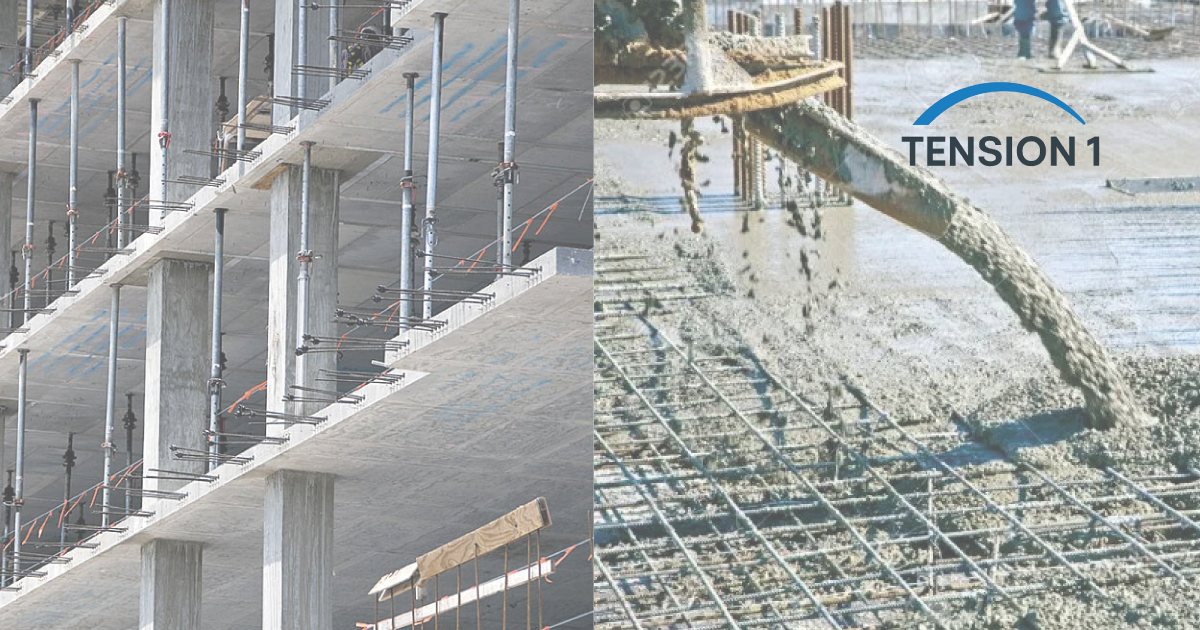
Section depth is the first lever. Draped tendons push up against gravity load, so the slab spans farther at a smaller thickness. A Portland Cement Association design article (2005) puts the typical reduction at 25 to 35 percent against mild reinforced slabs, with a preliminary span-to-thickness ratio of 45 for floors.
On a typical two-way flat plate with a 30 ft bay, our design evaluations consistently show a PT slab of 7 to 8 in against an RC equivalent of 10 to 12 in. ACI 318-19 agrees: the minimum nonprestressed flat plate on that bay is 10.2 in for an interior panel. At 10,000 ft2 of slab, 3 in less depth removes about 93 yd3 of concrete per floor, before column and foundation reductions.
Mild steel follows: in a post tension slab, bars handle crack control and code minimums, not primary flexure. Our project evaluations put the reduction at 40 to 60 percent of the RC rebar weight.
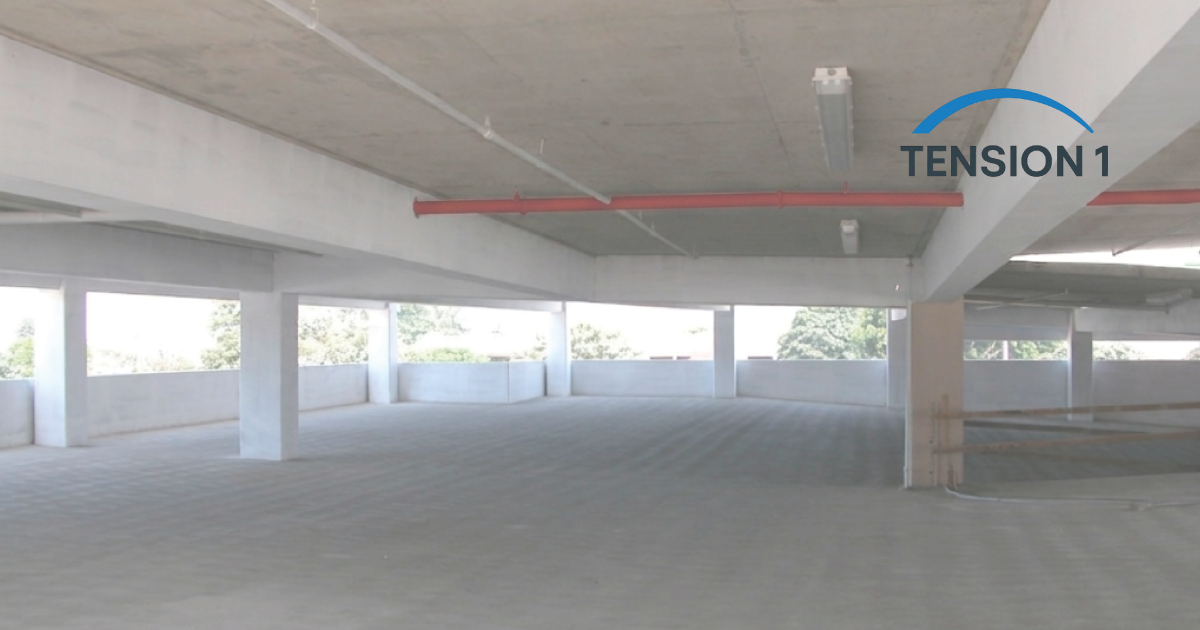
In our structural calculations for a multi-level parking project, we carried out a comparative study for a client between a conventional reinforced concrete slab with beams and a post-tensioned slab with bonded tendons. The results of this analysis showed a 30 percent reduction in concrete volume.
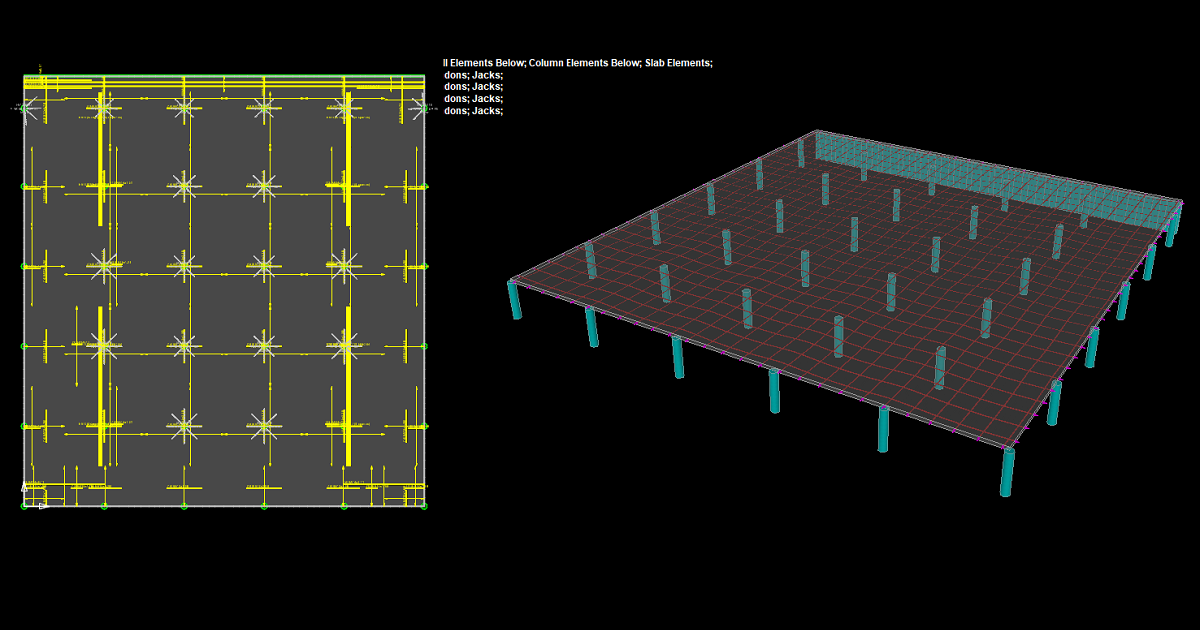
How we evaluated material quantities
We sized both options to the same immediate live load deflection limit, L/360 per ACI 318-19 Table 24.2.2, and the same strength demand under ASCE/SEI 7-22 factored loads. Concrete strength was 4,000 psi for RC and 5,000 psi for PT, with a parabolic tendon profile and maximum drape at midspan. Unit costs came from the 2023 RSMeans commercial database for the Dallas-Fort Worth region.
Formwork Economics: Cycle Time Is Where the Money Moves
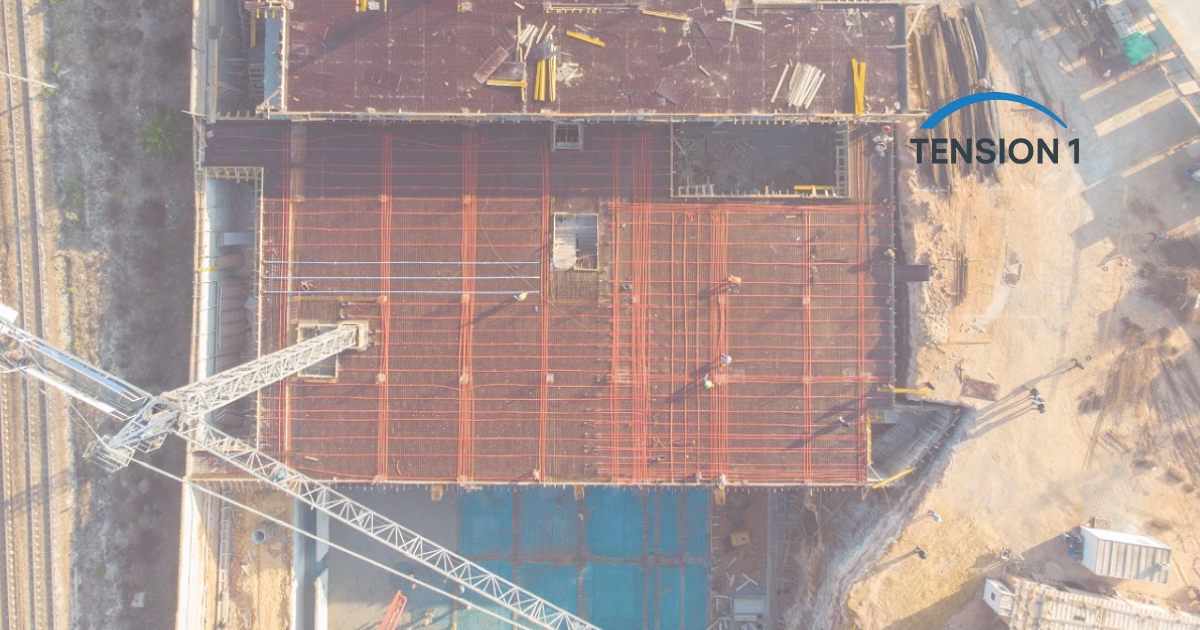
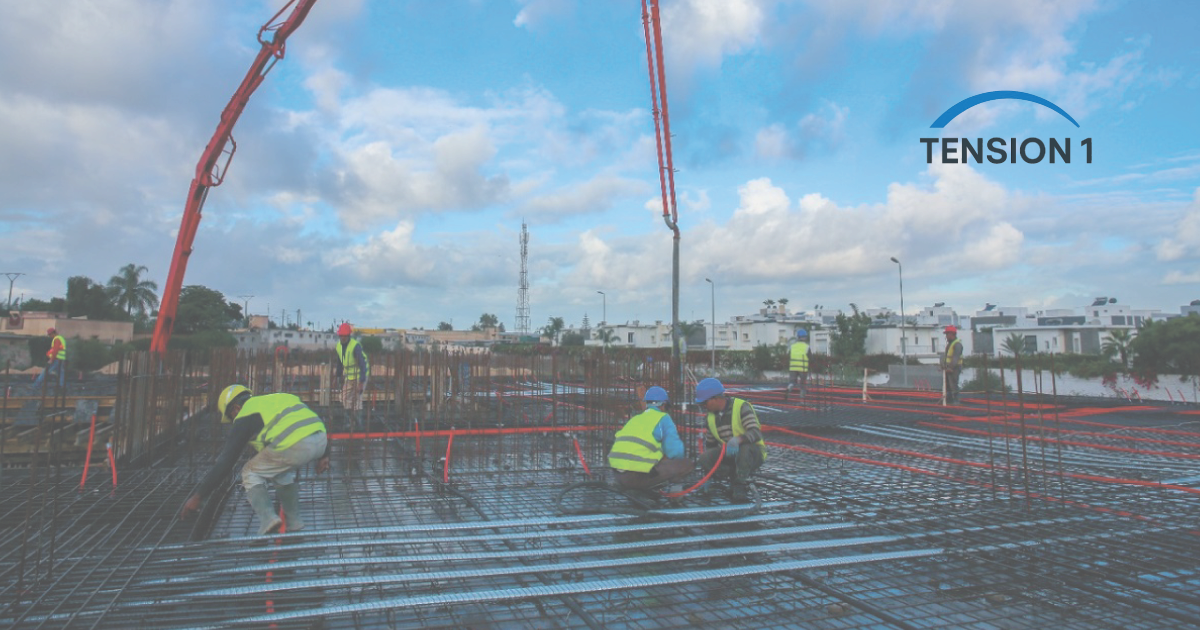
Formwork time is where owners look least, and on multi-story frames it is often where a post tension slab returns the most. A conventional slab waits for strength gain before forms and shores can come out. A PT slab can release its forms once the tendons are stressed, because stressing puts the post tension slab to work. The strength at stressing comes from the project specification; the PCA article ties the common 3,000 psi minimum to the bearing capacity of a typical anchor.
The gain is not automatic. A Penn State architectural engineering study (2006) scheduled 8 days per floor for a PT flat plate against 7 for its RC redesign, because of tendon placement and stressing.
Texas summer heat speeds early strength gain but raises thermal gradient risk during curing. Confirm the specified stressing strength with field-cured cylinders. Do not stress by calendar alone.
What worked on site
- Stressing as soon as the specified minimum strength was reached, not waiting for 28-day values, maximized formwork reuse without sacrificing structural performance.
- Sectioning the pour into sequenced bays allowed stressing and stripping in one bay while the next was still curing.
- Coordinating the PT subcontractor with the formwork superintendent reduced reshoring conflicts.
What to watch
- On one project, the stressing sequence was not included in the shoring removal plan submitted to the engineer of record. This caused a 4-day hold while the sequence was reviewed and approved. The document workflow, not the engineering, caused the delay.
- Slabs poured in winter, below 50 degrees F, needed extended curing before reaching stressing strength, and the schedule savings narrowed considerably.
Story Height: The Return That Compounds Every Floor
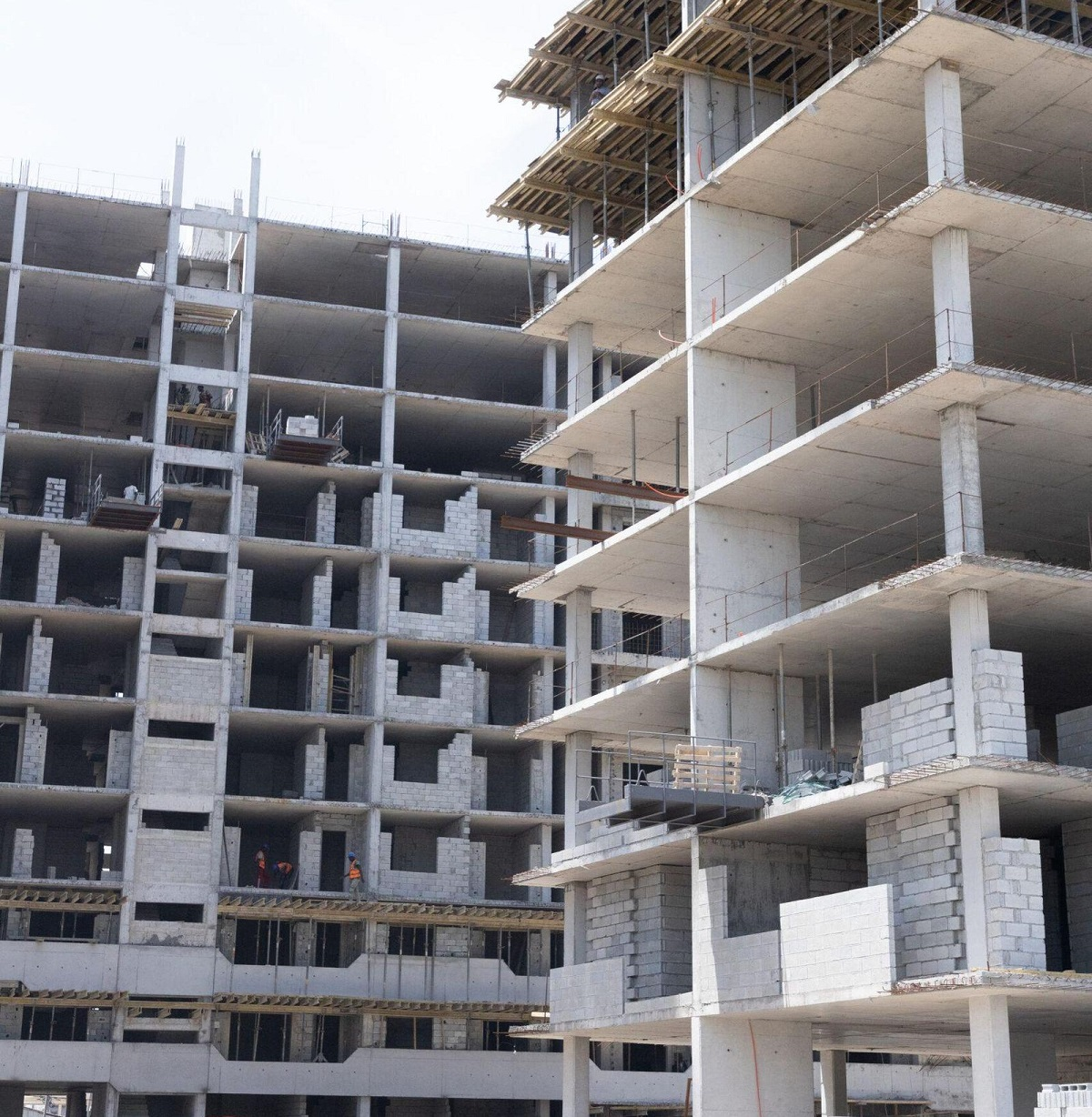
A thinner slab lowers every soffit. On a 10-story frame, 3 in less slab per floor is 30 in of building height. That is less facade, shorter risers and elevator runs, or more clear height inside the same envelope. We develop this at scale in PT vs RC slab efficiency in high-rise construction.
Post Tension Slab vs RC: The ROI Levers Side by Side
| Lever | Post tension slab | Conventional RC slab | Basis |
|---|---|---|---|
| Thickness, 30 ft bay | 7 to 8 in | 10 to 12 in | TensionOne evaluations, ACI 318-19, PCA |
| Concrete volume | About 30 percent less in our parking study | Baseline | Project comparison |
| Mild steel weight | 40 to 60 percent less | Baseline | TensionOne evaluations |
| Form release | After stressing | After strength gain | Project specification |
| Per-floor cycle | Project-specific | Project-specific | Penn State: 8 days PT, 7 days RC |
| Building height, 10 stories | About 30 in lower | Baseline | 3 in per floor |
Calculating Post Tension Slab ROI: A Worked Example
Take a 5-story office building with 10,000 ft2 per floor on 30 ft by 30 ft bays: an 8 in post tension slab against an 11 in RC flat plate.
- Concrete: 3 in x 50,000 ft2 = 12,500 ft3, or about 463 yd3 less. Multiply by your local supplied-and-placed price.
- Mild steel: take the RC rebar tonnage from the take-off and apply the 40 to 60 percent reduction, then multiply by your installed rebar price.
- PT premium: strand, anchors, stressing and shop drawings from the PT quote.
- Schedule: days saved per floor, if any, times the daily general conditions.
- Height and frame: facade, column and foundation reductions.
Net saving is the sum of the reductions minus the PT premium. For a published order of magnitude, the Penn State study estimated about $21 per ft2 for the PT slab against $26 per ft2 for its RC redesign, in 2006 dollars. On 50,000 ft2, that $5 gap would be about $250,000. It is a sanity check, not a quote for your post tension slab. The bid-level comparison is in PT vs rebar cost and performance for commercial builders, and the parking case in post tension slab ROI for parking garages.
The same quantities feed the carbon advantage of post-tensioned slabs. Houses on expansive soil follow different cost drivers for residential slabs, and when PT does not pay, see our builder's guide to post tension slab alternatives. The full framework is in post-tension vs reinforced concrete: 6 criteria to choose the right system.
Run the Numbers on Your Grid
The governing code edition and project documents take precedence over this article, and sealing and approval belong to the licensed engineer of record. How we source and date cost figures is set out in our editorial policy.
We build post tension slab and RC take-offs side by side on your grid, with every assumption stated so your estimator can price it, as independent technical support for your engineer of record. See our post-tension slab design, optimization and diagnostics services.