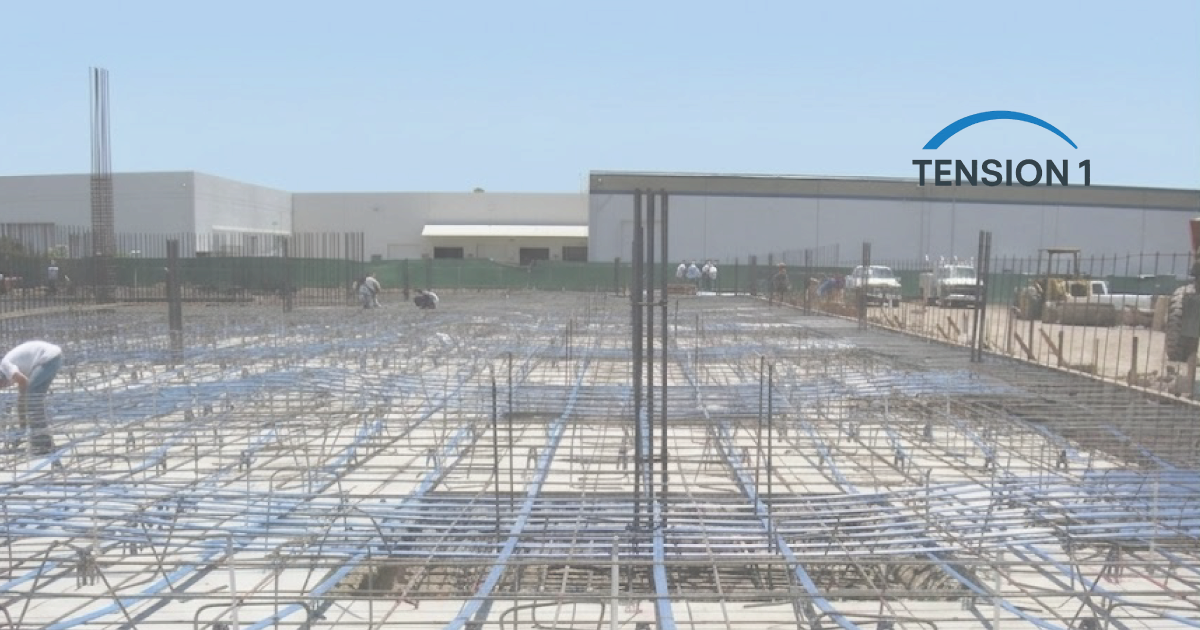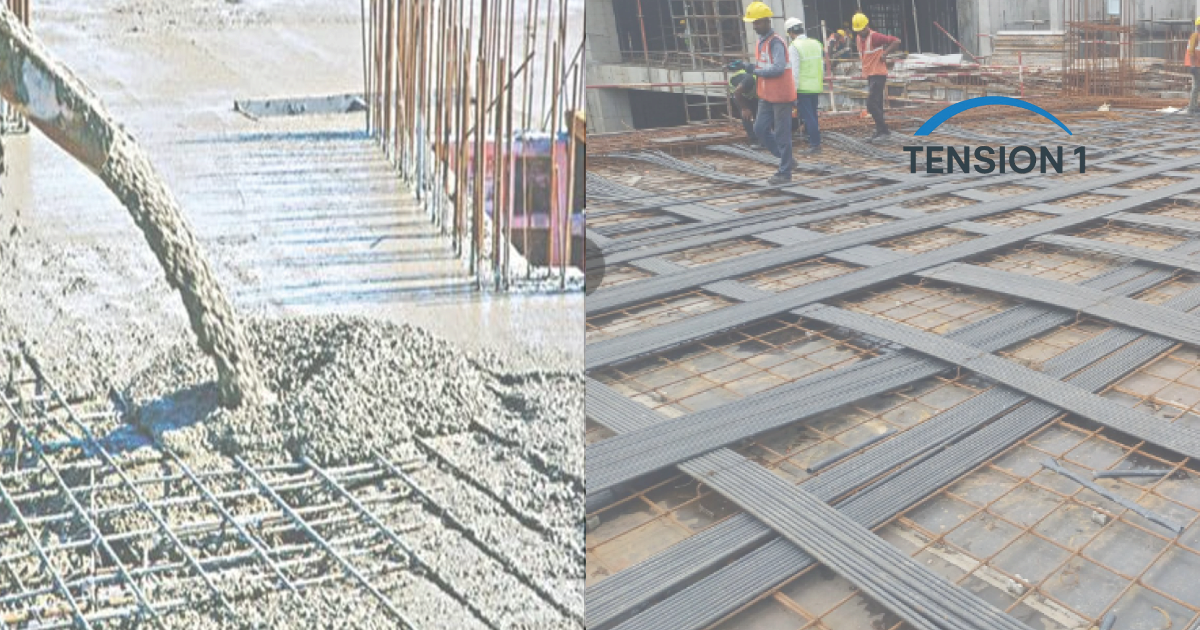
When a post tension slab starts showing distress, every contractor and owner asks the same two questions: how serious is this, and how expensive is the fix? The answer depends heavily on which post-tensioning system was used. Bonded and unbonded systems behave very differently once they are cast into concrete. The differences show up decades later, when corrosion starts or a tendon has to be inspected.
Choosing a system without understanding its long-term weak points leads to tendon replacements, lost capacity and repairs that were avoidable. This article compares the two systems on maintenance, longevity and, above all, on what actually fails in the field and why. For PT fundamentals, see The Ultimate Guide to Post-Tension Slabs: Advantages, Design, and Longevity.
What Is an Unbonded Post Tension Slab System?
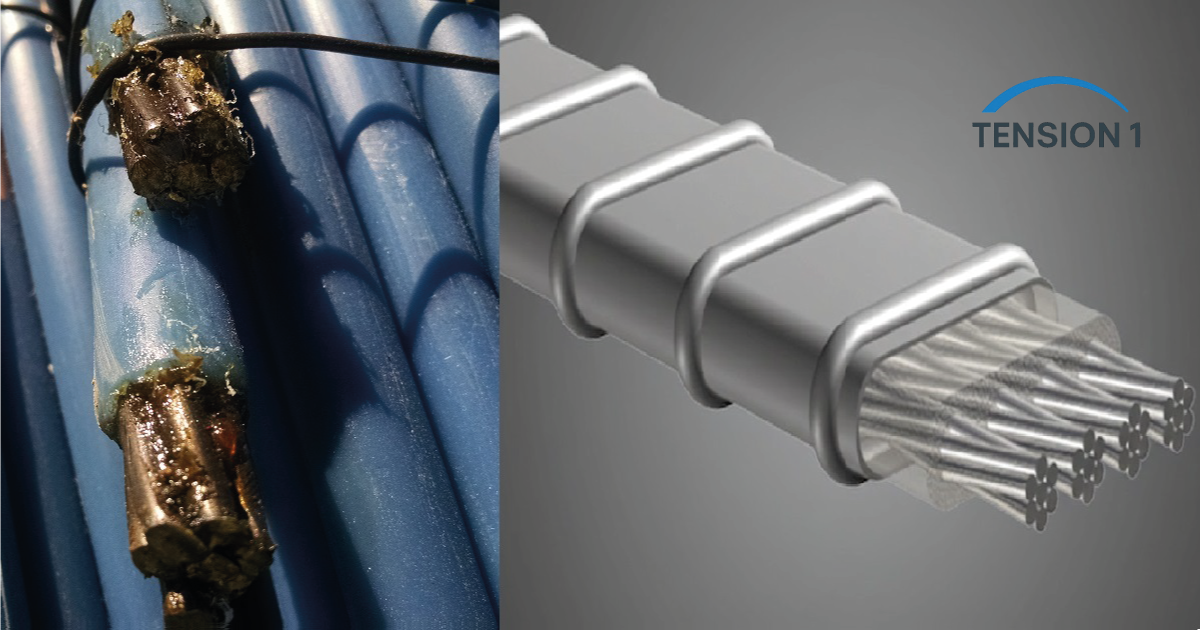
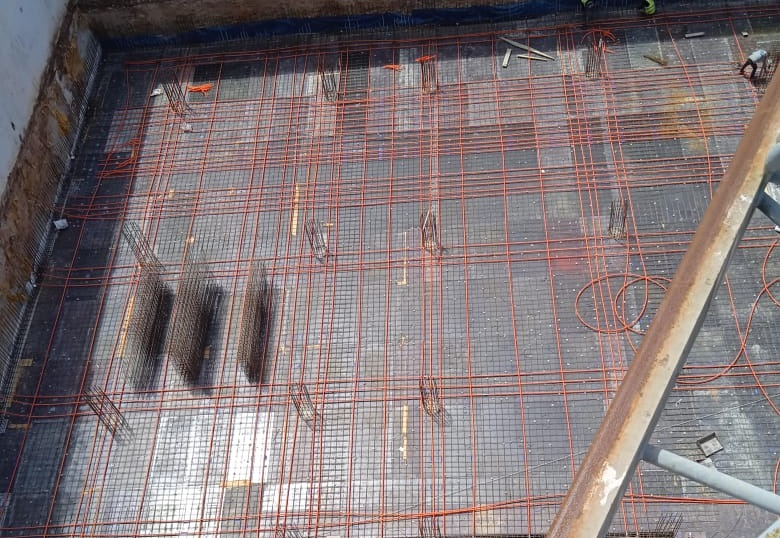
An unbonded system uses single-strand tendons, usually 0.5 in. or 0.6 in. seven-wire strand. Each strand is coated with corrosion-inhibiting grease and enclosed in an extruded plastic sheath. After stressing, the strand stays free to slide inside its sheath for the life of the structure. The grease and sheath do two jobs: they let the strand move during stressing, and they are its main corrosion protection.
In Texas, unbonded monostrand PT is the system of choice for residential foundations, podium slabs and parking structures. It is fast to place, economical and suited to thin slabs. The hardware is specified by PTI M10.2-17, Specification for Unbonded Single Strand Tendons. That specification also defines encapsulated systems, with sealed sheathing, anchors and caps, for aggressive environments.
What Is a Bonded Post Tension Slab System?
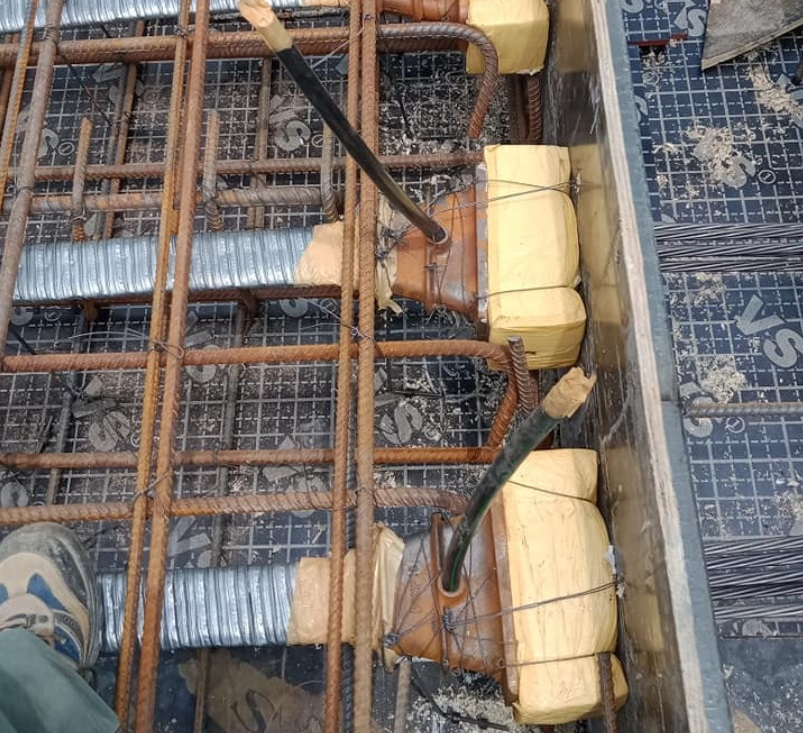
A bonded system places several strands inside a corrugated metal or plastic duct. In slabs these are usually flat ducts holding a few strands, and in beams and bridges round ducts holding up to 19 or more. After stressing, cementitious grout is pumped into the duct. Once it hardens, the strands are bonded to the concrete through the grout.
Bond changes how the slab behaves when something goes wrong. If a strand breaks, it re-anchors itself in the grout over a short length, and the rest of the tendon keeps its force. The requirements come from PTI/ASBI M50.3-19, Specification for Multistrand and Grouted Post-Tensioning, used with PTI M55.1-19 for the grouting itself.
Bonded PT is standard in bridges, heavy transfer structures and many markets outside the U.S. During Joseph's project experience prior to transitioning to the U.S. market, bonded PT flat slabs for multi-story commercial construction were routine. In Texas building construction, bonded PT remains the exception, mostly found on complex commercial and transfer structures.
The Structural Difference That Drives Everything Else
Bond does not only change durability. It changes how much the strand contributes at ultimate load. In an unbonded tendon, the strand stretches over its full length between anchors, so its stress rises far less than in a bonded tendon at a crack. ACI 318-19 reflects this. For unbonded tendons with a span-to-depth ratio of 35 or less, it limits the stress at nominal strength to fse + 10,000 + f'c/(100ρp) psi, below the bonded value.
That is why ACI 318-19 requires minimum bonded reinforcement in members with unbonded tendons. The rebar controls cracking and supplies ductility that the unbonded strand cannot. A slab with unbonded tendons and no bonded steel is not a cheaper version of the same slab. It is a non-compliant one.
What Actually Fails in the Field: Unbonded Systems
Unbonded tendons fail where water reaches bare steel. In practice, that means four places:
- Anchorages and pockets: the anchor is the most exposed component, and a cracked or missing pocket fill lets water straight in.
- Sheathing breaches: tears from construction traffic, from rebar chairs or at field repairs leave the strand exposed along its length.
- Gaps at the anchor: where the sheath stops short of the anchor, the strand is bare inside the concrete.
- Water trapped in the sheath: water that enters during construction or later tracks along the strand to low points and anchors.
History explains much of the current stock of problems. According to STRUCTURE magazine, the first unbonded tendons in U.S. buildings used paper-wrapped, button-headed strands. Plastic sheathing and modern corrosion protection came later. A 2017 PTI Journal paper notes that corrosion problems in commercial buildings and parking decks became evident through the 1970s and early 1980s. Many of those structures are still in service today. ACI 423.4R-14, Report on Corrosion and Repair of Unbonded Single-Strand Tendons, documents that evolution and the repair methods.
In parking structure investigations, we have documented cases where chloride-laden water migrating through crack networks reached the anchorage pockets and initiated severe pitting corrosion at the strand's most highly stressed cross-section, exactly where section loss has the greatest structural consequence.
What Did Not Work
Standard grout-only pocket fills, without a secondary protective cap, particularly in outdoor parking decks exposed to Texas thermal cycling, showed deteriorated grout and exposed strand ends in as few as 8 to 10 years post-construction.
What Works Instead
For exposed structures, specify an encapsulated system to PTI M10.2-17. It has watertight sheathing connections, sealed caps over the strand tails, and pocket fills placed with the same care as structural concrete. When an unbonded strand does break, the force is lost over most of its length. The repair is still often local: a coupler splice, a replacement strand pulled through the existing sheath, or a supplemental tendon. Our step-by-step guide to fixing a severed post-tension tendon covers that sequence.
What Actually Fails in the Field: Bonded Systems
Bonded tendons fail where the grout is missing or poor. The record comes mostly from bridges, where grouted tendons are the norm and inspection is systematic. According to FHWA-HRT-22-090 (2022), the first U.S. tendon failure caused by corrosion was found in 1999 on the Niles Channel Bridge in the Florida Keys. The corrosion developed in a grout void formed by bleed water at the anchorage.
The year after, a routine inspection of the Mid-Bay Bridge near Destin, Florida, found corrosion in numerous tendons. One 19-strand tendon had gone completely slack after a corrosion failure at its anchor, as reported in research archived by the U.S. Department of Transportation. A later FHWA summary (FHWA-HRT-24-148) lists major tendon failures in Florida, Virginia, Minnesota, Indiana and South Carolina. All of them were linked to water or moisture and grout voids.
The failure points are consistent:
- Voids at high points and anchorages: bleed water separates from the grout and leaves empty space where water can collect later.
- Soft or segregated grout: grout that does not set properly gives little protection and can concentrate chlorides or sulfates.
- Damaged ducts: a dented or split duct blocks grout flow or lets water in before grouting.
- Unprotected anchorages: grout caps and anchorage protection are as critical here as in unbonded systems.
After those failures, the industry moved to thixotropic grouts and stricter procedures. PTI M55.1-19, now in its fourth edition, defines Class A grout for nonaggressive exposure and Class B for wet-dry cycles, marine environments and deicing salts. It caps the water-cementitious ratio at 0.45 and requires a written grouting plan. The weakness that remains is inspection. A void inside a hardened duct is invisible without radiography, impact-echo or borescope investigation.
Longevity: Which Post Tension Slab System Lasts Longer?
Neither system is inherently more durable than the other. The long-term performance of a post tension slab depends primarily on three factors: the aggressiveness of the exposure environment, the quality of installation and grouting workmanship, and whether the system was designed with the appropriate protection level for the intended service condition.
- Interior, climate-controlled slabs: a well-detailed unbonded system with protected anchorages is the economical choice. Its exposure is low and its anchorages stay accessible.
- Parking structures and exterior slabs: both systems can work, but only with full protection. That means an encapsulated unbonded system, or a bonded system with plastic ducts and Class B grout, combined with drainage, sealers and crack maintenance.
- Coastal or industrial exposure: chloride exposure is sustained, so corrosion protection has to be redundant. Some owners prefer bonded systems there; WSDOT, for example, designates multistrand grouted tendons as its preferred system for post-tensioned concrete bridges.
The critical qualification: a bonded system with grout voids can fail faster, and with less warning, than a well-maintained unbonded system. The longevity advantage of bonded PT depends entirely on grouting quality control.
System Comparison at a Glance
| Criteria | Unbonded (Monostrand) | Bonded (Multistrand) |
|---|---|---|
| Corrosion protection | Grease and plastic sheath, encapsulated in aggressive exposure | Grout inside a metal or plastic duct |
| Strands per tendon | One (0.5 in. or 0.6 in.) | Several per duct, up to 19 or more |
| Bond after stressing | None: strand free to slide | Full bond through hardened grout |
| If a strand breaks | Force lost over most of the tendon length | Strand re-anchors locally in the grout |
| Typical repair | Splice, strand replacement or supplemental tendon | Local repair, but extent hard to confirm |
| Inspection access | Anchorages and pockets can be opened | Duct interior needs NDT |
| Main field failure | Water at anchorages and sheath breaches | Grout voids, soft grout, bleed water |
| Dominant U.S. use | Residential, podium and parking slabs | Bridges, transfer structures |
| Key specifications | PTI M10.2-17, ACI 318-19 | PTI/ASBI M50.3-19, PTI M55.1-19, ACI 318-19 |
Inspection and Repair Over the Service Life
Inspection follows the failure points. On unbonded slabs it means opening pockets, checking anchorages and caps, and lift-off testing accessible tendons. On bonded slabs it means non-destructive testing of the ducts, starting at high points and anchorages. Either way, a schedule beats a surprise. See whether post-tension slabs require regular professional inspection and the 5 warning signs your post-tension slab needs immediate expert repair.
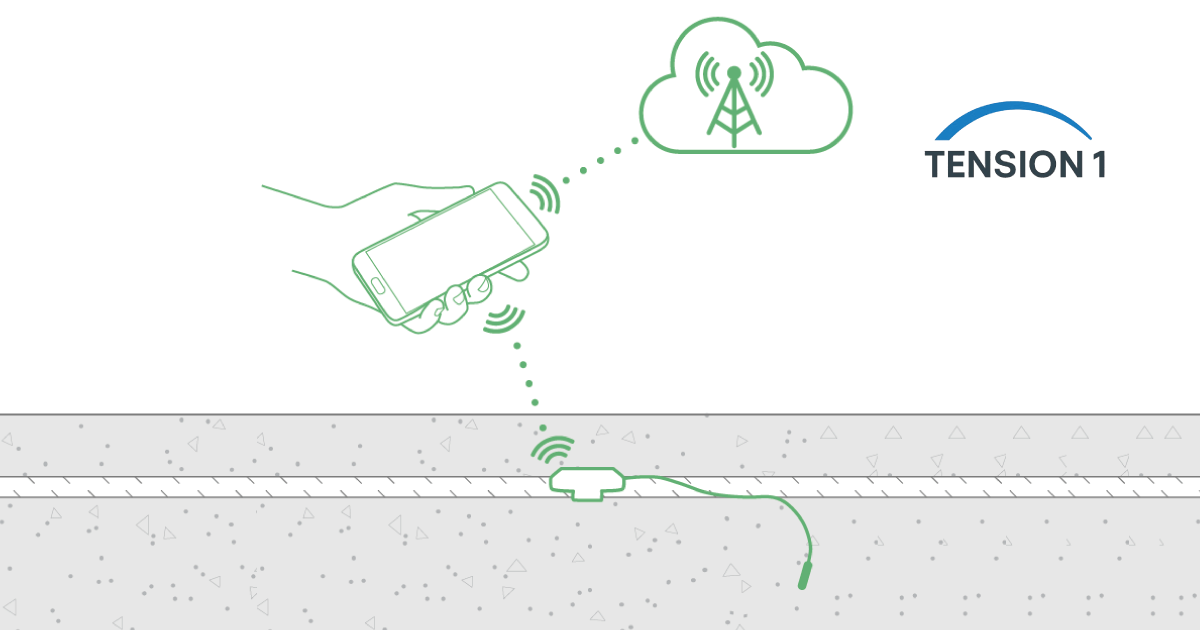
Continuous monitoring is starting to supplement periodic inspection on high-value structures. That is the subject of our article on IoT and embedded sensors for post-tension slab monitoring. Repair of either system is governed by ACI CODE-562-21 where adopted, and by PTI DC80.3/ICRI 320.6 (2024) for unbonded systems.
System Choice Beyond Durability
The system choice also affects design and environmental impact. Bond changes how a slab cracks and deflects, as explained in how post-tensioning prevents cracking and deflection in long-span structures. It also matters at cantilevers, where a broken tendon at the edge has nowhere to shed its load, as discussed in our case study on PT cantilevers. On slabs-on-ground, unbonded tendons are almost universal, for reasons covered in post-tension foundations in expansive clay soils. For the material and carbon side of the comparison, see post tension slab vs. reinforced concrete: embodied carbon.
Need a Second Opinion on System Selection or a Condition Report?
Through our expert technical consulting, we review exposure conditions, specifications and condition reports with design teams and owners in a virtual meeting. We help them decide between bonded and unbonded systems, or interpret what an investigation has found. This is independent technical support. Sealing and approval remain with the licensed engineer of record.
This article is educational and does not constitute a PE-stamped structural opinion or a design for any project. The governing code edition and project documents take precedence.
References: ACI 318-19, Building Code Requirements for Structural Concrete (current edition ACI CODE-318-25). ACI 423.4R-14, Report on Corrosion and Repair of Unbonded Single-Strand Tendons. ACI CODE-562-21, Assessment, Repair, and Rehabilitation of Existing Concrete Structures. PTI M10.2-17, Specification for Unbonded Single Strand Tendons. PTI/ASBI M50.3-19, Specification for Multistrand and Grouted Post-Tensioning. PTI M55.1-19, Specification for Grouting of Post-Tensioned Structures. PTI DC80.3/ICRI 320.6 (2024). FHWA-HRT-22-090, Corrosion-Induced Durability Issues and Maintenance Strategies for Post-Tensioned Concrete Bridges (2022). FHWA-HRT-24-148, Corrosion-Induced Major Tendon Failures in Post-Tensioned Bridges.