Anyone who has built slabs across the Dallas-Fort Worth metroplex knows what expansive clay does to a foundation. The ground swells after rain and shrinks through a dry summer, and a conventionally reinforced slab cannot follow that movement without cracking. That is why a post tension slab is the standard answer on Texas expansive soils, and why the details of its design matter so much.
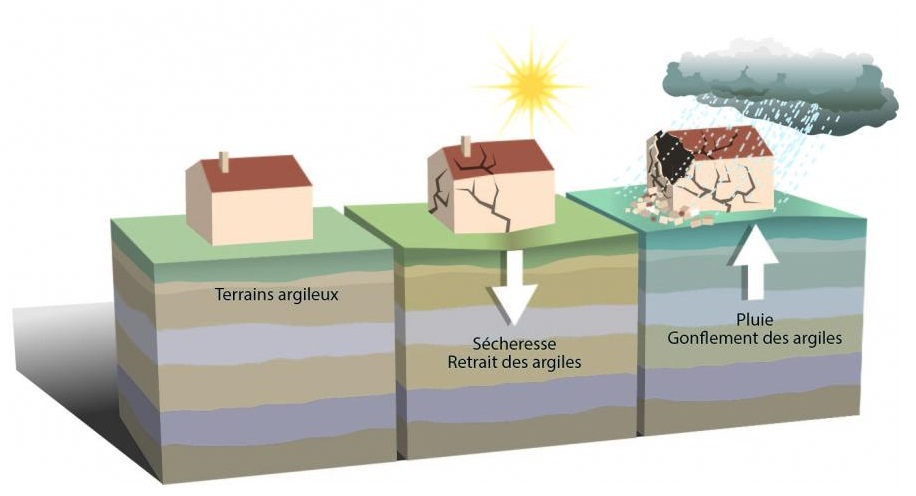
The damage goes well beyond cosmetic cracks. Floor finishes lift, plumbing shears at penetrations, doors stick and partitions rack out of plumb. In the Blackland Prairie this is not an edge case. It is the soil most foundations sit on.
A properly engineered post tension slab answers at the structural level. It keeps the concrete in compression and gives the foundation enough stiffness to ride through center lift and edge lift. This article covers the soil behavior, the design method, the field execution points that matter, and the detailing decisions we apply on Texas projects. For the full overview of PT systems, see The Ultimate Guide to Post-Tension Slabs: Advantages, Design, and Longevity.
Understanding Expansive Clay and What It Does to a Slab
Why the Blackland Prairie Is So Demanding
Expansive clays swell when they take on water and shrink when they lose it. The amount of movement tracks with the plasticity index (PI) measured by the geotechnical engineer. North Texas sits on some of the most active of these soils anywhere. According to the Texas Water Development Board, the Houston Black series covers about 1.5 million acres of the Blackland Prairie, from north of Dallas to San Antonio. It is recognized worldwide as the classic Vertisol, a soil that shrinks and swells markedly with moisture. A 1956 soil survey of Houston Black clay recorded wetting and drying of the profile to depths of as much as 10 ft.
The cost is national as well as local. The Virginia Department of Energy cites an ASCE estimate that one quarter of all U.S. homes have suffered damage from expansive soils.
Center Lift and Edge Lift
A slab-on-ground over expansive clay has to be designed for two opposite cases. In center lift, the perimeter dries and shrinks while the soil under the middle stays wet, so the slab is supported in the center and its edges hang. In edge lift, rain or irrigation swells the soil at the perimeter while the center stays drier, so the edges are pushed up. Each case bends the slab the opposite way, and a design that checks only one is incomplete.
The geotechnical engineer quantifies both cases with two parameters used in the PTI method: the edge moisture variation distance, em, and the differential soil movement, ym. Those two numbers drive the beam depth, the beam spacing and the prestress.
Why Conventional Reinforcement Falls Short
A conventionally reinforced slab-on-ground accepts cracking as a design premise: the concrete cracks and the steel limits how wide the cracks open. On stable soil that works. On expansive clay, every swell-shrink cycle works the existing cracks wider and opens new ones.
Inspections of conventionally reinforced slabs in the Dallas area after five to seven years of service have shown crack widths exceeding 1/8 in., with differential movement visible across the floor plane. Those slabs were not structurally failed, but they were serviceable only with significant remediation cost. The PT approach removes cracking as a design premise.
How a Post Tension Slab Controls Movement and Cracking on Clay
Precompression
Once the concrete reaches the strength specified for stressing, the tendons are stressed and locked off. That strength is commonly 75 percent of f'c, or as the project specifications require. The tendons squeeze the slab, so any tension from soil movement or load has to overcome that compression before cracks can open.
PTI DC10.5 requires a minimum effective prestress of 50 psi after losses for slabs-on-ground. STRUCTURE magazine reports typical values of 60 to 100 psi. On high-PI Dallas clay sites, we frequently specify 75 psi average prestress to provide additional margin against severe swell events.
Stiffness: The Ribbed Foundation
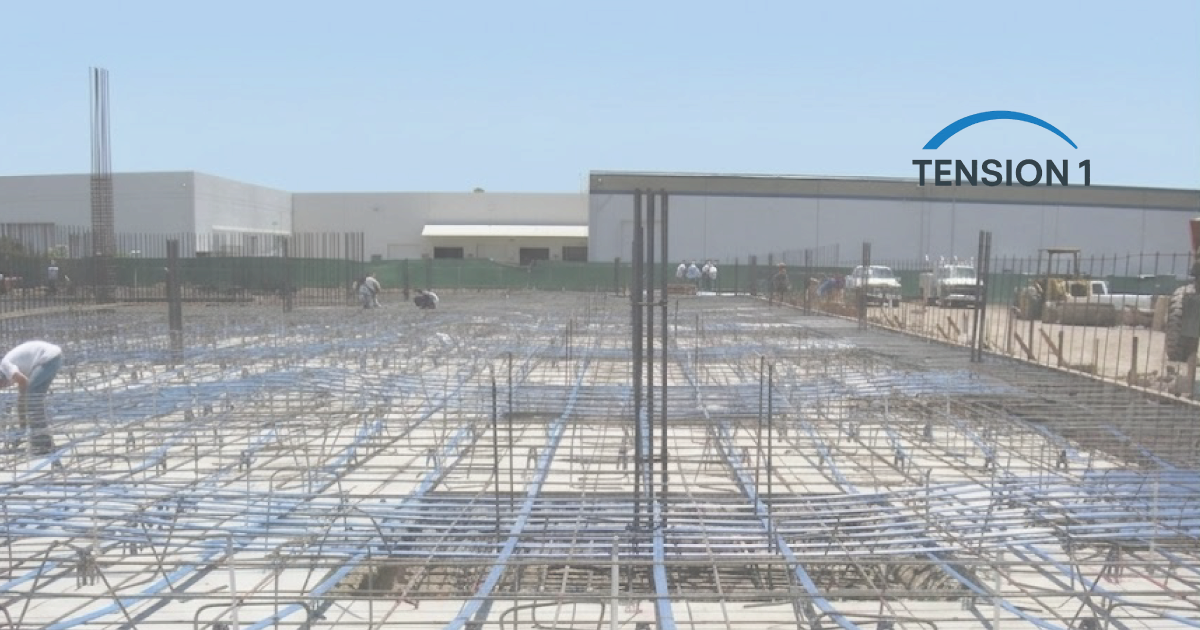
Precompression controls cracking, but stiffness controls movement. A typical Texas PT foundation is a ribbed slab: a thin slab, often 4 to 5 in., stiffened by a grid of perimeter and interior beams cast monolithically into trenches. The beams supply the moment of inertia that lets the foundation span the soft spots in center lift and cantilever over them in edge lift. The tendons put the whole section, slab and beams, into compression.
That is a key difference from an elevated slab. In a suspended floor, tendons are draped to balance gravity load. In a slab-on-ground, the soil supports the dead load. Tendons in the slab portion are usually placed flat, close to mid-depth. Their job is precompression across the section and resisting the moments from soil movement, not load balancing.
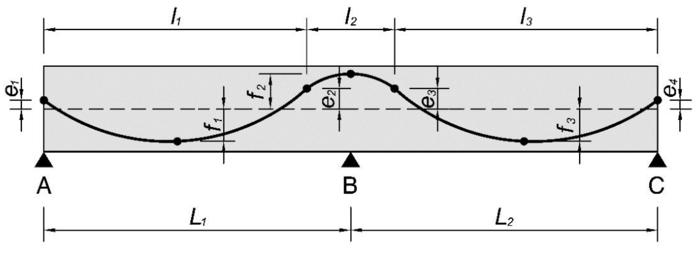
The draped case is covered in detail in how post-tensioning prevents cracking and deflection in long-span structures.
Which Documents Govern
ACI 318-19 generally excludes slabs-on-ground from its scope unless they carry loads from other parts of the structure to the soil. The design method for PT slabs on expansive soil is PTI DC10.5-19, Standard Requirements for Design and Analysis of Shallow Post-Tensioned Concrete Foundations on Expansive and Stable Soils. The International Building Code names DC10.5 as an accepted method for slab-on-ground foundations on expansive soils.
DC10.5 sets the allowable differential deflection according to the superstructure. Brittle finishes such as stucco or brick veneer get tighter limits than wood framing. Texas has no single statewide building code, so the edition that applies depends on the local jurisdiction. Construction and maintenance are covered by PTI DC10.2-17.
PT Slab vs. Conventional Slab on Expansive Clay
The table below summarizes the main differences between unbonded PT and conventionally reinforced slabs-on-ground on expansive clay.
| Parameter | Post-Tension Slab | Conventional RC Slab |
|---|---|---|
| Soil behavior | High swell/shrink potential | High swell/shrink potential |
| Foundation type | Unbonded PT ribbed slab-on-ground | Conventional RC slab-on-ground |
| Crack control | Continuous precompression | Passive steel, wider cracks |
| Slab thickness | 4 to 5 in. (typical residential) | 6 to 8 in. (comparable design) |
| Tendon spacing | 48 to 60 in. (typical) | N/A |
| Response to heave | Moves as a stiffened plate | Localized cracking, differential movement |
| Long-term performance | Consistent across wet/dry cycles | Degrades with repeated swell cycles |
These values are indicative of typical Dallas residential projects. Actual design values depend on site-specific geotechnical data, loading and the governing code edition.
Field Observations: What Worked and What Did Not
What Worked On-Site
- Perimeter beam depth tied to geotechnical report: On projects with a site-specific geotechnical report providing a PI value and recommended beam depth, the final slab performance aligned closely with the design deflection limits. The correlation between a properly specified beam embedment (reaching below the active zone) and long-term slab flatness was consistent across multiple Dallas residential projects.
- Stressing sequence control: On slabs wider than 100 ft, we implemented a staged stressing sequence stressing alternate tendons in each direction first, then completing the remaining tendons after 24 hours. This approach reduced the tendency for plastic shrinkage cracking along tendon lines observed on slabs stressed all at once in hot summer conditions.
- Grease cap inspection at anchorages: Verifying grease cap installation at all dead-end anchorages before concrete placement eliminated corrosion-related anchorage issues that showed up on earlier projects during inspection. This is a 20-minute check that prevents a multi-day repair.
What Did Not Work On-Site
- Skipping the pre-pour tendon pull test: On one project, a subcontractor completed placement without confirming tendon free movement. Two tendons were found bonded to the bleed water channel after concrete hardened, resulting in under-elongation and a localized re-stress operation. The pre-pour pull test is non-negotiable.
- Undersized perimeter beam on cut-and-fill lots: A cut-and-fill site in a North Dallas subdivision presented soil with significantly different PI values at the cut versus fill transition. The original beam design did not account for this differential, and one zone of the slab showed measurable edge lift within 18 months. The lesson: geotechnical variability on cut-and-fill lots requires additional soil borings, not extrapolation from a single report.
- Tendon spacing at maximum allowable without adjusted prestress: Pushing tendon spacing to the maximum allowable without compensating with a slightly higher stressing force produced marginal average prestress values on one 5,000 sq ft slab. The slab performed adequately, but we have since adopted a policy of verifying average prestress by zone rather than globally. Marginal average prestress leaves no buffer for tendon losses above the estimated values.
Those anchorage checks matter for the life of the slab, not just the pour. How unbonded tendons age, and where they fail, is covered in bonded vs. unbonded post tension slab systems.
Critical Detailing Decisions for Texas Expansive Clay Sites
Perimeter and Interior Beams
The beams are the backbone of a PT slab-on-ground. Their depth is set from em and ym in the geotechnical report, and the report also defines the active zone, the depth over which seasonal moisture changes the soil. It varies with vegetation, drainage and irrigation, which is why it must come from the site, not from a rule of thumb.
Beam width has to work for both structure and hardware. We typically size perimeter beams at a minimum of 12 in. wide to maintain adequate concrete cover around the tendon anchor casting and to allow for proper concrete consolidation during placement.
Void Forms Under Interior Beams
Where the design calls for it, carton void forms under interior beams isolate the concrete from direct uplift. When the soil swells, the form crushes instead of pushing on the beam. We specify a minimum 2 in. void form depth under interior beams on high-PI Dallas sites, increasing to 4 in. on sites where the geotechnical report indicates ym values above 2 in. Void form thickness is not a standard value: it must be calibrated to the site conditions.
Vapor Retarder and Subgrade Preparation
A vapor retarder is not waterproofing. It limits moisture moving up through the slab into floor finishes. ASTM E1745 classifies these membranes, and ACI 302.1R-15 discusses where to place them. Placing the membrane directly under the slab, with laps and penetrations sealed, avoids a granular layer that can hold water.
Moisture control does not stop at the slab. Grading, gutters and the distance of trees and irrigation from the foundation decide how much the soil moves in the first place.
Keeping the Foundation Stable Over Time
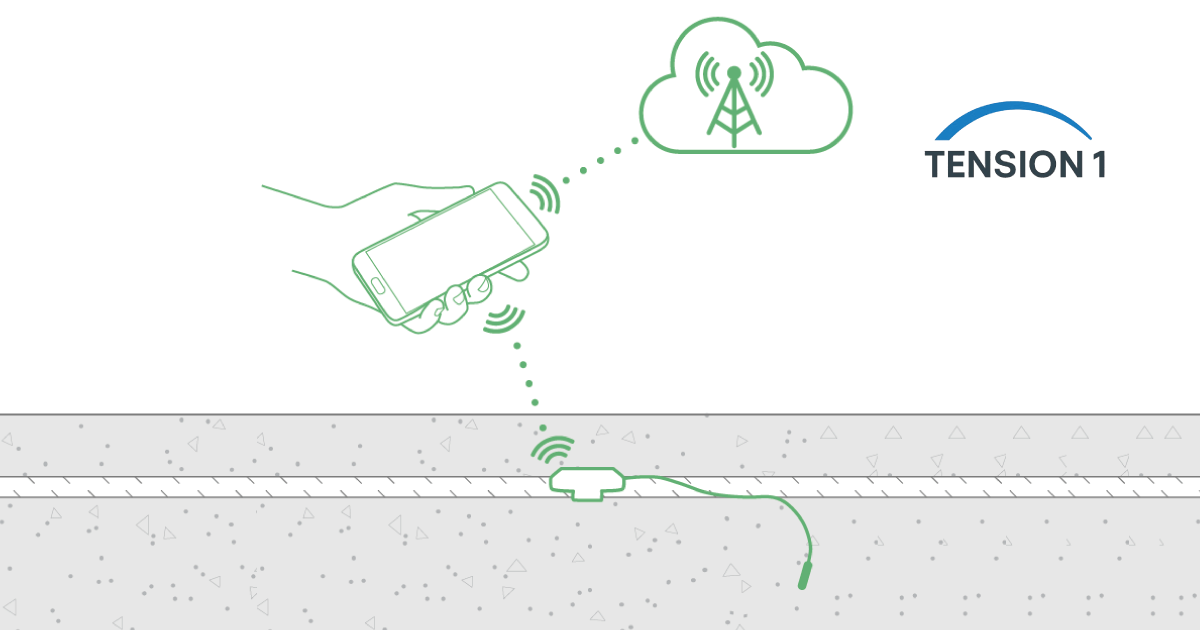
A PT foundation on clay is a system that keeps working with the soil around it. Owners should watch for sticking doors, new cracks and drainage changes, and have the foundation checked on a schedule. See whether post-tension slabs require regular professional inspection and the 5 warning signs your post-tension slab needs immediate expert repair. Sensors that track movement and tendon force over time are starting to appear on larger projects. Our article on IoT and embedded sensors for post-tension slab monitoring covers what is actually in use.
The same PT logic that stiffens a foundation also lets elevated slabs reach far past their supports, as shown in our case study on PT cantilevers in architectural design. A thinner PT foundation also uses less concrete than a deeper conventional one. The environmental side of that difference is covered in post tension slab vs. reinforced concrete: embodied carbon.
Get a Second Opinion on Your Foundation Design or Movement Issue
Through our expert technical consulting, we work through it with you in a virtual meeting. That can be a builder reviewing a PT foundation plan against the geotechnical report, a design team checking a slab on a difficult lot, or an owner trying to understand movement in a house. This is independent technical support, not a sealed assessment. Design, evaluation and approval remain with the licensed engineer of record.
This article is a technical reference and does not constitute a PE-stamped engineering opinion or project-specific structural recommendation. All design decisions should be reviewed and approved by the licensed engineer of record.
References: PTI DC10.5-19, Standard Requirements for Design and Analysis of Shallow Post-Tensioned Concrete Foundations on Expansive and Stable Soils. PTI DC10.2-17, Construction and Maintenance Manual for Post-Tensioned Slab-on-Ground Foundations. ACI 318-19, Building Code Requirements for Structural Concrete (current edition ACI CODE-318-25). ACI 302.1R-15, Guide to Concrete Floor and Slab Construction. ASTM E1745, Standard Specification for Plastic Water Vapor Retarders Used in Contact with Soil or Granular Fill under Concrete Slabs. Texas Water Development Board, Houston Black: Texas State Soil.