A failed tendon does not always announce itself. In a post tension slab, the steel cables that hold the concrete in compression can lose their force quietly, and by the time damage shows on the surface, the slab has often been carrying load differently for a while.
That uncertainty is the real problem with a post tension slab. A broken or corroded tendon that nobody notices can lead to spalling, spreading cracks, sagging floors and, in the worst cases, a strand bursting out of the slab. Emergency repair also costs far more than a routine catch.
This guide walks through the visible signs of a post-tension cable failure in the order you are likely to notice them, explains what each one means, and says when a sign means "stop and call an engineer now" versus "document and monitor".
Post Tension Slab Signs You Can See Without Tools
A blowout or spalling near the slab edge
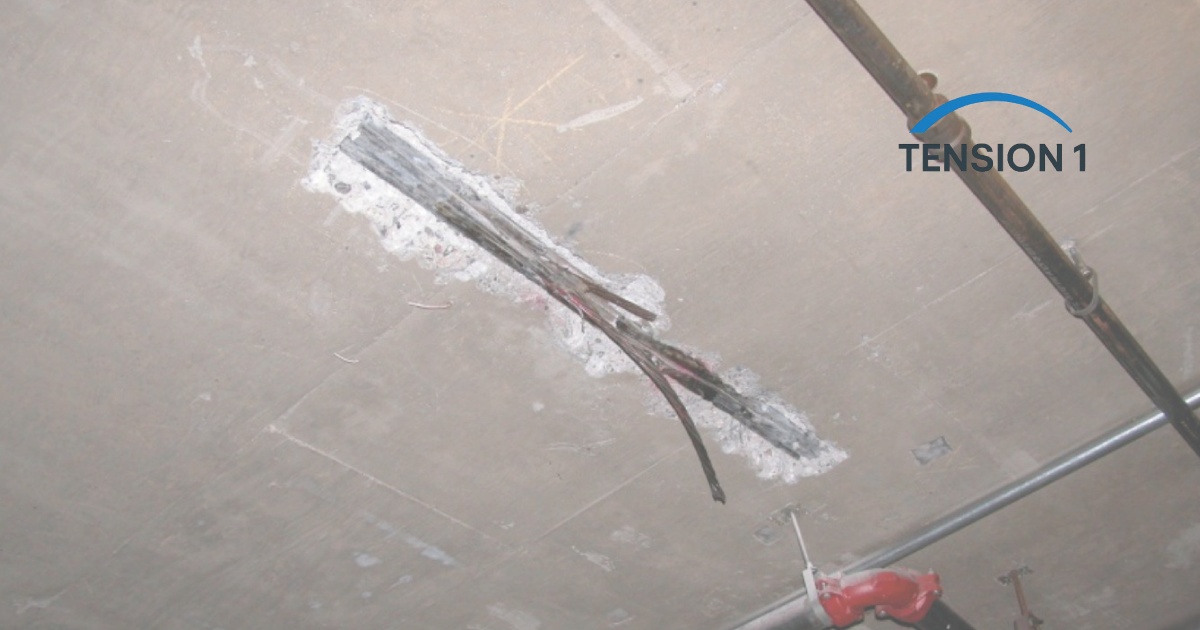
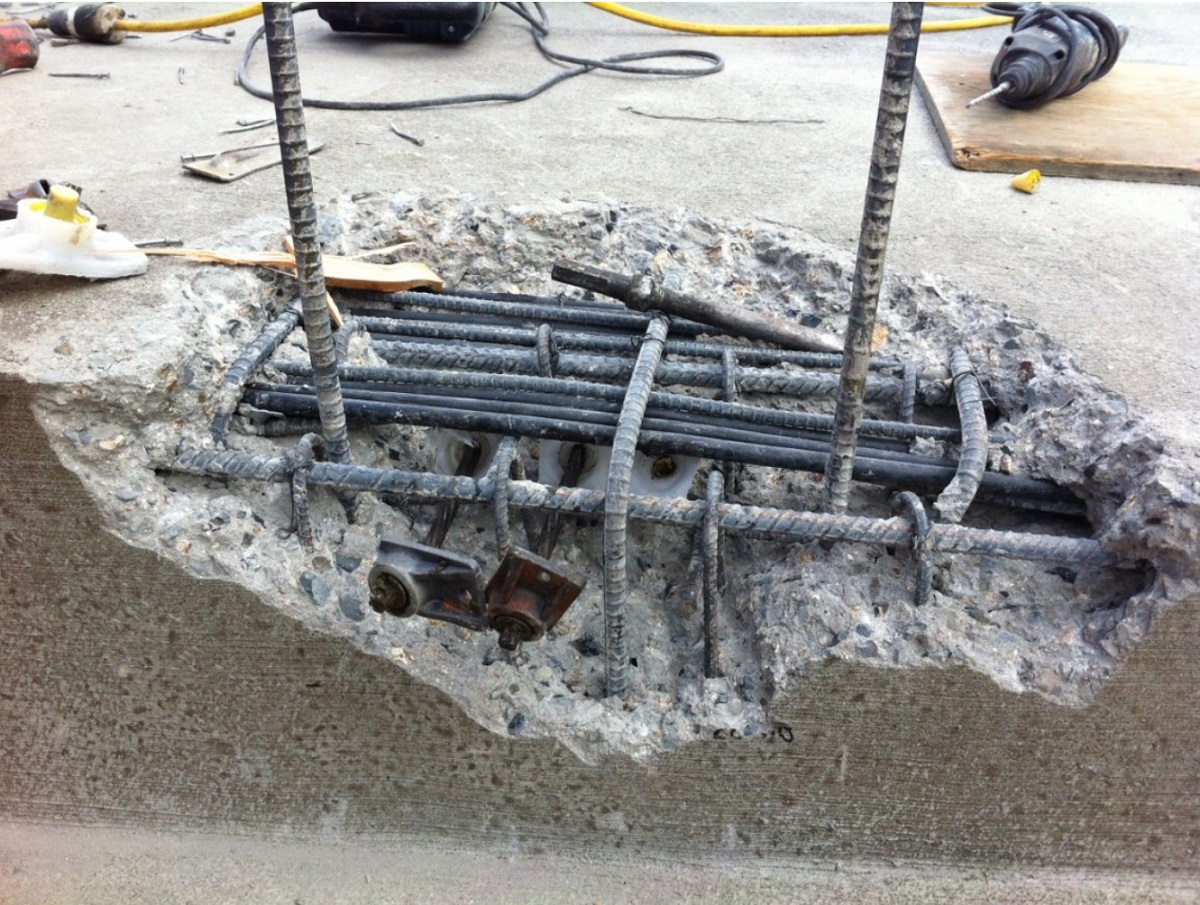
The most unmistakable sign is a blowout: a chunk of concrete pushed out at the post tension slab edge or near an anchor pocket, sometimes with the anchor, the wedges or the strand exposed. When a tendon ruptures or loses its anchorage, the stored energy releases at once, and the strand can break out of the slab. Spalling is the milder version: flaking or delaminated concrete over the tendon line, often with rust at the crack mouth.
- What to look for: a crater or fan-shaped void at the slab perimeter, exposed steel, or fresh damage near a patched anchor pocket.
- What it means: a tendon has already released. Keep people clear of the tendon line and call an engineer before anyone works nearby.
Cracks with a direction
Not every crack in a post tension slab means a cable problem. Fine, random, map-like cracking is usually shrinkage. Two patterns deserve attention:
- Cracks across the tendon direction that keep widening: a tendon compresses the concrete along its length. If it loses force, that compression disappears locally and cracks can open across its line.
- Cracks along a tendon, or radiating from an anchor pocket: corroding steel expands and can split the concrete above or beside it, often with rust staining.
Signs of a Problem Below the Post Tension Slab Surface
A tendon can be badly corroded, or even broken, while the concrete above it looks almost normal. In unbonded systems, each strand sits in grease inside a plastic sheath. ACI 423.4R-14, the ACI report on corrosion of unbonded single-strand tendons, notes that once water gets inside the sheath, the coating stops protecting the steel, and that water can travel along the tendon away from where it entered.
A floor that sags or no longer feels level
On an elevated post tension slab, a new low spot in a bay that used to be flat can mean tendons have lost force. A level or laser survey compared with earlier readings shows whether it is real and whether it is growing.
On a post tension slab foundation under a house, be careful: in Texas, an uneven floor is most often caused by expansive soil movement, not by a broken tendon. The Post-Tensioning Institute publishes PTI DC10.8-18, a guide for evaluating the performance of slab-on-ground foundations, precisely because those two causes need to be separated by measurement, not guessed.
Rust stains, grease and moisture
Brown rust bleeding from a crack in a post tension slab means water has reached steel. On unbonded systems, a greasy residue seeping from a crack or pocket means the sheath has been breached and the corrosion protection is compromised. Both are early warnings that, left alone, progress toward a broken strand.
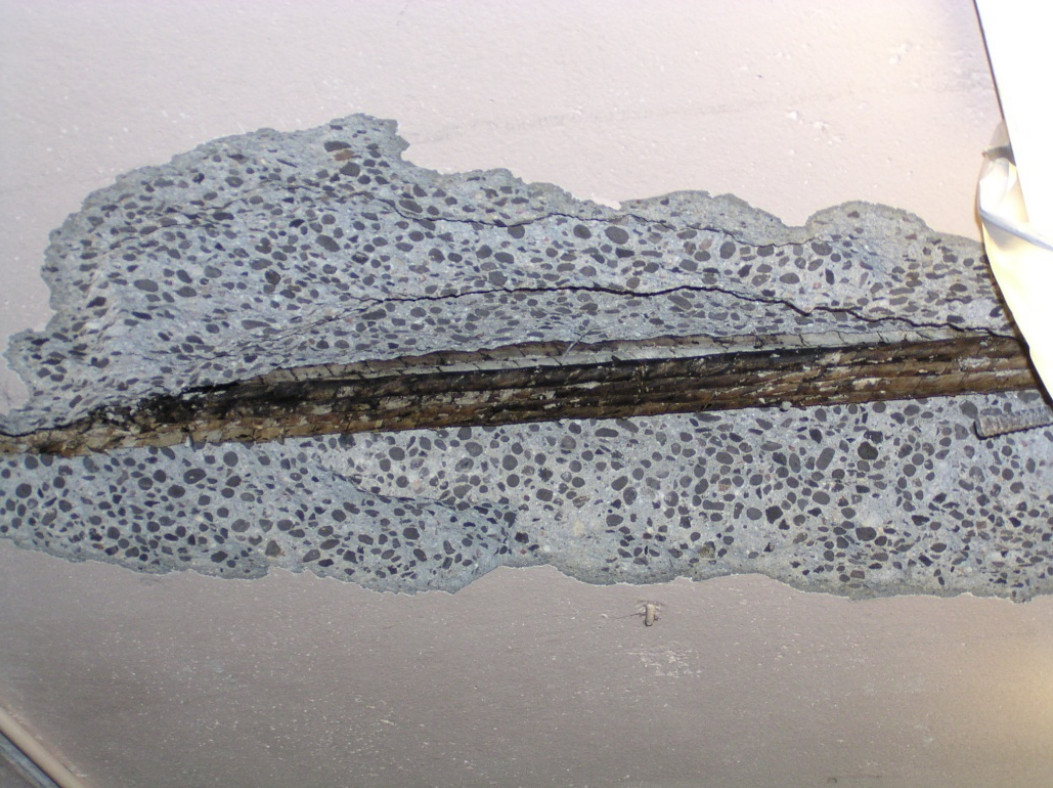
In a project involving a parking structure exposed to repeated freeze cycles and deicing salts, corrosion that began at a single cracked anchor pocket traveled along several tendons before any surface sag appeared. The visible defect is often smaller than the actual damage.
A bang with no obvious cause
Owners sometimes report a loud, sharp noise with nothing broken in sight. A strand is seven wires, and a PTI Journal article by Fulton and Trépanier (2015) notes it typically takes more than two wire breaks before the strand itself ruptures. A bang can be a wire or a tendon letting go. Note the date and location, and have the post tension slab inspected.
How We Evaluate a Suspected Post Tension Slab Tendon Failure
Our evaluation moves from observation to targeted investigation, so the post tension slab is opened only where evidence points.
- Visual walkover mapping blowouts, spalling, staining and crack direction against the tendon layout drawings.
- Level or laser survey of the bay to measure deflection or loss of camber.
- Crack monitoring over time to separate stable shrinkage cracks from active ones.
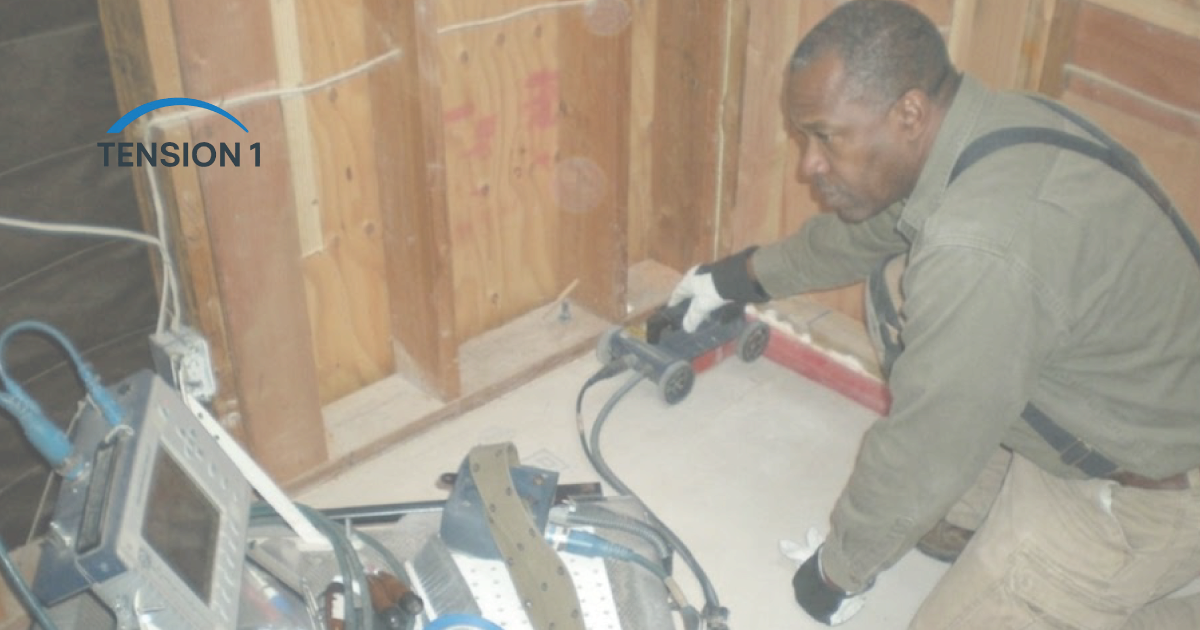
- Scanning to locate tendons before any coring, then selective openings only where indicators converge.
The goal is to establish whether the tendons still carry their force, not whether the surface looks cosmetically sound. PTI DC80.3-12, the Post-Tensioning Institute's guide for evaluation and repair of unbonded PT structures, sets out that approach. The full inspection sequence is in our pillar guide, the dangers of corroded tendons: post tension slab inspection and preservation.
What worked on site
- Cross-referencing crack direction with the actual tendon layout drawing before drawing any conclusion.
- Repeating level readings over several weeks to confirm whether a sag is active or static before committing to a repair scope.
- Treating any greasy weep on an unbonded system as a breached sheath until proven otherwise.
What to watch
- Relying on crack width alone. A tight crack over a corroded tendon can be far more serious than a wide, stable shrinkage crack.
- Coring before scanning. Cutting blind risks nicking a neighboring live tendon and turning an inspection into the incident.
- Assuming one visible defect is the full extent of corrosion. On unbonded strands it rarely is.
When a Post Tension Slab Sign Means Stop Now
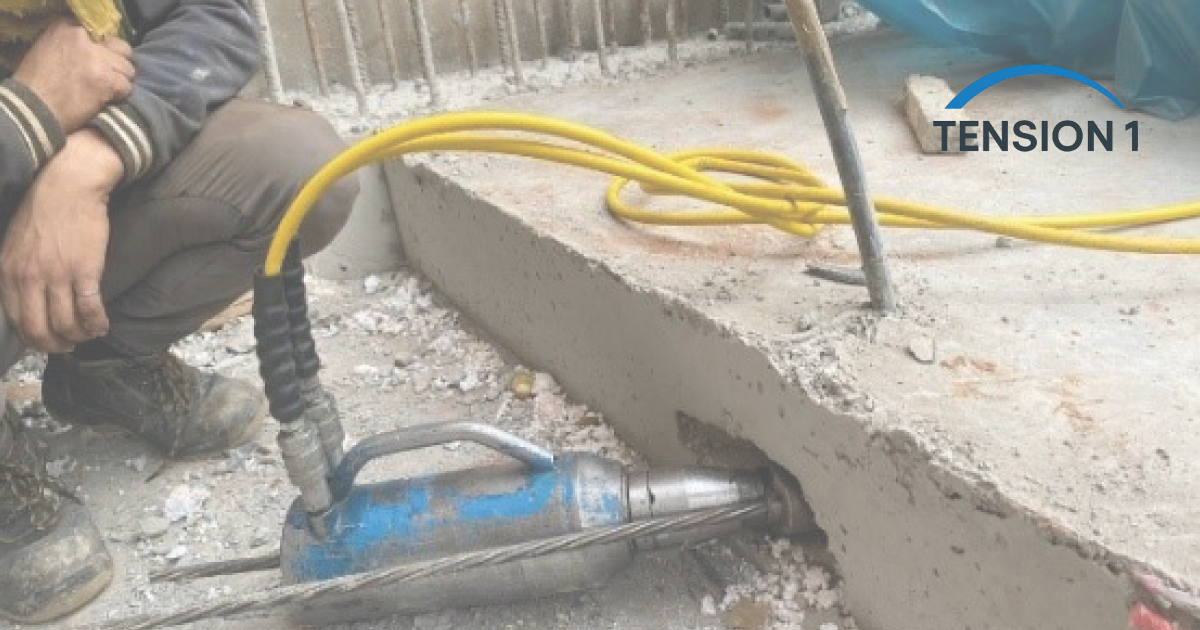
A blowout, an exposed anchor or rapidly growing cracks at a pocket are not "wait and see" conditions. Keep people out of the tendon line, keep heavy loads off the area, and bring in a structural engineer with post-tensioning experience. Repairs, splicing new strand and re-stressing, are specialist work; ask the contractor for PTI certification in unbonded PT repair. Never try to cut, drill or chip around a damaged tendon yourself.
Corrosion is the usual cause behind these signs, see protecting post-tension tendons from corrosion and chloride penetration. Holes drilled without locating the cables are another, covered in is it safe to drill into a post tension slab without knowing where the cables are. For seismic behavior, see post-tension slab earthquake resistance vs conventional RC.
This article describes general warning signs and does not diagnose any specific slab; only an on-site inspection by a qualified engineer can. Our sourcing rules are in our editorial policy. If you have photos, an inspection report or a repair quote and want a second opinion before you sign, a technical consultation on post-tension cable failure reviews it with you.